
@adapttable/ai
v0.2.3
Published
Provider-neutral adaptive table capability discovery — catalog, describe and execute against a live AdaptTable without shipping a model SDK.

Maintainers
 orwa.mahmoud
Readme
@adapttable/ai
Provider-neutral context and execution for a live AdaptTable. Expose what this
table can do right now, then execute the agent's commands against that
contract. catalog and describe support discovery when more guidance is
needed; they are not mandatory extra model calls before every action.
No model SDK is bundled.
@adapttable/core, the adapter roots and @adapttable/server do not
import this package.
npm install @adapttable/aiimport { createAgentSession } from "@adapttable/ai";
import { tableAgent } from "@adapttable/ai-react";For React, install @adapttable/ai-react and compose
tableAgent({ tableId, bridge, writePolicy, approval, commit, columns }).
Use the kit's agentApproval() surface or supply your own approval handler.
approval defaults to "writes";
commit defaults to "stage". The root import stays React-free so a
backend worker can speak the same three calls.
Requires Node.js 22.12.0 or newer; packed releases are tested on Node 22.12 and Node 24.
Integration levels
- Custom bridge — map any agent action onto
session.execute(key, args, expectedRevision, idempotencyKey). Bind the revision to the view the agent received, not a fresh revision read when its command arrives. Keep the same identity when retrying the same action. AgentEnvelope— carry the versioned envelope on your transport, thenparseEnvelope/executeEnvelope.- JSON / OpenAI / MCP helpers — from your own runtime. LangChain may consume JSON tools. It is not an AdaptTable dependency.
Execution never requires another model call. Returning ExecuteResult to
a model is an application choice. No prescribed chat-response wrapper or
assistant widget is required.
buildAgentContext on /context offers compact and full context profiles.
Provide the enabled input guidance up front for ordinary actions; load further
descriptions only when needed. The same executor serves the ready assistant
and an existing agent or custom interface.
import { toJsonTools, executeEnvelope } from "@adapttable/ai/json";
import { toOpenAITools } from "@adapttable/ai/openai";
import { toMcpTools, toMcpResources, mcpListChanged } from "@adapttable/ai/mcp";@adapttable/ai/json— plain JSON function tools +AgentEnvelope@adapttable/ai/openai— strict function tools with OpenAI-safe names (view_setPage);{ deferred: true }is the portable trio@adapttable/ai/mcp— tools in catalog order with derived annotations, per-key guide resources, list-changed@adapttable/ai/mcp-apps— the table as a view an MCP host embeds@adapttable/ai/http— optional endpoint client andagentSystemPrompt; connect a backend@adapttable/ai/context— the permitted context contract, and bounded column sampling@adapttable/ai/assistant— the conversation lifecycle, with no framework@adapttable/ai/voice— dictation, in the browser or through a backend@adapttable/ai/webmcp— the table as browser tools for an agent in the page@adapttable/ai/ag-ui— the table as an AG-UI run's frontend tools@adapttable/ai/ai-sdk— the table as AI SDK client tools
tableAgent and useTableAssistant are @adapttable/ai-react. Everything
above is React-free.
The catalog lists only enabled features, permissions, source support and host callbacks. A filtering + pagination table does not advertise editing, grouping or pivoting.
See it work
Ask the live table — the assistant runs the same capabilities the page already wired.
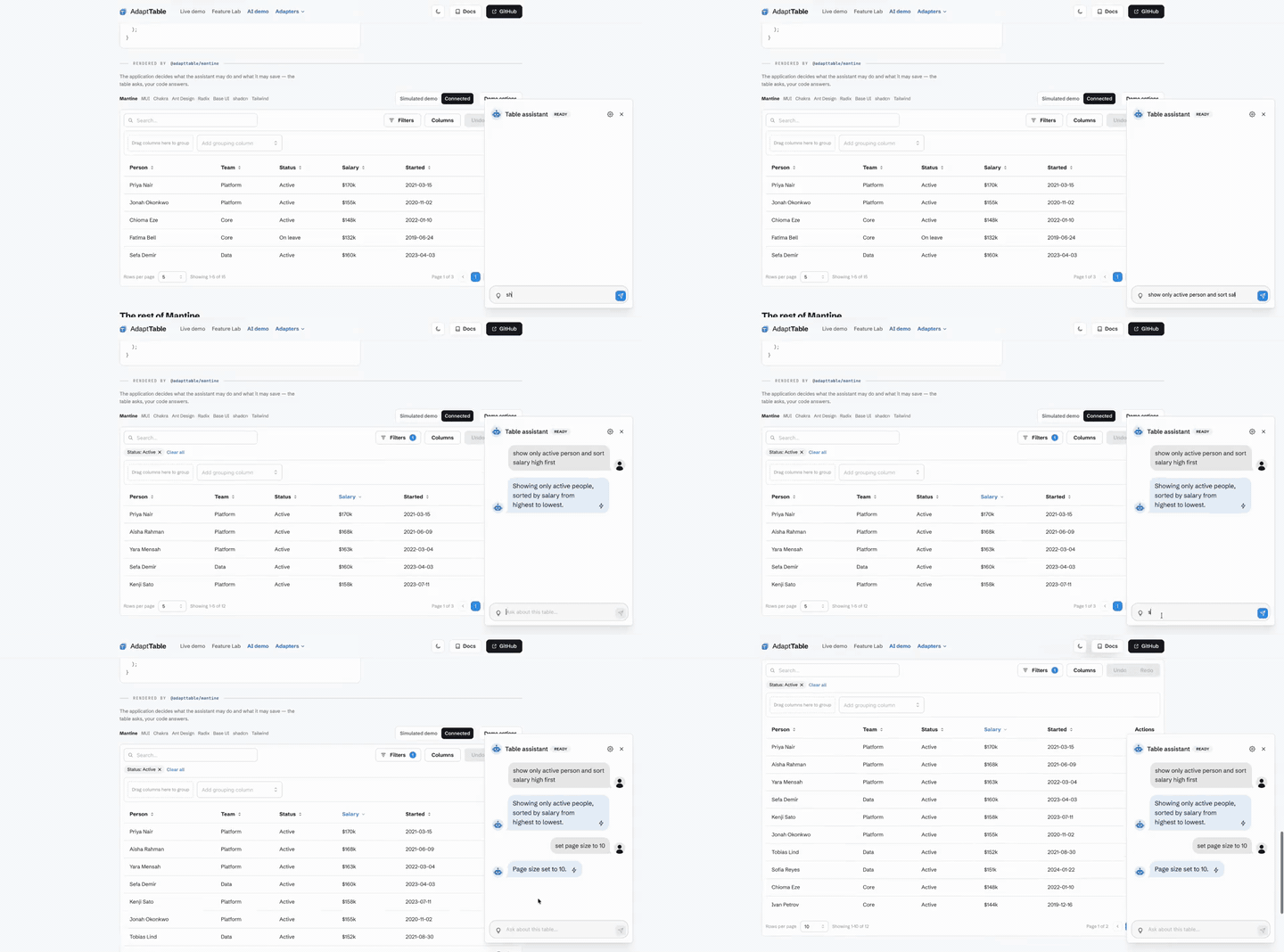
Filter, sort, and page size — active people, salary high first, then 10 rows a page
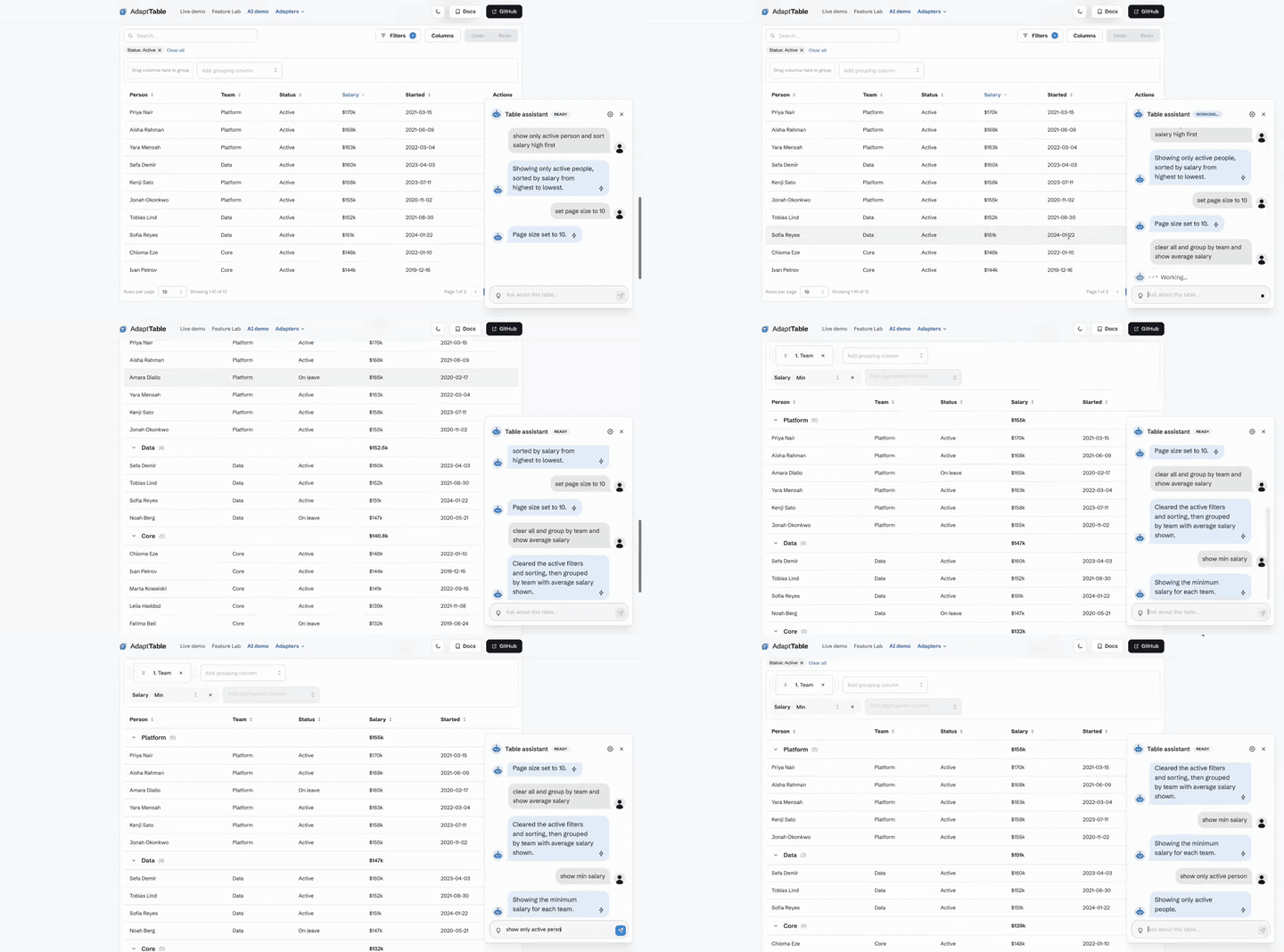
Group and aggregate — group by team, average then min salary, then only active
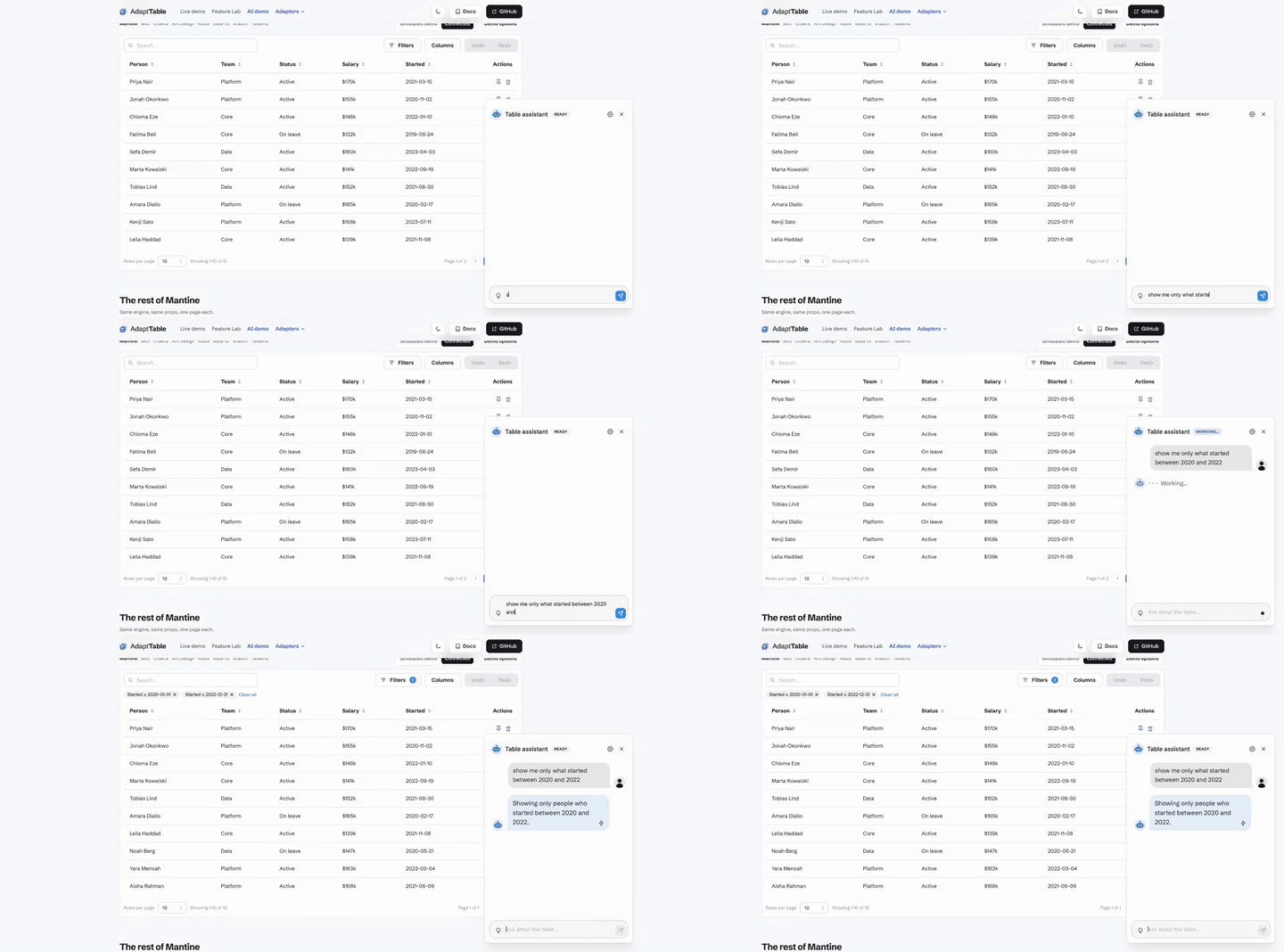
Date range — only rows that started between 2020 and 2022
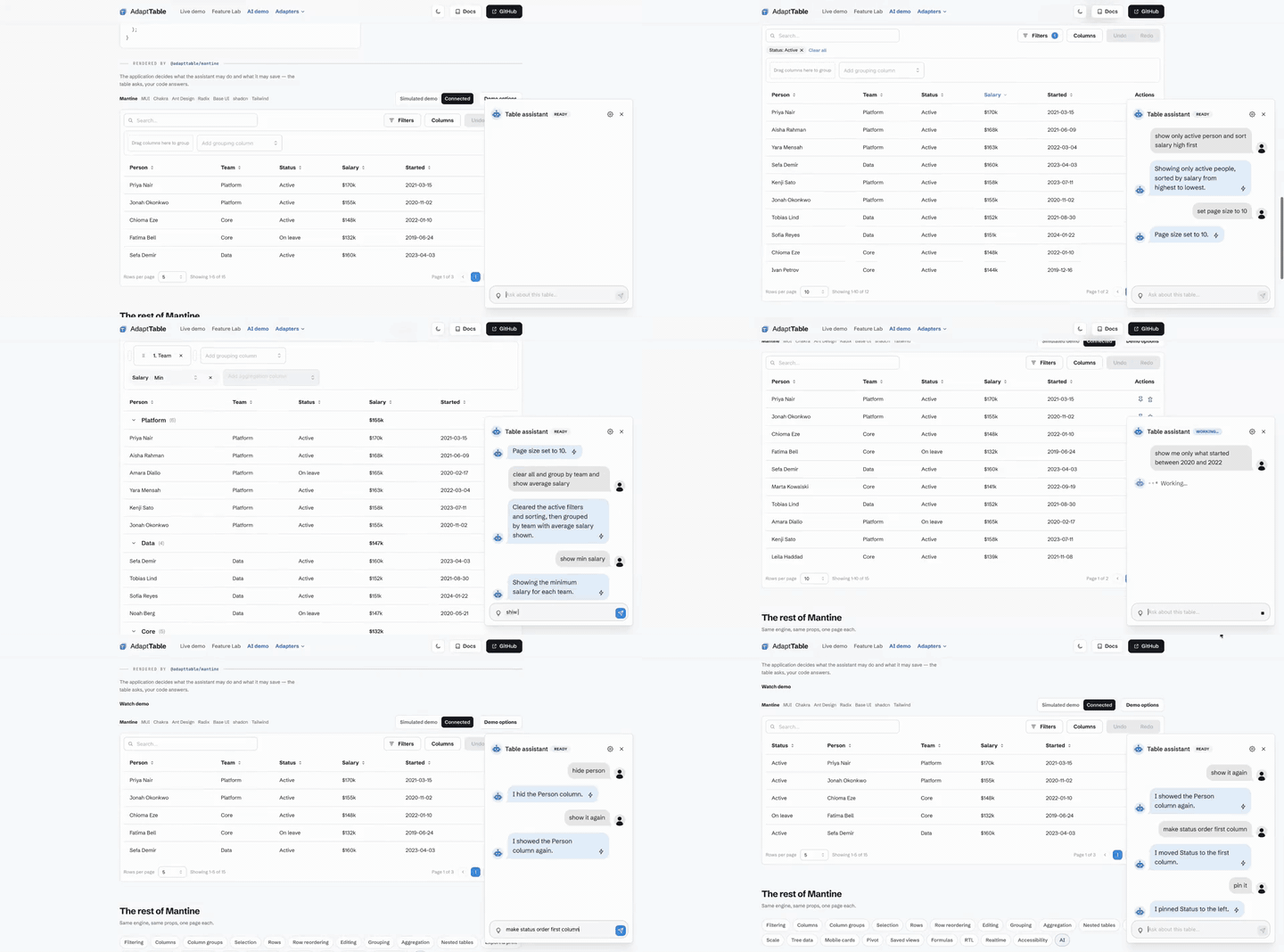
Column management — hide Person, show it again, Status first, then pin it
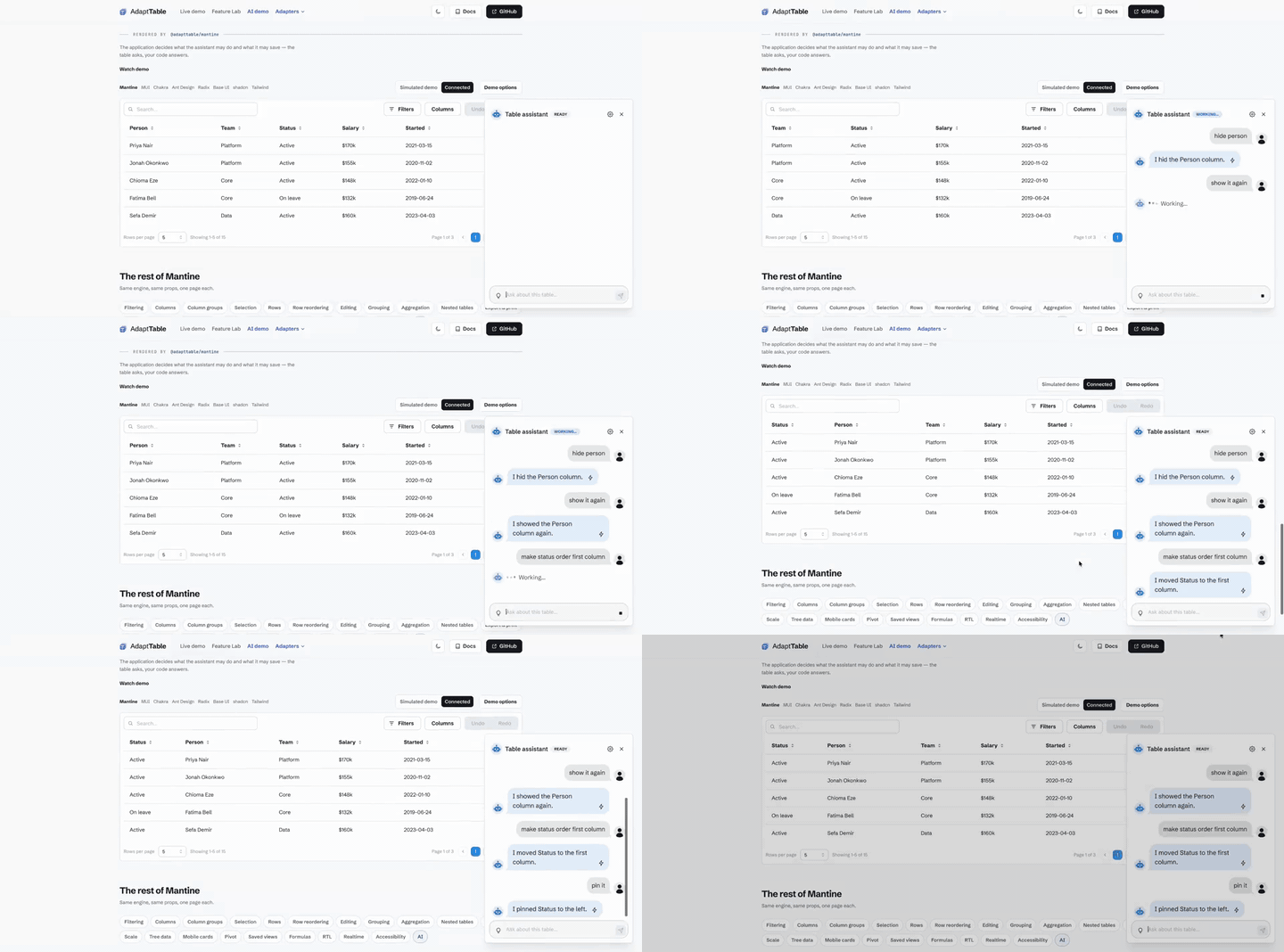
Try the interactive playground (no credentials). Guide: agent integrations.
Docs: capability contract · reference.