
@allmaps/leaflet
v1.0.0-beta.55
Published
Allmaps Leaflet plugin
Downloads
5,038


Readme
@allmaps/leaflet
Allmaps plugin for Leaflet. This plugin allows displaying georeferenced IIIF images on a Leaflet map. The plugin works by loading Georeference Annotations and uses WebGL to transform images from a IIIF image server to overlay them on their correct geographical position.
See allmaps.org for more information.
The development of the Allmaps plugin for Leaflet was funded by CLARIAH-VL. The development of the Allmaps plugin for Leaflet was funded by CLARIAH-VL.
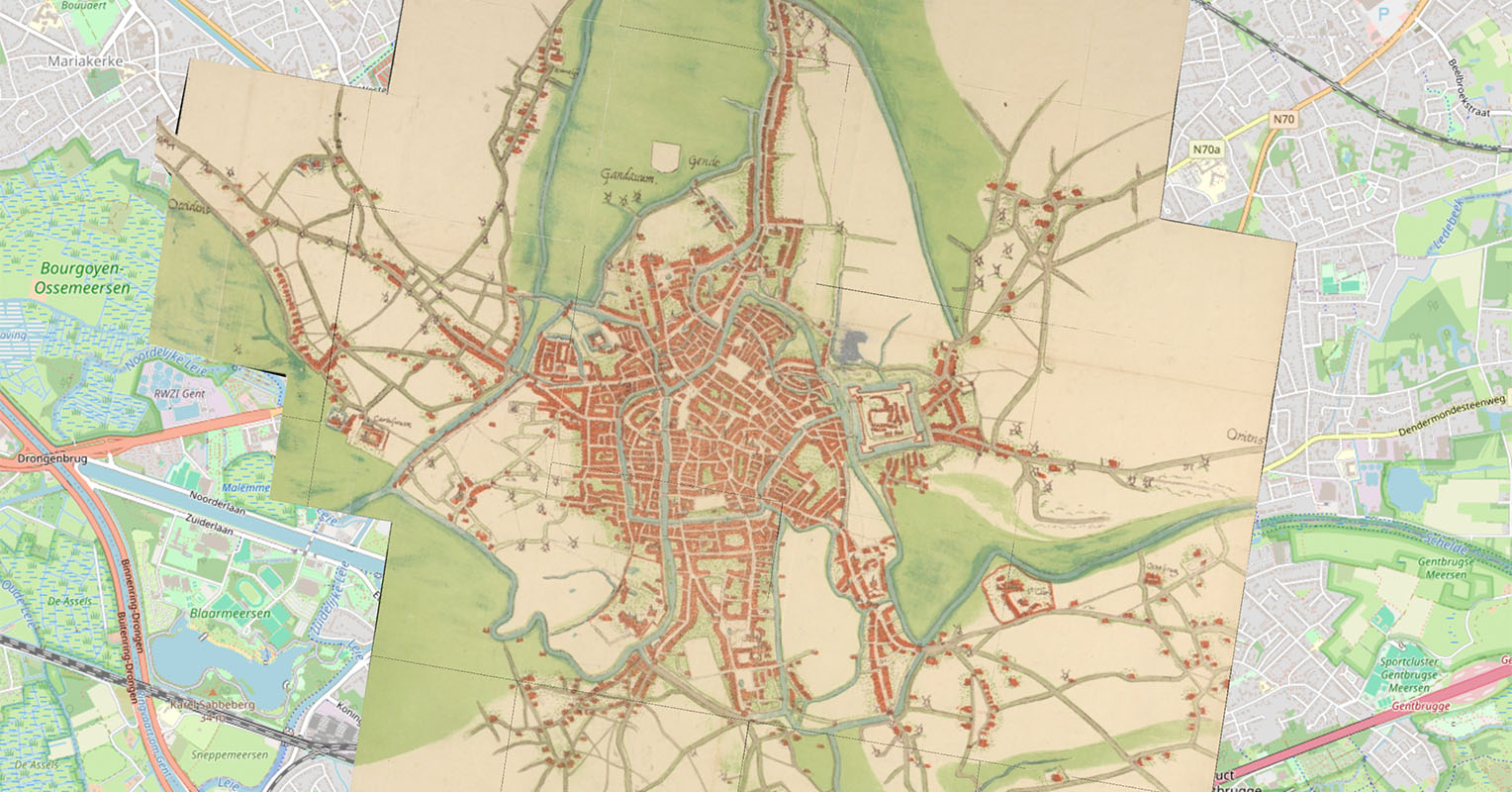
Examples:
How it works
This plugin exports the class WarpedMapLayer that extends L.Layer. You can add one or multiple Georeference Annotations (or AnnotationPages that contain multiple Georeference Annotations) to a WarpedMapLayer, and add the WarpedMapLayer to your Leaflet map. This will render all georeferenced maps defined by the Georeference Annotations.
To understand what happens under the hood for each georeferenced map, see the @allmaps/render package.
This plugin implements a lot of methods from @allmaps/warpedmaplayer, the core package gathering the functionality connecting the Allmaps plugins to the @allmaps/render package.
Installation
This package works in browsers and in Node.js as an ESM or an UMD module.
Install with pnpm:
npm install @allmaps/leafletYou can optionally build this package locally by running:
pnpm run buildThe easiest way to test this package during local development is via @allmaps/test-plugins. A minimal example is also included in ./index.html and can be served via pnpm run dev.
Usage
Built for Leaflet 1.9, but should work with earlier versions as well.
Adding a WarpedMapLayer to a MapLibre Map
Creating a WarpedMapLayer and adding it to a map looks like this:
import L from 'leaflet'
import { WarpedMapLayer } from '@allmaps/leaflet'
const map = L.map('map', {
center: [51.0518, 3.7278],
zoom: 14,
// Zoom animations for more than one zoom level are
// currently not supported by the Allmaps plugin for Leaflet
zoomAnimationThreshold: 1
})
L.tileLayer('https://tile.openstreetmap.org/{z}/{x}/{y}.png', {
attribution:
'© <a href="https://www.openstreetmap.org/copyright">OpenStreetMap</a> contributors'
}).addTo(map)
const annotationUrl =
'https://annotations.allmaps.org/maps/2d49b3ecd1ba6346'
const warpedMapLayer = new WarpedMapLayer(annotationUrl).addTo(map)When adding this WarpedMapLayer to the Leaflet map, the georeferenced map specified in the Georeference Annotation will be rendered on the Leaflet map.
Ways to load Georeference Annotations
Once the layer has been added to the map, a Georeference Annotation can be added to a WarpedMapLayer using the addGeoreferenceAnnotation and addGeoreferenceAnnotationByUrl functions:
fetch(annotationUrl)
  .then((response) => response.json())
  .then((annotation) => warpedMapLayer.addGeoreferenceAnnotation(annotation))
Or:
await warpedMapLayer.addGeoreferenceAnnotationByUrl(annotationUrl)It's also possible to create a WarpedMapList first and pass it to the layer on creation. This has the advantage of being able to compute properties of a WarpedMapList first, e.g. getting the bounds and passing it to the Leaflet Map.
import L from 'leaflet'
import { WarpedMapLayer } from '@allmaps/leaflet'
import { WarpedMapList } from '@allmaps/render'
import { WebGL2WarpedMap } from '@allmaps/render/webgl2'
const annotationUrl =
'https://annotations.allmaps.org/manifests/8f9faeba73d67031'
const annotation = await fetch(annotationUrl).then((response) =>
response.json()
)
const warpedMapList = new WarpedMapList<WebGL2WarpedMap>()
await warpedMapList.addGeoreferenceAnnotation(annotation)
const bbox = warpedMapList.getMapsBbox()
const map = L.map('map', {
// Zoom animations for more than one zoom level are
// currently not supported by the Allmaps plugin for Leaflet
zoomAnimationThreshold: 1
})
L.tileLayer('https://tile.openstreetmap.org/{z}/{x}/{y}.png', {
attribution:
'© <a href="https://www.openstreetmap.org/copyright">OpenStreetMap</a> contributors'
}).addTo(map)
const warpedMapLayer = new WarpedMapLayer(undefined, { warpedMapList }).addTo(map)
if (bbox) {
map.fitBounds([ [ bbox[0], bbox[1] ], [ bbox[2], bbox[3] ] ])
}Note that the ...ByUrl() functions are not available on a WarpedMapList.
WarpedMapLayer API, Options and Events
See the @allmaps/warpedmaplayer package for the API documentation of the methods coming from the WarpedMapLayer class (shared by all Allmaps plugins). It describes the methods like addGeoreferenceAnnotation() and includes a list of all options that can be set on instances of the class and all events which are passed to the native map instance hosting the layer instance.
You can set options on the entire layer, or on a specific map on the layer (overwriting layer options):
warpedMapLayer.setLayerOptions({ visible: true })
warpedMapLayer.setMapOptions(mapId, { visible: true })
You can listen to events in the typical way:
map.on('warpedmapadded', (event) => {
  console.log(event.mapIds)
})
License
MIT
API
LeafletWarpedMapLayerOptions
Type
SpecificLeafletWarpedMapLayerOptions & Partial<WebGL2RenderOptions>new WarpedMapLayer(annotationOrAnnotationUrl, options)
Creates a WarpedMapLayer
Parameters
annotationOrAnnotationUrl(unknown)- Georeference Annotation or URL of a Georeference Annotation
options?(Partial<LeafletWarpedMapLayerOptions> | undefined)- Options for the layer
Returns
WarpedMapLayer.
Extends
BaseWarpedMapLayer
WarpedMapLayer#_animateZoom(event)
Parameters
event(L.ZoomAnimEvent)
Returns
void.
WarpedMapLayer#_annotationOrAnnotationUrl
Type
unknownWarpedMapLayer#_initGl()
Parameters
There are no parameters.
Returns
void.
WarpedMapLayer#_resized(entries)
Parameters
entries(Array<ResizeObserverEntry>)
Returns
void.
WarpedMapLayer#_unload()
Parameters
There are no parameters.
Returns
void.
WarpedMapLayer#_update()
Parameters
There are no parameters.
Returns
HTMLDivElement | undefined.
WarpedMapLayer#_updateZIndex()
Parameters
There are no parameters.
Returns
void.
WarpedMapLayer#addEventListeners()
Parameters
There are no parameters.
Returns
void.
WarpedMapLayer#addGeoreferenceAnnotation(annotation, mapOptions, batchOptions)
Adds a Georeference Annotation
Parameters
annotation(unknown)- Georeference Annotation
mapOptions?(Partial<WebGL2WarpedMapOptions> | undefined)- Map options
batchOptions?(Partial<BatchOptions> | undefined)
Returns
Map IDs of the maps that were added, or an error per map (Array<BatchMapResult>).
WarpedMapLayer#addGeoreferenceAnnotationByUrl(annotationUrl, mapOptions, batchOptions)
Adds a Georeference Annotation by URL
Parameters
annotationUrl(string)- URL of a Georeference Annotation
mapOptions?(Partial<WebGL2WarpedMapOptions> | undefined)- Map options
batchOptions?(Partial<BatchOptions> | undefined)
Returns
Map IDs of the maps that were added, or an error per map (Promise<Array<BatchMapResult>>).
WarpedMapLayer#addGeoreferencedMap(georeferencedMap, mapOptions)
Adds a Georeferenced Map
Parameters
georeferencedMap(unknown)- Georeferenced Map
mapOptions?(Partial<WebGL2WarpedMapOptions> | undefined)- Map options
Returns
Map ID of the map that was added (string).
WarpedMapLayer#addImageInfos(imageInfos)
Adds image information to the WarpedMapList's image information cache
Parameters
imageInfos(Array<unknown>)- Image informations
Returns
Image IDs of the image informations that were added (Array<string>).
WarpedMapLayer#addSprites(sprites, imageUrl, imageSize)
Adds sprites to the Renderer's sprite tile cache
This adds tiles from sprites to warped maps in WarpedMapList. Load maps before running this function. This uses the image info of related maps. When using addImageInfos(), call it before calling this function.
Parameters
sprites(Array<Sprite>)- Sprites
imageUrl(string)- Image url
imageSize([number, number])- Image size
Returns
Promise<void>.
WarpedMapLayer#bringMapsForward(mapIds)
Bring maps forward
Parameters
mapIds(Iterable<string>)- IDs of the maps
Returns
void.
WarpedMapLayer#bringMapsToFront(mapIds)
Bring maps to front
Parameters
mapIds(Iterable<string>)- IDs of the maps
Returns
void.
WarpedMapLayer#bringToBack()
Brings the layer to the back of other overlays (in the same map pane).
Parameters
There are no parameters.
Returns
this.
WarpedMapLayer#bringToFront()
Brings the layer in front of other overlays (in the same map pane).
Parameters
There are no parameters.
Returns
this.
WarpedMapLayer#canvas?
Type
HTMLCanvasElementWarpedMapLayer#clear()
Removes all warped maps from the layer
Parameters
There are no parameters.
Returns
void.
WarpedMapLayer#container?
Type
HTMLDivElementWarpedMapLayer#contextLost(event)
Parameters
event(Event)
Returns
void.
WarpedMapLayer#contextRestored(event)
Parameters
event(Event)
Returns
void.
WarpedMapLayer#defaultSpecificWarpedMapLayerOptions
Type
{
  interactive: boolean
  className: string
  pane: string
  zIndex?: number
}
WarpedMapLayer#getBbox(options)
Get the bounding box of all maps in the layer
The result is returned in lon-lat EPSG:4326 by default.
Note: more selection options are available on this function of WarpedMapList
Parameters
options?(Partial<ProjectionOptions & MaskOptions> | undefined)- Mask and projection options, defaults to applied mask and current projection
Returns
The bbox of all maps, in the chosen projection, or undefined if there were no maps (Bbox | undefined).
WarpedMapLayer#getBounds()
Returns the bounds of all visible maps (inside or outside of the Viewport), in latitude/longitude coordinates.
Parameters
There are no parameters.
Returns
[Point, Point] | undefined.
- L.LatLngBounds in array form of all visible maps
WarpedMapLayer#getCenter(options)
Get the center of the bounding box of all maps in the layer
The result is returned in lon-lat EPSG:4326 by default.
Note: more selection options are available on this function of WarpedMapList
Parameters
options?(Partial<ProjectionOptions & MaskOptions> | undefined)- Mask and projection options, defaults to applied mask and current projection
Returns
The center of the bbox of all maps, in the chosen projection, or undefined if there were no maps (Point | undefined).
WarpedMapLayer#getConvexHull(options)
Get the convex hull of all maps in the layer
The result is returned in lon-lat EPSG:4326 by default.
Note: more selection options are available on this function of WarpedMapList
Parameters
options?(Partial<ProjectionOptions & MaskOptions> | undefined)- Mask and projection options, defaults to applied mask and current projection
Returns
The convex hull of all maps, in the chosen projection, or undefined if there were no maps (Ring | undefined).
WarpedMapLayer#getDefaultOptions()
Get the default options the layer
Parameters
There are no parameters.
Returns
SpecificLeafletWarpedMapLayerOptions & Partial<WebGL2RenderOptions> & SpecificBaseRenderOptions<WebGL2WarpedMap> & Partial<...> & SpecificWebGL2WarpedMapOptions & SpecificTriangulatedWarpedMapOptions & WarpedMapOptions.
WarpedMapLayer#getLayerOptions()
Get the layer options
Parameters
There are no parameters.
Returns
{ fetchFn?: FetchFn | undefined; gcps?: Array<Gcp> | undefined; resourceMask?: Ring | undefined; transformationType?: TransformationType | undefined; ... 79 more ...; zIndex?: number | undefined; }.
WarpedMapLayer#getMapDefaultOptions(mapId)
Get the default options of a map
These come from the default option settings for WebGL2WarpedMaps and the map's georeferenced map proporties
Parameters
mapId(string)- Map ID for which the options apply
Returns
WebGL2WarpedMapOptions | undefined.
WarpedMapLayer#getMapIds()
Get mapIds for all maps in the layer
Note: more selection options are available on this function of WarpedMapList
Parameters
There are no parameters.
Returns
The mapIds of all maps (Array<string>).
WarpedMapLayer#getMapMapOptions(mapId)
Get the map-specific options of a map
Parameters
mapId(string)- Map ID for which the options apply
Returns
Partial<WebGL2WarpedMapOptions> | undefined.
WarpedMapLayer#getMapOptions(mapId)
Get the options of a map
These options are the result of merging the default, georeferenced map, layer and map-specific options of that map.
Parameters
mapId(string)- Map ID for which the options apply
Returns
WebGL2WarpedMapOptions | undefined.
WarpedMapLayer#getMapZIndex(mapId)
Get the z-index of a map
Parameters
mapId(string)- Map ID for which to get the z-index
Returns
The z-index of a map (number | undefined).
WarpedMapLayer#getMapsBbox(mapIds, options)
Get the bounding box of all selected maps
The result is returned in lon-lat EPSG:4326 by default.
Note: more selection options are available on this function of WarpedMapList
Parameters
mapIds(Array<string>)- Map IDs
options?(Partial<ProjectionOptions & MaskOptions> | undefined)- Mask and projection options, defaults to applied mask and current projection
Returns
The bbox of all selected maps, in the chosen projection, or undefined if there were no maps matching the selection (Bbox | undefined).
WarpedMapLayer#getMapsCenter(mapIds, options)
Get the center of the bounding box of all selected maps
The result is returned in lon-lat EPSG:4326 by default.
Note: more selection options are available on this function of WarpedMapList
Parameters
mapIds(Array<string>)- Map IDs
options?(Partial<ProjectionOptions & MaskOptions> | undefined)- Mask and projection options, defaults to applied mask and current projection
Returns
The center of the bbox of all selected maps, in the chosen projection, or undefined if there were no maps matching the selection (Point | undefined).
WarpedMapLayer#getMapsConvexHull(mapIds, options)
Get the convex hull of all selected maps maps
The result is returned in lon-lat EPSG:4326 by default.
Note: more selection options are available on this function of WarpedMapList
Parameters
mapIds(Array<string>)- Map IDs
options?(Partial<ProjectionOptions & MaskOptions> | undefined)- Mask and projection options, defaults to applied mask and current projection
Returns
The convex hull of all selected maps, in the chosen projection, or undefined if there were no maps matching the selection (Ring | undefined).
WarpedMapLayer#getOpacity()
Get the layer opacity
Returns a number between 0 and 1 (the default)
Parameters
There are no parameters.
Returns
number.
WarpedMapLayer#getWarpedMap(mapId)
Get the WarpedMap instance for a map
Parameters
mapId(string)- Map ID of the requested WarpedMap instance
Returns
WebGL2WarpedMap | undefined.
WarpedMapLayer#getWarpedMapList()
Get the WarpedMapList object that contains a list of the warped maps of all loaded maps
Parameters
There are no parameters.
Returns
WarpedMapList<WebGL2WarpedMap>.
WarpedMapLayer#getWarpedMaps(mapIds)
Get the WarpedMap instances for all maps, or all selected maps
If no argument is passed, the WarpedMap instance of all maps in the layer is passed
Note: more selection options are available on this function of WarpedMapList
Parameters
mapIds?(Array<string> | undefined)- Map IDs
Returns
The WarpedMap instance of all (selected) map (Array<WebGL2WarpedMap>).
WarpedMapLayer#getZIndex()
Gets the z-index of the layer.
Parameters
There are no parameters.
Returns
number | undefined.
WarpedMapLayer#gl?
Type
WebGL2RenderingContextWarpedMapLayer#initialize(annotationOrAnnotationUrl, options)
Parameters
annotationOrAnnotationUrl(unknown)options?(Partial<LeafletWarpedMapLayerOptions> | undefined)
Returns
void.
WarpedMapLayer#nativePassWarpedMapEvent(event)
Parameters
event(Event)
Returns
void.
WarpedMapLayer#nativeUpdate()
Parameters
There are no parameters.
Returns
void.
WarpedMapLayer#onAdd(map)
Contains all code code that creates DOM elements for the layer and adds them to map panes where they belong.
Parameters
map(L.Map)
Returns
this.
WarpedMapLayer#onRemove(map)
Contains all cleanup code that removes the layer's elements from the DOM.
Parameters
map(L.Map)
Returns
this.
WarpedMapLayer#options
Type
SpecificLeafletWarpedMapLayerOptions & Partial<WebGL2RenderOptions>WarpedMapLayer#removeEventListeners()
Parameters
There are no parameters.
Returns
void.
WarpedMapLayer#removeGeoreferenceAnnotation(annotation, batchOptions)
Removes a Georeference Annotation
Parameters
annotation(unknown)- Georeference Annotation
batchOptions?(Partial<BatchOptions> | undefined)
Returns
Map IDs of the maps that were removed, or an error per map (Array<BatchMapResult>).
WarpedMapLayer#removeGeoreferenceAnnotationByUrl(annotationUrl, batchOptions)
Removes a Georeference Annotation by URL
Parameters
annotationUrl(string)- URL of a Georeference Annotation
batchOptions?(Partial<BatchOptions> | undefined)
Returns
Map IDs of the maps that were removed, or an error per map (Promise<Array<BatchMapResult>>).
WarpedMapLayer#removeGeoreferencedMap(georeferencedMap)
Removes a Georeferenced Map
Parameters
georeferencedMap(unknown)- Georeferenced Map
Returns
Map ID of the map that was removed (string).
WarpedMapLayer#removeGeoreferencedMapById(mapId)
Removes a Georeferenced Map by its ID
Parameters
mapId(string)- Map ID of the georeferenced map to remove
Returns
Map ID of the map that was removed (string).
WarpedMapLayer#renderer?
Type
WebGL2RendererWarpedMapLayer#resetLayerOptions(layerOptionKeys, animationOptions)
Reset the layer options
Undefined option keys reset all options
Doesn't reset render options or specific warped map layer options. Use setOptions() instead.
Parameters
layerOptionKeys?(Array<string> | undefined)- Keys of the layer options to reset
animationOptions?(Partial<AnimationOptions> | undefined)- Animation options
Returns
void.
WarpedMapLayer#resetMapsAndListOptions(mapIds, mapsOptionKeys, layerOptionKeys, animationOptions)
Reset the map-specific options of the specified maps, and the layer options
Omitting mapsOptionKeys or layerOptionKeys resets all options for that scope;
passing an empty array resets none.
Parameters
mapIds(Array<string>)- IDs of the maps whose options to reset
mapsOptionKeys?(| Array< | keyof SpecificTriangulatedWarpedMapOptions | keyof SpecificWebGL2WarpedMapOptions | keyof WarpedMapOptions > | undefined)- Keys of the map-specific options to reset
layerOptionKeys?(| Array< | keyof SpecificTriangulatedWarpedMapOptions | keyof SpecificWebGL2WarpedMapOptions | keyof WarpedMapOptions > | undefined)- Keys of the layer options to reset
animationOptions?(Partial<AnimationOptions> | undefined)- Animation options
Returns
void.
WarpedMapLayer#resetMapsOptions(mapIds, mapsOptionKeys, animationOptions)
Reset the map-specific options of the specified maps
Omitting mapsOptionKeys resets all options; passing an empty array resets none.
Parameters
mapIds(Array<string>)- IDs of the maps whose options to reset
mapsOptionKeys?(| Array< | keyof SpecificTriangulatedWarpedMapOptions | keyof SpecificWebGL2WarpedMapOptions | keyof WarpedMapOptions > | undefined)- Keys of the options to reset
animationOptions?(Partial<AnimationOptions> | undefined)- Animation options
Returns
void.
WarpedMapLayer#resizeObserver
Type
ResizeObserver | undefinedWarpedMapLayer#sendMapsBackward(mapIds)
Send maps backward
Parameters
mapIds(Iterable<string>)- IDs of the maps
Returns
void.
WarpedMapLayer#sendMapsToBack(mapIds)
Send maps to back
Parameters
mapIds(Array<string>)- IDs of the maps
Returns
void.
WarpedMapLayer#setLayerOptions(layerOptions, animationOptions)
Set the layer options
Doesn't set render options or specific warped map layer options. Use setOptions() instead.
Parameters
layerOptions?(Partial<WarpedMapListOptions<WebGL2WarpedMap>> | undefined)- Layer options to set
animationOptions?(Partial<AnimationOptions> | undefined)- Animation options
warpedMapLayer.setLayerOptions({ transformationType: 'thinPlateSpline' })
Returns
void.
WarpedMapLayer#setLayerTransformationType(transformationType, animationOptions)
Set the transformation type of the layer
Parameters
transformationType?(TransformationType | undefined)- Transformation type to set
animationOptions?(Partial<AnimationOptions> | undefined)- Animation options
Returns
void.
WarpedMapLayer#setMapGcps(mapId, gcps, animationOptions)
Set the GCPs of a map
This only sets the map-specific gcps option of the map
(or more specifically of the warped map used for rendering),
overwriting the original GCPs inferred from the Georeference Annotation.
The original GCPs can be reset by resetting the map-specific GCPs option,
and stay accessible in the warped map's map property.
Parameters
mapId(string)- Map ID for which to set the options
gcps(Array<Gcp>)- GCPs to set
animationOptions?(Partial<AnimationOptions> | undefined)- Animation options
Returns
void.
WarpedMapLayer#setMapOptions(mapId, mapOptions, animationOptions)
Set the map-specific options of a map
In general setting a map-specific option also sets the corresponding option of the map, since these are the result of merging the default, georeferenced map, layer and map-specific options of that map.
A special case is setting a map-specific option to undefined:
then the corresponding option is derived from the default, georeferenced map or layer option.
This is equivalent to using the reset function for map-specific option.
Parameters
mapId(string)- Map ID for which to set the options
mapOptions({ fetchFn?: FetchFn | undefined; gcps?: Array<Gcp> | undefined; resourceMask?: Ring | undefined; transformationType?: TransformationType | undefined; ... 59 more ...; debugTiles?: boolean | undefined; })- Map-specific options to set
animationOptions?(Partial<AnimationOptions> | undefined)- Animation options
Returns
void.
Examples
warpedMapLayer.setMapOptions(myMapId, { transformationType: 'thinPlateSpline' })WarpedMapLayer#setMapResourceMask(mapId, resourceMask, animationOptions)
Set the resource mask of a map
This only sets the map-specific resourceMask option of the map
(or more specifically of the warped map used for rendering),
overwriting the original resource mask inferred from the Georeference Annotation.
The original resource mask can be reset by resetting the map-specific resource mask option,
and stays accessible in the warped map's map property.
Parameters
mapId(string)- Map ID for which to set the options
resourceMask(Array<Point>)- Resource mask to set
animationOptions?(Partial<AnimationOptions> | undefined)- Animation options
Returns
void.
WarpedMapLayer#setMapTransformationType(mapId, transformationType, animationOptions)
Set the transformation type of a map
This only sets the map-specific transformationType option of the map
(or more specifically of the warped map used for rendering),
overwriting the original transformation type inferred from the Georeference Annotation.
The original transformation type can be reset by resetting the map-specific transformation type option,
and stays accessible in the warped map's map property.
Parameters
mapId(string)- Map ID for which to set the options
transformationType?(TransformationType | undefined)- Transformation type to set
animationOptions?(Partial<AnimationOptions> | undefined)- Animation options
Returns
void.
WarpedMapLayer#setMapsAndLayerOptions(mapIds, mapsOptions, layerOptions, animationOptions)
Set the map-specific options of the specified maps, and the layer options
Useful when map-specific options are changed for multiple maps at once, together with the layer options, but only one animation should be fired.
Doesn't set render options or specific warped map layer options. Use setOptions() instead.
Parameters
mapIds(Array<string>)- IDs of the maps whose options to set
mapsOptions?(Partial<WebGL2WarpedMapOptions> | undefined)- Map-specific options to apply to each of those maps
layerOptions?(Partial<WarpedMapListOptions<WebGL2WarpedMap>> | undefined)- Layer options to apply
animationOptions?(Partial<AnimationOptions> | undefined)- Animation options
Returns
void.
Examples
warpedMapLayer.setMapsAndLayerOptions([myMapId], { transformationType: 'thinPlateSpline' }, { visible: true })WarpedMapLayer#setMapsOptions(mapIds, mapsOptions, animationOptions)
Set the map-specific options of the specified maps
In general setting a map-specific option also sets the corresponding option of the map, since these are the result of merging the default, georeferenced map, layer and map-specific options of that map.
A special case is setting a map-specific option to undefined:
then the corresponding option is derived from the default, georeferenced map or layer option.
This is equivalent to using the reset function for map-specific option.
Useful when map-specific options are changed for multiple maps at once, but only one animation should be fired.
Parameters
mapIds(Array<string>)- Map IDs of the maps whose options to set
mapsOptions?(Partial<WebGL2WarpedMapOptions> | undefined)- Map-specific options to apply to each of those maps
animationOptions?(Partial<AnimationOptions> | undefined)- Animation options
Returns
void.
Examples
warpedMapLayer.setMapsOptions([myMapId], { transformationType: 'thinPlateSpline' })WarpedMapLayer#setMapsTransformationType(mapIds, transformationType, animationOptions)
Set the transformation type of maps
This only sets the map-specific transformationType option of the map
(or more specifically of the warped map used for rendering),
overwriting the original transformation type inferred from the Georeference Annotation.
The original transformation type can be reset by resetting the map-specific transformation type option,
and stays accessible in the warped map's map property.
Parameters
mapIds(Array<string>)- Map IDs for which to set the options
transformationType?(TransformationType | undefined)- Transformation type to set
animationOptions?(Partial<AnimationOptions> | undefined)- Animation options
Returns
void.
WarpedMapLayer#setOpacity(opacity)
Set the layer opacity
Parameters
opacity(number)- Layer opacity to set
Returns
void.
WarpedMapLayer#setOptions(options)
Set the options
Parameters
options?(| Partial<LeafletWarpedMapLayerOptions> | Partial<WebGL2RenderOptions> | undefined)- Options to set
Returns
void.
WarpedMapLayer#setZIndex(value)
Changes the z-index of the layer.
Parameters
value(number)- z-index
Returns
this.