
@builder.io/plugin-phrase-connector
v0.0.17
Published
## Installation

Maintainers
 steve8708
 samijaber
 teleaziz123
 mrkoreye
 mhevery
 gustavohgs
 manucorporat
 sanyamkamat
 bengirone
 kylefowler
 builderio-bot
 armela
 aishwarya_parab
 emmaac
 sidmohanty11
 jcortesebuilder
 vishwasgopinath
 nicholaskipchumba
 floating_dynamo
 paprikaf
 pabloelisseo
 liamdebeasi
Keywords
Readme
Builder.io Phrase Integration Plugin
Installation
From the plugins tab, pick Phrase, it'll ask you for your phrase user name and password, make sure the user has a Project Manager role.
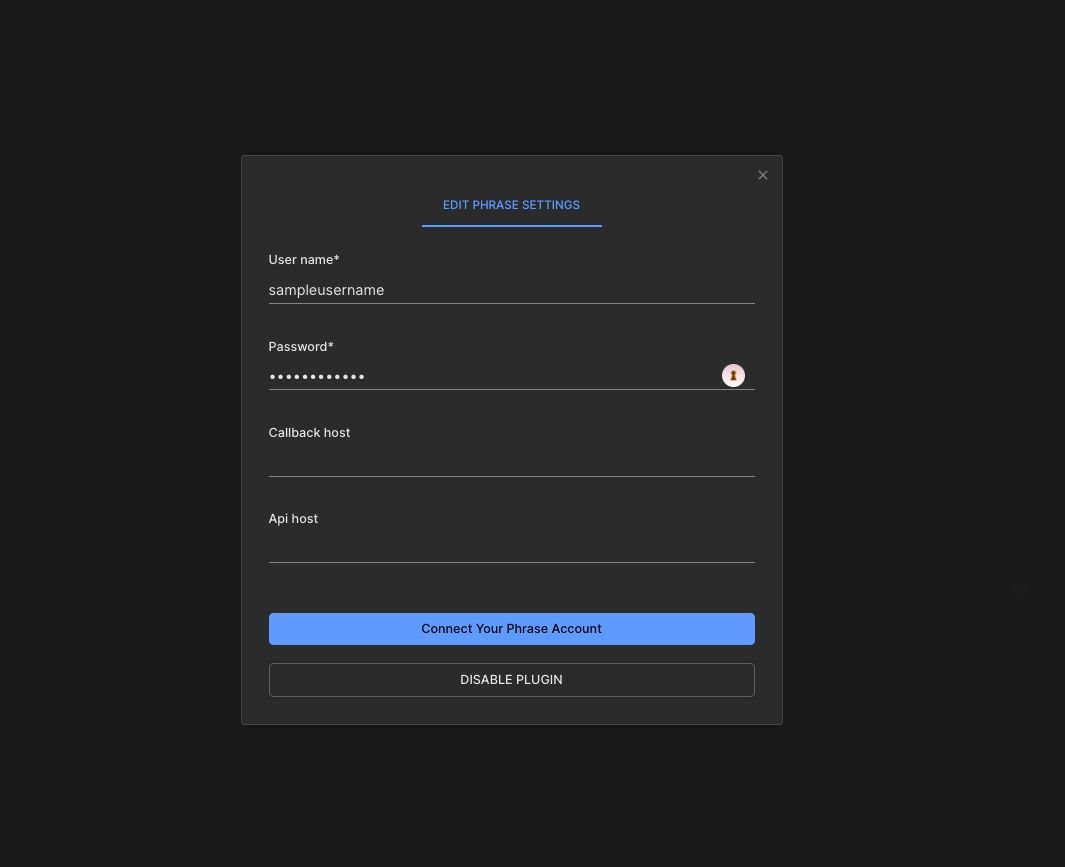
Authentication
The plugin supports two authentication modes, selected via the Authentication dropdown in the plugin settings:
- Username / password (default) — the classic flow. Enter the Phrase username and password of a user with a
Project Managerrole. - SSO / OAuth 2.0 — recommended for organizations that enforce SSO (where username/password login is blocked). Each organization registers its own Phrase OAuth app and connects via a login popup; no password is stored.
Both modes are fully supported. You can switch between them at any time, and switching does not delete the other mode's stored credentials.
Switching to OAuth (SSO)
Prerequisites
- A Phrase TMS user with an Administrator profile (required both to register the OAuth app and to approve the connection).
- Your Phrase data center: US (
us.cloud.memsource.com) or EU/default (cloud.memsource.com).
Part A — Register an OAuth app in Phrase
- Sign in to Phrase TMS as an Administrator.
- Go to Settings → Integrations → Registered OAuth Apps.
- Create a new OAuth app.
- Set the Redirect URI exactly to:
If Builder gave you a custom API host, use that host with the samehttps://cdn.builder.io/api/v1/memsource/oauth/callback/api/v1/memsource/oauth/callbackpath. - Save the app and copy the Client ID. Phrase does not issue a client secret — that's expected; only the Client ID is needed.
Part B — Connect the Builder plugin
- In Builder, open Space Settings → Integrations → Phrase.
- Set Authentication to SSO / OAuth 2.0.
- If your Phrase account is on the US data center, enable "Account's data center is US based."
- Paste the Client ID from Part A into OAuth Client ID.
- Click Connect to Phrase.
- In the popup, log in with an Administrator profile and click Allow.
- Confirm the panel shows ✓ Connected to Phrase, then Save the settings.
How the connection works
sequenceDiagram
    participant U as User (Builder)
    participant P as Plugin UI
    participant B as Builder API
    participant Ph as Phrase

    U->>P: Set OAuth mode + Client ID, click Connect
    P->>B: POST /oauth/prepare (Client ID, data center)
    B-->>P: one-time state token
    P->>B: open popup /oauth/start?state=...
    B->>Ph: redirect to /oauth/authorize
    U->>Ph: Log in (Admin) + Allow
    Ph->>B: redirect /oauth/callback?code&state
    B->>Ph: exchange code for tokens
    B->>B: store tokens (server-side) + clear state
    B-->>P: postMessage: connected (metadata only)
    P-->>U: ✓ Connected to Phrase
The access token is stored and used only on the Builder server; the browser only ever receives connection metadata.
Verify
Run a Translate action on any entry — it should create the Phrase project/job as usual.
Good to know
- Each organization registers its own OAuth app; the Client ID is per-org and entered in plugin settings (there is no shared, Builder-wide client).
- Phrase access tokens are short-lived (~1h) and Phrase often issues no refresh token. If a translation action reports "Phrase OAuth session expired. Please reconnect," click Connect to Phrase again. This is uncommon day-to-day but is the expected reconnect path.
- To revert, switch Authentication back to Username / password — the previously entered credentials are still stored.
- Use Disconnect from Phrase in the connection panel to revoke the stored OAuth token.
Translating content
What's being translated:
- All text elements in builder content [you can exclude specific element by right click +
exclude from future translations] - All custom fields in content that are marked as
localized - All custom components inputs that are marked as
localized
How To translate?
- once done with preparing content, publish it, and press the triple dots options menu on the top right of the editor:
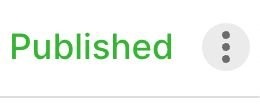
Then click Translate
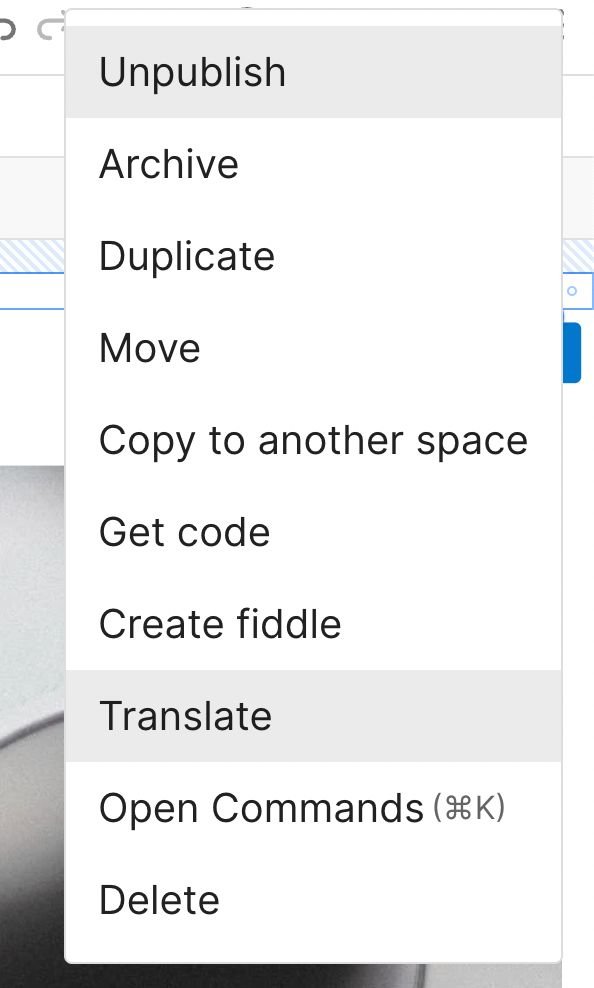
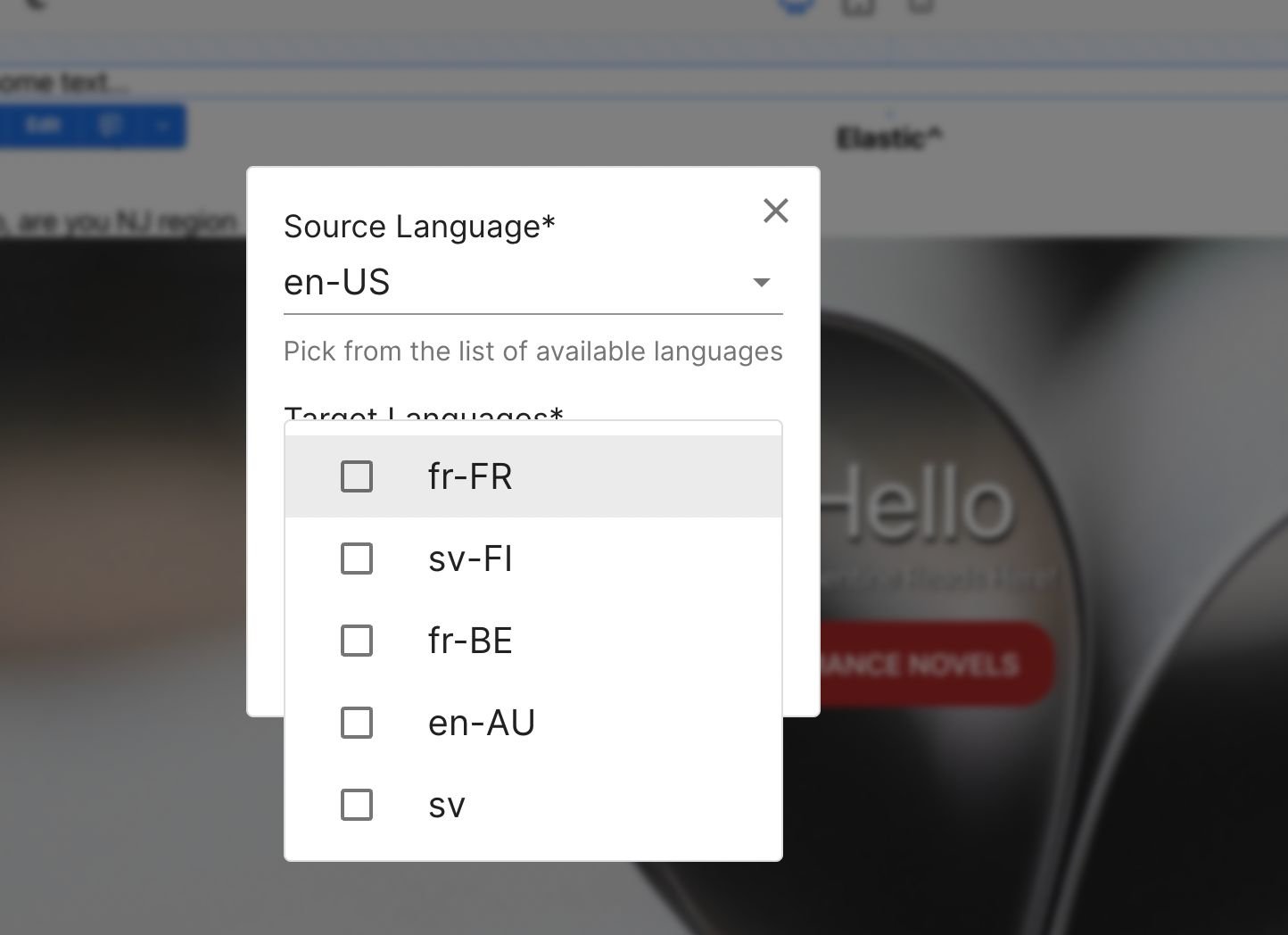
- it'll ask you for the source language and target languages and create a project in phrase with those configuration.
- once the project is completed, press on
Apply Translationto get the translated values into your content. - You can at any time restart the process by pressing on
Reset Translation.
Future work:
- Automating the translation application on content once a project is completed in phrase.