npm package discovery and stats viewer.

Discover Tips

  • General search

    [free text search, go nuts!]

  • Package details

    pkg:[package-name]

  • User packages

    @[username]

Sponsor

Optimize Toolset

I’ve always been into building performant and accessible sites, but lately I’ve been taking it extremely seriously. So much so that I’ve been building a tool to help me optimize and monitor the sites that I build to make sure that I’m making an attempt to offer the best experience to those who visit them. If you’re into performant, accessible and SEO friendly sites, you might like it too! You can check it out at Optimize Toolset.

About

Hi, 👋, I’m Ryan Hefner  and I built this site for me, and you! The goal of this site was to provide an easy way for me to check the stats on my npm packages, both for prioritizing issues and updates, and to give me a little kick in the pants to keep up on stuff.

As I was building it, I realized that I was actually using the tool to build the tool, and figured I might as well put this out there and hopefully others will find it to be a fast and useful way to search and browse npm packages as I have.

If you’re interested in other things I’m working on, follow me on Twitter or check out the open source projects I’ve been publishing on GitHub.

I am also working on a Twitter bot for this site to tweet the most popular, newest, random packages from npm. Please follow that account now and it will start sending out packages soon–ish.

Open Software & Tools

This site wouldn’t be possible without the immense generosity and tireless efforts from the people who make contributions to the world and share their work via open source initiatives. Thank you 🙏

© 2026 – Pkg Stats / Ryan Hefner

@hoptrendy/hopcode

v0.23.0

Published

HopCode - AI-powered coding assistant

Readme

npm version License Node.js Version VS Code Downloads

An open-source AI agent that lives in your terminal — works with any model provider.

中文 | Deutsch | français | 日本語 | Русский | Português (Brasil)

🎉 News

  • 2026-04-19: 🎸 VS Code Extension v0.14.8 published to the VS Code Marketplace. Install directly from VS Code!

  • 2026-04-19: ✨ Skills System launched — 5 built-in skills (spec-driven, git-workflow, codebase-map, changelog, mcp-builder). Run hopcode skills list to see them.

  • 2026-04-15: Qwen OAuth provider has been discontinued. Switch to OpenRouter, Fireworks AI, any compatible API provider, or run models locally via Ollama. Run hopcode auth to configure.

Why HopCode?

HopCode is an open-source AI agent for the terminal that works with any LLM provider — cloud or local. It helps you understand large codebases, automate tedious work, and ship faster.

  • Any provider, any model: OpenAI, Anthropic, Google Gemini, Mistral, DeepSeek, Groq, Together AI, Fireworks AI, Cohere, xAI Grok, OpenRouter (100+ models), Ollama / vLLM (local), and any OpenAI-compatible endpoint. 15+ native provider SDKs — more deep integrations than any competitor.
  • Skills system: modular, auto-loaded skills extend HopCode's capabilities — run hopcode skills list to see bundled skills or add your own.
  • Agentic workflow, feature-rich: built-in tools for file editing, shell execution, web search, sub-agents, and full agentic loops — a Claude Code-like experience.
  • VS Code extension: the only terminal AI agent with a native VS Code Marketplace extension — install directly from VS Code for in-editor AI assistance. No JSON-RPC setup required.
  • Terminal-first, IDE-friendly: built for developers who live in the command line, with optional integration for VS Code, Zed, and JetBrains IDEs. Plus a web dashboard for browser-based workflows.
  • 🏟️ Arena mode (unique): run multiple AI models in parallel on the same task and compare outputs side-by-side. No other terminal agent has this.
  • 📊 Per-subagent /stats: track token usage, latency, and cost broken down by subagent — see exactly what each agent spent.
  • 🔍 LSP integration: native Language Server Protocol support for deep code intelligence — symbol navigation, hover info, and diagnostics powered by your language server.
  • 💬 Enterprise channels: WeChat and DingTalk integration for teams using Chinese enterprise platforms.
  • 🌐 Multi-language docs: documentation in 7 languages (EN, ZH, DE, FR, JA, RU, PT-BR).

HopCode CLI Screenshot

🏟️ Arena Mode — Unique to HopCode

Run multiple AI models simultaneously on the same prompt and compare their responses side-by-side. Use Arena mode to find the best model for any task without switching context.

# Start Arena mode with 3 models competing
hopcode --arena gpt-4o,claude-sonnet-4-5,deepseek-r1 "Refactor this function for readability"

Arena mode spawns parallel subagents — each using a different model — and streams their responses in synchronized columns. Use /stats to see per-subagent token usage and latency breakdown.

No competitor — not Hermes Agent, OpenClaude, Claude Code, or Cursor — offers multi-model parallel competition. Arena Mode is HopCode's exclusive superpower.

HopCode is also the only terminal agent with: a native VS Code Marketplace extension, LSP integration, a browser-based web dashboard, and 15+ native AI SDK provider integrations.

Installation

VS Code Extension

Install the HopCode companion directly from VS Code:

  1. Open VS Code → Extensions (Ctrl+Shift+X)
  2. Search for HopCode
  3. Click Install

Or install via the VS Code Marketplace.

CLI Installation (Recommended)

Prerequisites

Make sure you have Node.js 20 or later installed. Download it from nodejs.org.

NPM

npm install -g @hoptrendy/hopcode-cli@latest

Native installers and Homebrew packages are not published by this repository yet. Use the npm package above for the current supported CLI install path.

Quick Start

# Start HopCode (interactive)
hopcode

# Then, in the session:
/help
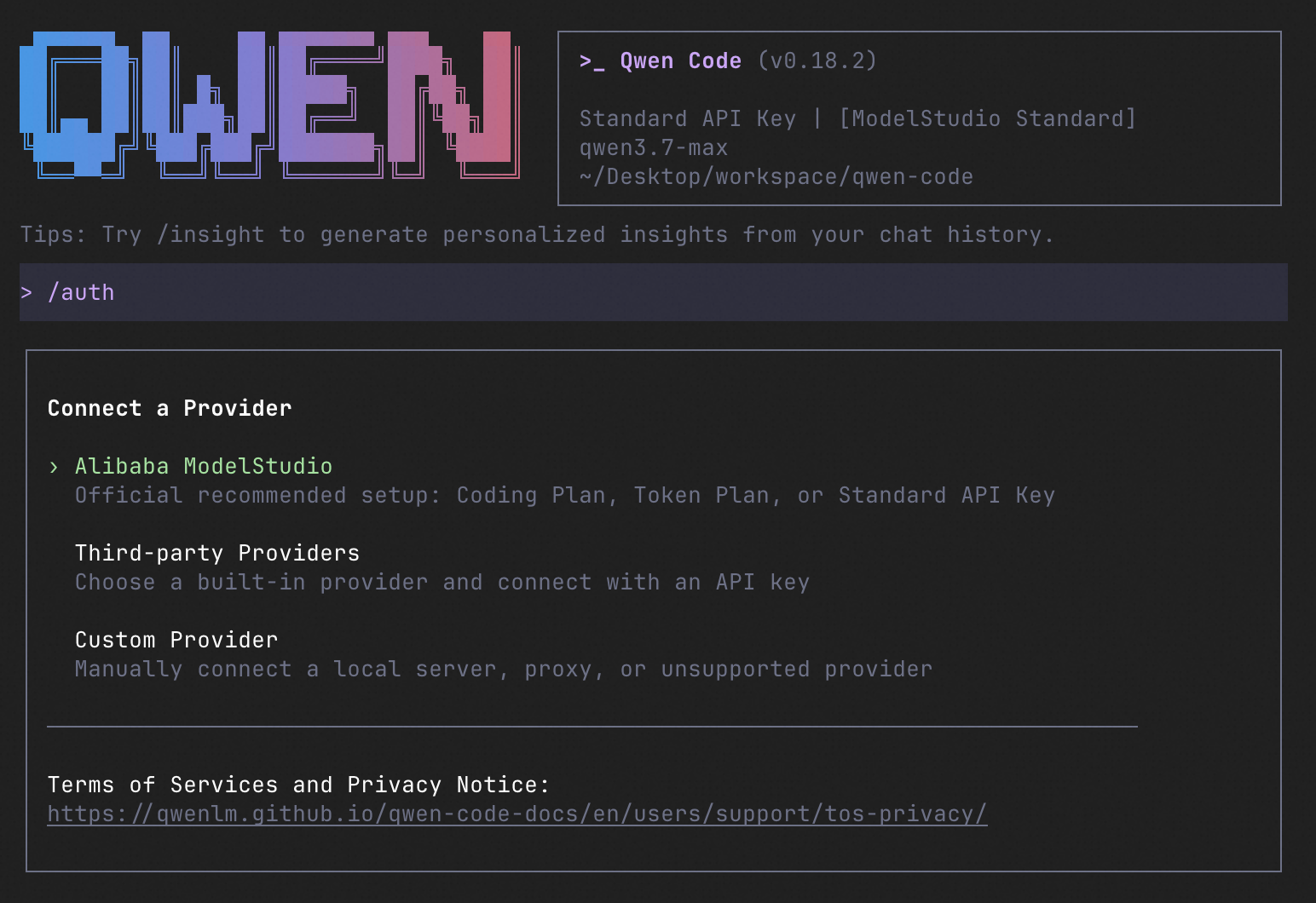
/auth

On first use, you'll be prompted to sign in. You can run /auth anytime to switch authentication methods.

Example prompts:

What does this project do?
Explain the codebase structure.
Help me refactor this function.
Generate unit tests for this module.

🦞 Use HopCode for Coding Tasks in Claw

Copy the prompt below and paste it into your agent:

Use HopCode as a coding agent. First, fetch and read this skill reference:
https://raw.githubusercontent.com/TaimoorSiddiquiOfficial/HopCode/refs/heads/main/.hopcode/skills/hopcode-claw/SKILL.md
Then follow the instructions inside to install, authenticate, and use HopCode via acpx for all coding tasks.

Authentication

HopCode works with any model provider that exposes an OpenAI-compatible API, plus native Anthropic and Google Gemini protocols.

Supported Providers

| Provider | Protocol | Notes | | ------------------------------------------------------ | ----------- | ----------------------------------- | | OpenAI | openai | GPT-4o, GPT-4.1, o3, etc. | | Anthropic | anthropic | Claude Opus/Sonnet/Haiku | | Google Gemini | gemini | Gemini 2.5 Pro/Flash | | Google Vertex AI | vertex-ai | Enterprise Gemini | | DeepSeek | openai | deepseek-chat, deepseek-reasoner | | Mistral | openai | mistral-large, codestral, etc. | | Groq | openai | Llama 4, Mixtral, Qwen (ultra-fast) | | Together AI | openai | 200+ open-source models | | Fireworks AI | openai | DeepSeek R1/V3, Llama 4 | | OpenRouter | openai | 300+ models, single API key | | xAI Grok | openai | grok-4, grok-3 | | Cohere | openai | Command-A, Command-R | | Alibaba Qwen | openai | qwen3.6-plus, qwen-max | | Ollama | openai | Local models (llama3, qwen3, etc.) | | vLLM | openai | Self-hosted models | | LM Studio | openai | Local GUI + API | | Any OpenAI-compatible | openai | Set baseUrl to your endpoint |

HopCode supports the following authentication methods:

  • API Key (recommended): use an API key from any supported provider (OpenAI, Anthropic, Google GenAI, Mistral, Groq, DeepSeek, OpenRouter, and any OpenAI-compatible endpoint).
  • Coding Plan: subscribe to the Alibaba Cloud Coding Plan (Beijing / intl) for a fixed monthly fee with higher quotas.

⚠️ Qwen OAuth was discontinued on April 15, 2026. If you were previously using Qwen OAuth, please switch to one of the methods above. Run hopcode and then /auth to reconfigure.

API Key (recommended)

Use an API key to connect to any supported provider. Supports multiple protocols:

  • OpenAI-compatible: OpenAI, OpenRouter, Groq, Fireworks AI, Together AI, DeepSeek, Mistral, Alibaba Qwen, Ollama, vLLM, and any /v1-compatible endpoint
  • Anthropic: Claude models directly
  • Google GenAI / Vertex AI: Gemini models

The recommended way to configure models and providers is by editing ~/.hopcode/settings.json (create it if it doesn't exist). This file lets you define all available models, API keys, and default settings in one place.

Quick Setup in 3 Steps

Step 1: Create or edit ~/.hopcode/settings.json

Here is a complete example using OpenRouter (gives you access to 300+ models with a single API key):

{
  "modelProviders": {
    "openai": [
      {
        "id": "anthropic/claude-sonnet-4-5",
        "name": "Claude Sonnet 4.5 (OpenRouter)",
        "baseUrl": "https://openrouter.ai/api/v1",
        "description": "Claude via OpenRouter",
        "envKey": "OPENROUTER_API_KEY"
      },
      {
        "id": "deepseek/deepseek-r1",
        "name": "DeepSeek R1 (OpenRouter)",
        "baseUrl": "https://openrouter.ai/api/v1",
        "description": "DeepSeek R1 reasoning model",
        "envKey": "OPENROUTER_API_KEY"
      },
      {
        "id": "qwen/qwen3-coder",
        "name": "Qwen3 Coder (OpenRouter)",
        "baseUrl": "https://openrouter.ai/api/v1",
        "description": "Qwen3 Coder via OpenRouter",
        "envKey": "OPENROUTER_API_KEY"
      }
    ]
  },
  "env": {
    "OPENROUTER_API_KEY": "sk-or-xxxxxxxxxxxxx"
  },
  "security": {
    "auth": {
      "selectedType": "openai"
    }
  },
  "model": {
    "name": "anthropic/claude-sonnet-4-5"
  }
}

Step 2: Understand each field

| Field | What it does | | ---------------------------- | ------------------------------------------------------------------------------------------------------------------------------------- | | modelProviders | Declares which models are available and how to connect to them. Keys like openai, anthropic, gemini represent the API protocol. | | modelProviders[].id | The model ID sent to the API (e.g. qwen3.6-plus, gpt-4o). | | modelProviders[].envKey | The name of the environment variable that holds your API key. | | modelProviders[].baseUrl | The API endpoint URL (required for non-default endpoints). | | env | A fallback place to store API keys (lowest priority; prefer .env files or export for sensitive keys). | | security.auth.selectedType | The protocol to use on startup (openai, anthropic, gemini, vertex-ai). | | model.name | The default model to use when HopCode starts. |

Step 3: Start HopCode — your configuration takes effect automatically:

hopcode

Use the /model command at any time to switch between all configured models.

More Examples
{
  "modelProviders": {
    "openai": [
      {
        "id": "qwen3.6-plus",
        "name": "qwen3.6-plus (Coding Plan)",
        "baseUrl": "https://coding.dashscope.aliyuncs.com/v1",
        "description": "qwen3.6-plus from ModelStudio Coding Plan",
        "envKey": "BAILIAN_CODING_PLAN_API_KEY"
      },
      {
        "id": "qwen3.5-plus",
        "name": "qwen3.5-plus (Coding Plan)",
        "baseUrl": "https://coding.dashscope.aliyuncs.com/v1",
        "description": "qwen3.5-plus with thinking enabled from ModelStudio Coding Plan",
        "envKey": "BAILIAN_CODING_PLAN_API_KEY",
        "generationConfig": {
          "extra_body": {
            "enable_thinking": true
          }
        }
      },
      {
        "id": "glm-4.7",
        "name": "glm-4.7 (Coding Plan)",
        "baseUrl": "https://coding.dashscope.aliyuncs.com/v1",
        "description": "glm-4.7 with thinking enabled from ModelStudio Coding Plan",
        "envKey": "BAILIAN_CODING_PLAN_API_KEY",
        "generationConfig": {
          "extra_body": {
            "enable_thinking": true
          }
        }
      },
      {
        "id": "kimi-k2.5",
        "name": "kimi-k2.5 (Coding Plan)",
        "baseUrl": "https://coding.dashscope.aliyuncs.com/v1",
        "description": "kimi-k2.5 with thinking enabled from ModelStudio Coding Plan",
        "envKey": "BAILIAN_CODING_PLAN_API_KEY",
        "generationConfig": {
          "extra_body": {
            "enable_thinking": true
          }
        }
      }
    ]
  },
  "env": {
    "BAILIAN_CODING_PLAN_API_KEY": "sk-xxxxxxxxxxxxx"
  },
  "security": {
    "auth": {
      "selectedType": "openai"
    }
  },
  "model": {
    "name": "qwen3.6-plus"
  }
}

Subscribe to the Coding Plan and get your API key at Alibaba Cloud ModelStudio(Beijing) or Alibaba Cloud ModelStudio(intl).

{
  "modelProviders": {
    "openai": [
      {
        "id": "gpt-4o",
        "name": "GPT-4o",
        "envKey": "OPENAI_API_KEY",
        "baseUrl": "https://api.openai.com/v1"
      }
    ],
    "anthropic": [
      {
        "id": "claude-sonnet-4-20250514",
        "name": "Claude Sonnet 4",
        "envKey": "ANTHROPIC_API_KEY"
      }
    ],
    "gemini": [
      {
        "id": "gemini-2.5-pro",
        "name": "Gemini 2.5 Pro",
        "envKey": "GEMINI_API_KEY"
      }
    ]
  },
  "env": {
    "OPENAI_API_KEY": "sk-xxxxxxxxxxxxx",
    "ANTHROPIC_API_KEY": "sk-ant-xxxxxxxxxxxxx",
    "GEMINI_API_KEY": "AIzaxxxxxxxxxxxxx"
  },
  "security": {
    "auth": {
      "selectedType": "openai"
    }
  },
  "model": {
    "name": "gpt-4o"
  }
}
{
  "modelProviders": {
    "openai": [
      {
        "id": "qwen3.5-plus",
        "name": "qwen3.5-plus (thinking)",
        "envKey": "DASHSCOPE_API_KEY",
        "baseUrl": "https://dashscope.aliyuncs.com/compatible-mode/v1",
        "generationConfig": {
          "extra_body": {
            "enable_thinking": true
          }
        }
      }
    ]
  },
  "env": {
    "DASHSCOPE_API_KEY": "sk-xxxxxxxxxxxxx"
  },
  "security": {
    "auth": {
      "selectedType": "openai"
    }
  },
  "model": {
    "name": "qwen3.5-plus"
  }
}

Tip: You can also set API keys via export in your shell or .env files, which take higher priority than settings.jsonenv. See the authentication guide for full details.

Security note: Never commit API keys to version control. The ~/.hopcode/settings.json file is in your home directory and should stay private.

Local Model Setup (Ollama / vLLM / LM Studio)

You can also run models locally — no API key or cloud account needed. Configure your local model endpoint in ~/.hopcode/settings.json using the modelProviders field.

  1. Install Ollama from ollama.com
  2. Pull models: ollama pull qwen3:32b && ollama pull llama3.3:70b && ollama pull deepseek-r1:14b
  3. Configure ~/.hopcode/settings.json — list all your pulled models so you can switch with /model:
{
  "modelProviders": {
    "openai": [
      {
        "id": "qwen3:32b",
        "name": "Qwen3 32B (Ollama)",
        "baseUrl": "http://localhost:11434/v1",
        "description": "Qwen3 32B running locally"
      },
      {
        "id": "llama3.3:70b",
        "name": "Llama 3.3 70B (Ollama)",
        "baseUrl": "http://localhost:11434/v1",
        "description": "Meta Llama 3.3 70B"
      },
      {
        "id": "deepseek-r1:14b",
        "name": "DeepSeek R1 14B (Ollama)",
        "baseUrl": "http://localhost:11434/v1",
        "description": "DeepSeek R1 reasoning model"
      }
    ]
  },
  "security": {
    "auth": {
      "selectedType": "openai"
    }
  },
  "model": {
    "name": "qwen3:32b"
  }
}

Use /model inside HopCode to switch between models from the same Ollama instance.

  1. Install vLLM: pip install vllm
  2. Start the server: vllm serve Qwen/Qwen3-32B
  3. Configure ~/.hopcode/settings.json:
{
  "modelProviders": {
    "openai": [
      {
        "id": "Qwen/Qwen3-32B",
        "name": "Qwen3 32B (vLLM)",
        "baseUrl": "http://localhost:8000/v1",
        "description": "Qwen3 32B running locally via vLLM"
      }
    ]
  },
  "security": {
    "auth": {
      "selectedType": "openai"
    }
  },
  "model": {
    "name": "Qwen/Qwen3-32B"
  }
}

Usage

As an open-source terminal agent, you can use HopCode in four primary ways:

  1. Interactive mode (terminal UI)
  2. Headless mode (scripts, CI)
  3. IDE integration (VS Code, Zed)
  4. TypeScript SDK

Interactive mode

cd your-project/
hopcode

Run hopcode in your project folder to launch the interactive terminal UI. Use @ to reference local files (for example @src/main.ts).

Headless mode

cd your-project/
hopcode -p "your question"

Use -p to run HopCode without the interactive UI—ideal for scripts, automation, and CI/CD. Learn more: Headless mode.

IDE integration

Use HopCode inside your editor (VS Code, Zed, and JetBrains IDEs):

TypeScript SDK

Build on top of HopCode with the TypeScript SDK:

Skills

Skills are modular instruction sets that extend HopCode's capabilities for specific workflows.

# List available skills
hopcode skills list

# Show a skill's instructions
hopcode skills show spec-driven

# Add a custom skill from a URL
hopcode skills add https://example.com/my-skill/SKILL.md

# Remove a skill
hopcode skills remove my-skill

Built-in skills:

| Skill | Description | | -------------- | ------------------------------------------ | | spec-driven | TDD / spec-first development workflow | | git-workflow | Conventional commits, PR descriptions | | codebase-map | Document your codebase architecture | | changelog | Generate structured CHANGELOG entries | | mcp-builder | Build MCP (Model Context Protocol) servers |

Commands & Shortcuts

CLI Profile Commands

Save and switch provider/model configurations as named profiles:

hopcode profile init "fast-local"   # interactive wizard — sets provider, model, base URL, API key
hopcode profile list                 # list all saved profiles
hopcode profile use "fast-local"     # activate a profile for next startup
hopcode profile show                 # show currently active profile
hopcode profile delete "fast-local"  # remove a profile

Profiles are stored in ~/.hopcode-profiles.json and persist across sessions.

Session Commands

  • /help - Display available commands
  • /clear - Clear conversation history
  • /compress - Compress history to save tokens
  • /stats - Show current session information
  • /bug - Submit a bug report
  • /exit or /quit - Exit HopCode

Keyboard Shortcuts

  • Ctrl+C - Cancel current operation
  • Ctrl+D - Exit (on empty line)
  • Up/Down - Navigate command history

Learn more about Commands

Tip: In IZN mode (--izn), vision switching happens automatically without prompts when images are detected. Learn more about Approval Mode

Configuration

HopCode can be configured via settings.json, environment variables, and CLI flags.

| File | Scope | Description | | -------------------------- | ------------- | ------------------------------------------------------------------------------------- | | ~/.hopcode/settings.json | User (global) | Applies to all your HopCode sessions. Recommended for modelProviders and env. | | .hopcode/settings.json | Project | Applies only when running HopCode in this project. Overrides user settings. |

The most commonly used top-level fields in settings.json:

| Field | Description | | ---------------------------- | ---------------------------------------------------------------------------------------------------- | | modelProviders | Define available models per protocol (openai, anthropic, gemini, vertex-ai). | | env | Fallback environment variables (e.g. API keys). Lower priority than shell export and .env files. | | security.auth.selectedType | The protocol to use on startup (e.g. openai). | | model.name | The default model to use when HopCode starts. | | agentModels | Per-subagent model overrides — route specific subagents to different models. |

Per-Agent Model Routing

Use agentModels in settings.json to route specific subagents to different models. This lets you use a fast/cheap model for simple subagents and a powerful model for complex ones:

{
  "agentModels": {
    "test-engineer": "gpt-4o-mini",
    "code-review": "claude-opus-4",
    "main": "claude-sonnet-4-5"
  }
}

The key is the subagent name (as defined in its config), and the value is any model ID configured in modelProviders. The "main" key sets the model for the primary conversation agent.

See the Authentication section above for complete settings.json examples, and the settings reference for all available options.

Benchmark Results

Terminal-Bench Performance

| Agent | Model | Accuracy | | ------- | ------------------ | -------- | | HopCode | Qwen3-Coder-480A35 | 37.5% | | HopCode | Qwen3-Coder-30BA3B | 31.3% |

Ecosystem

Looking for a graphical interface?

  • AionUi A modern GUI for command-line AI tools including HopCode
  • Gemini CLI Desktop A cross-platform desktop/web/mobile UI for HopCode

Troubleshooting

If you encounter issues, check the troubleshooting guide.

Common issues:

  • Qwen OAuth free tier was discontinued on 2026-04-15: Qwen OAuth is no longer available. Run hopcode/auth and switch to API Key or Coding Plan. See the Authentication section above for setup instructions.

To report a bug from within the CLI, run /bug and include a short title and repro steps.

Connect with Us

  • Discord: https://discord.gg/RN7tqZCeDK
  • Dingtalk: https://qr.dingtalk.com/action/joingroup?code=v1,k1,+FX6Gf/ZDlTahTIRi8AEQhIaBlqykA0j+eBKKdhLeAE=&_dt_no_comment=1&origin=1

Acknowledgments

HopCode is a fork of Qwen Code, which itself is based on Google Gemini CLI. We acknowledge and appreciate the excellent work of both the Qwen Code team and the Gemini CLI team.

HopCode extends the original with:

  • Multi-provider model support (OpenAI, Anthropic, Gemini, Groq, OpenRouter, Ollama, vLLM, and more)
  • Skills system for modular AI workflows
  • VS Code Marketplace extension
  • OpenRouter integration for 300+ models via a single API key