npm package discovery and stats viewer.

Discover Tips

  • General search

    [free text search, go nuts!]

  • Package details

    pkg:[package-name]

  • User packages

    @[username]

Sponsor

Optimize Toolset

I’ve always been into building performant and accessible sites, but lately I’ve been taking it extremely seriously. So much so that I’ve been building a tool to help me optimize and monitor the sites that I build to make sure that I’m making an attempt to offer the best experience to those who visit them. If you’re into performant, accessible and SEO friendly sites, you might like it too! You can check it out at Optimize Toolset.

About

Hi, 👋, I’m Ryan Hefner  and I built this site for me, and you! The goal of this site was to provide an easy way for me to check the stats on my npm packages, both for prioritizing issues and updates, and to give me a little kick in the pants to keep up on stuff.

As I was building it, I realized that I was actually using the tool to build the tool, and figured I might as well put this out there and hopefully others will find it to be a fast and useful way to search and browse npm packages as I have.

If you’re interested in other things I’m working on, follow me on Twitter or check out the open source projects I’ve been publishing on GitHub.

I am also working on a Twitter bot for this site to tweet the most popular, newest, random packages from npm. Please follow that account now and it will start sending out packages soon–ish.

Open Software & Tools

This site wouldn’t be possible without the immense generosity and tireless efforts from the people who make contributions to the world and share their work via open source initiatives. Thank you 🙏

© 2025 – Pkg Stats / Ryan Hefner

@kilocode/cli

v0.12.1

Published

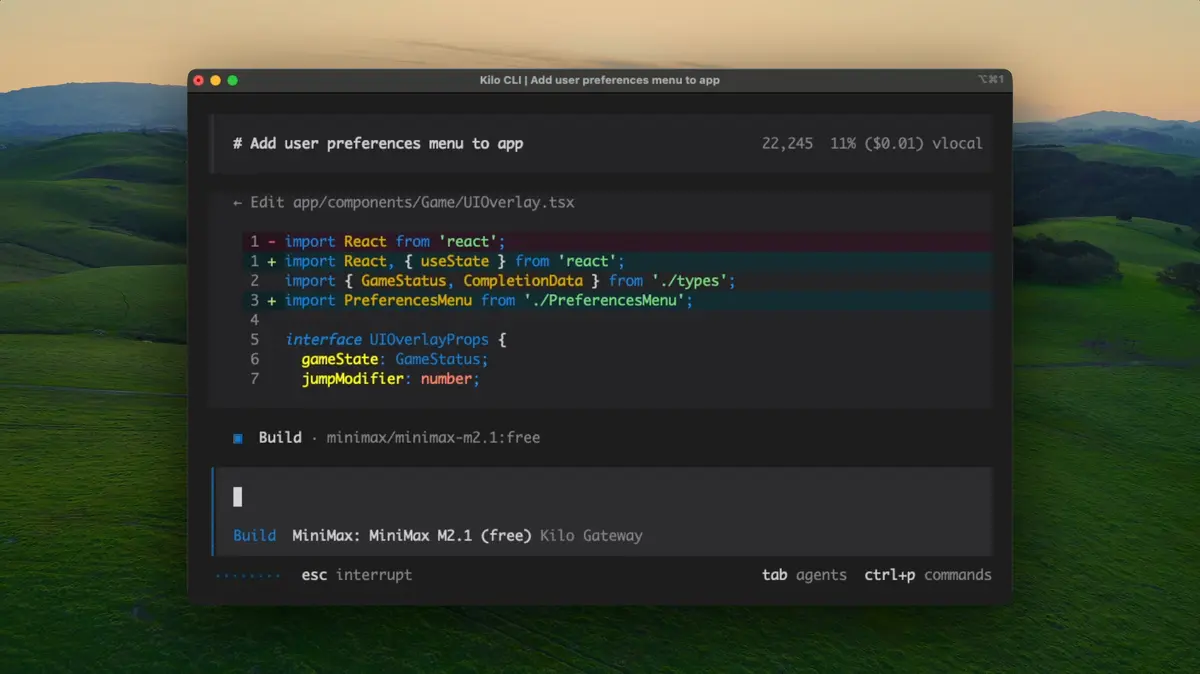
Terminal User Interface for Kilo Code

Downloads

10,862

Readme

Kilo Code CLI

Terminal User Interface for Kilo Code

Installation

npm install -g @kilocode/cli

Then, make sure you place your Kilo Code API token in the CLI config:

kilocode config # this opens up your editor

You can find your Kilo Code API token on your profile page at app.kilo.ai, and place it in the kilocodeToken field in the CLI config.

Known Issues

Theme Detection

We don't detect the theme of your terminal, and are aware the the current theme doesn't work well on light mode terminals. Switch to the light theme using using kilocode config.

Outdated dependency warnings

When installing Kilo Code CLI you'll be greeted by some scary looking dependency deprecation warnings. We're aware of the issue and will resolve it shortly.

Windows Support

We've only tested the CLI on Mac and Linux, and are aware that there are some issues on Windows. For now, if you can, we advise you to use a WSL environment to run the CLI.

Usage

Interactive Mode

# Start interactive chat session
kilocode

# Start with a specific mode
kilocode --mode architect

# Start with a specific workspace
kilocode --workspace /path/to/project

# Resume the last conversation from this workspace
kilocode -c
# or
kilocode --continue

Parallel mode

Parallel mode allows multiple Kilo Code instances to work in parallel on the same directory, without conflicts. You can spawn as many Kilo Code instances as you need! Once finished, changes will be available on a separate git branch.

# Prerequisite: must be within a valid git repository

# In interactive mode, changes will be committed on /exit
# Terminal 1
kilocode --parallel "improve xyz"
# Terminal 2
kilocode --parallel "improve abc"

# Pairs great with auto mode 🚀
# Terminal 1
kilocode --parallel --auto "improve xyz"
# Terminal 2
kilocode --parallel --auto "improve abc"

Autonomous mode (Non-Interactive)

Autonomous mode allows Kilo Code to run in automated environments like CI/CD pipelines without requiring user interaction.

# Run in autonomous mode with a prompt
kilocode --auto "Implement feature X"

# Run in autonomous mode with piped input
echo "Fix the bug in app.ts" | kilocode --auto

# Run in autonomous mode with timeout (in seconds)
kilocode --auto "Run tests" --timeout 300

Autonomous mode Behavior

When running in Autonomous mode (--auto flag):

  1. No User Interaction: All approval requests are handled automatically based on configuration
  2. Auto-Approval/Rejection: Operations are approved or rejected based on your auto-approval settings
  3. Follow-up Questions: Automatically responded with a message instructing the AI to make autonomous decisions
  4. Automatic Exit: The CLI exits automatically when the task completes or times out

Auto-Approval Configuration

Autonomous mode respects your auto-approval configuration. Edit your config file with kilocode config to customize:

{
	"autoApproval": {
		"enabled": true,
		"read": {
			"enabled": true,
			"outside": true
		},
		"write": {
			"enabled": true,
			"outside": false,
			"protected": false
		},
		"execute": {
			"enabled": true,
			"allowed": ["npm", "git", "pnpm"],
			"denied": ["rm -rf", "sudo"]
		},
		"browser": {
			"enabled": false
		},
		"mcp": {
			"enabled": true
		},
		"mode": {
			"enabled": true
		},
		"subtasks": {
			"enabled": true
		},
		"question": {
			"enabled": false,
			"timeout": 60
		},
		"retry": {
			"enabled": true,
			"delay": 10
		},
		"todo": {
			"enabled": true
		}
	}
}

Configuration Options:

  • read: Auto-approve file read operations
    • outside: Allow reading files outside workspace
  • write: Auto-approve file write operations
    • outside: Allow writing files outside workspace
    • protected: Allow writing to protected files (e.g., package.json)
  • execute: Auto-approve command execution
    • allowed: List of allowed command patterns (e.g., ["npm", "git"])
    • denied: List of denied command patterns (takes precedence)
  • browser: Auto-approve browser operations
  • mcp: Auto-approve MCP tool usage
  • mode: Auto-approve mode switching
  • subtasks: Auto-approve subtask creation
  • question: Auto-approve follow-up questions
  • retry: Auto-approve API retry requests
  • todo: Auto-approve todo list updates

Command Approval Patterns

The execute.allowed and execute.denied lists support hierarchical pattern matching:

  • Base command: "git" matches any git command (e.g., git status, git commit, git push)
  • Command + subcommand: "git status" matches any git status command (e.g., git status --short, git status -v)
  • Full command: "git status --short" only matches exactly git status --short

Example:

{
	"execute": {
		"enabled": true,
		"allowed": [
			"npm", // Allows all npm commands
			"git status", // Allows all git status commands
			"ls -la" // Only allows exactly "ls -la"
		],
		"denied": [
			"git push --force" // Denies this specific command even if "git" is allowed
		]
	}
}

Interactive Command Approval

When running in interactive mode, command approval requests now show hierarchical options:

[!] Action Required:
> ✓ Run Command (y)
  ✓ Always run git (1)
  ✓ Always run git status (2)
  ✓ Always run git status --short --branch (3)
  ✗ Reject (n)

Selecting an "Always run" option will:

  1. Approve and execute the current command
  2. Add the pattern to your execute.allowed list in the config
  3. Auto-approve matching commands in the future

This allows you to progressively build your auto-approval rules without manually editing the config file.

Autonomous mode Follow-up Questions

In Autonomous mode, when the AI asks a follow-up question, it receives this response:

"This process is running in non-interactive Autonomous mode. The user cannot make decisions, so you should make the decision autonomously."

This instructs the AI to proceed without user input.

Exit Codes

  • 0: Success (task completed)
  • 124: Timeout (task exceeded time limit)
  • 130: SIGINT interruption (Ctrl+C)
  • 143: SIGTERM interruption (system termination)
  • 1: Error (initialization or execution failure)

Example CI/CD Integration

# GitHub Actions example
- name: Run Kilo Code
  run: |
      echo "Implement the new feature" | kilocode --auto --timeout 600

Local Development

DevTools

In order to run the CLI with devtools, add DEV=true to your pnpm start command, and then run npx react-devtools to show the devtools inspector.