
npm package discovery and stats viewer.

Discover Tips

  • General search

    [free text search, go nuts!]

  • Package details

    pkg:[package-name]

  • User packages

    @[username]

Sponsor

Optimize Toolset

I’ve always been into building performant and accessible sites, but lately I’ve been taking it extremely seriously. So much so that I’ve been building a tool to help me optimize and monitor the sites that I build to make sure that I’m making an attempt to offer the best experience to those who visit them. If you’re into performant, accessible and SEO friendly sites, you might like it too! You can check it out at Optimize Toolset.

About

Hi, 👋, I’m Ryan Hefner  and I built this site for me, and you! The goal of this site was to provide an easy way for me to check the stats on my npm packages, both for prioritizing issues and updates, and to give me a little kick in the pants to keep up on stuff.

As I was building it, I realized that I was actually using the tool to build the tool, and figured I might as well put this out there and hopefully others will find it to be a fast and useful way to search and browse npm packages as I have.

If you’re interested in other things I’m working on, follow me on Twitter or check out the open source projects I’ve been publishing on GitHub.

I am also working on a Twitter bot for this site to tweet the most popular, newest, random packages from npm. Please follow that account now and it will start sending out packages soon–ish.

Open Software & Tools

This site wouldn’t be possible without the immense generosity and tireless efforts from the people who make contributions to the world and share their work via open source initiatives. Thank you 🙏

© 2026 – Pkg Stats / Ryan Hefner

@latido/audio

v0.3.0

Published

Web Audio sources for Latido.

Readme

@latido/audio

Web Audio sources for Latido.

Turn audio energy, frequency bands, and beats into UI signals.
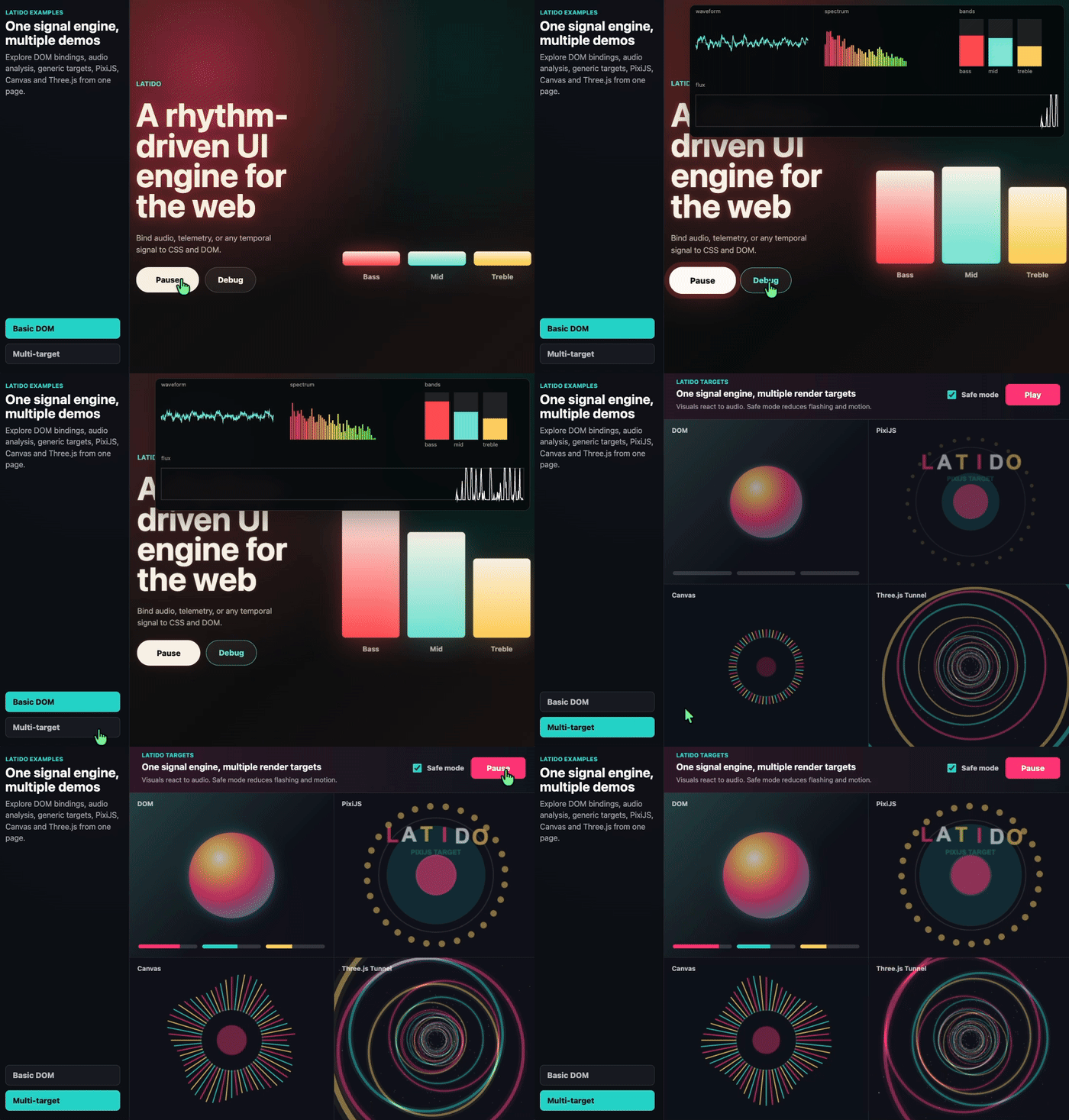
Latido demo

Live demo · GitHub

Install

npm install @latido/core @latido/dom @latido/audio

Usage

import { createLatido } from "@latido/core"
import { dom } from "@latido/dom"
import { audio } from "@latido/audio"

const latido = createLatido()
  .use(dom())
  .use(audio({ element: document.querySelector("audio") }))

latido.signal("audio.energy")
  .smooth(0.15)
  .clamp(0, 1)
  .bindCSSVar(document.body, "--energy")

latido.signal("audio.beat")
  .decay(0.2)
  .bindClass(".beat-button", "is-beating", value => value > 0.5)

latido.start()

Audio starts after a user gesture. Call latido.play() from a button click to satisfy browser autoplay rules.

Beat detection

audio.beat is a binary onset signal for visual synchronization. It detects short energy changes in the spectrum; it does not estimate musical BPM or bar position.

audio({
  element,
  minBeatInterval: 180,
  beatSensitivity: 1.35,
  energySensitivity: 1.04
})

Use lower sensitivity values for denser reactions and higher values for fewer false positives.