
@power-seo/meta
v1.0.19
Published
SSR-optimized meta tag helpers for Next.js App Router, Remix, and generic SSR

Maintainers
 ccbd.dev
Readme
@power-seo/meta






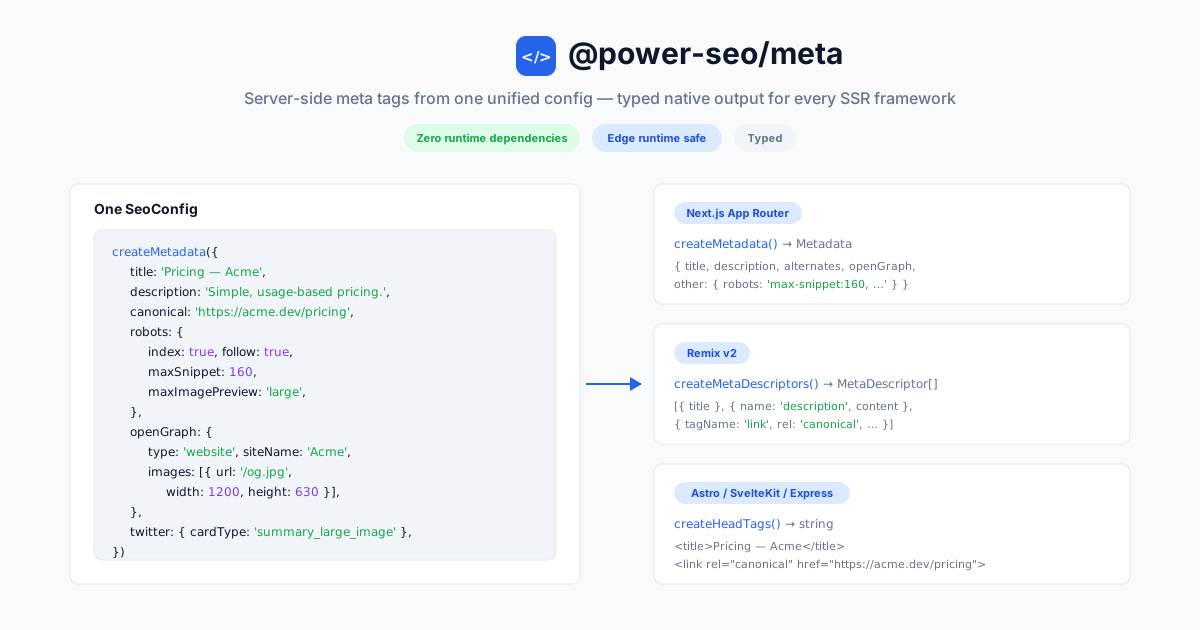
One SEO config in, framework-native head tags out — for Next.js App Router, Remix v2, and any generic SSR runtime.
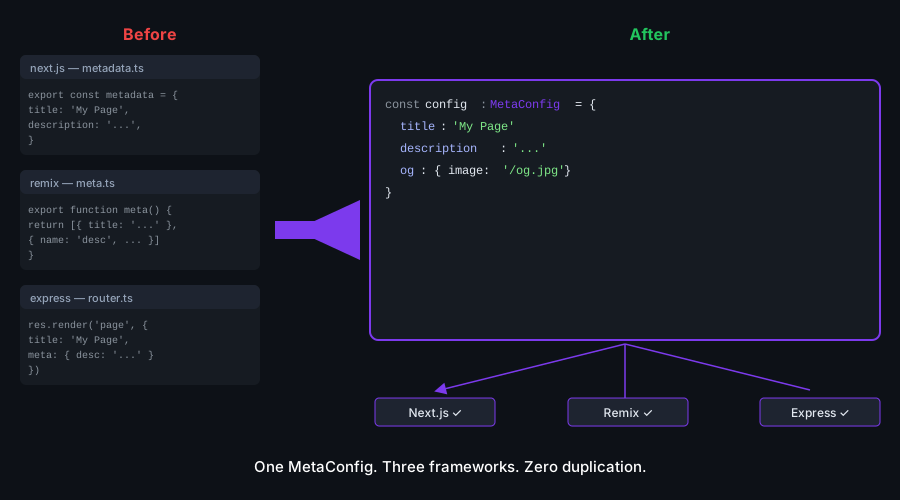
@power-seo/meta is a server-side meta tag generation library that takes one shared SEOConfig object and emits the correct output for every major SSR framework. It is for developers who maintain SEO across more than one framework — or who want a single, typed source of truth for titles, canonicals, Open Graph, Twitter Cards, robots directives, and hreflang. It exists because each framework wants a different shape (Next.js wants a Metadata object, Remix wants a MetaDescriptor[], plain SSR wants an HTML string), and hand-mapping that per page is where head-tag bugs hide.
Why @power-seo/meta?
Meta tags are the highest-leverage, most-copy-pasted lines of SEO code in any codebase. When the same title, canonical, and Open Graph values have to be re-expressed in three framework dialects, they drift — a stale canonical here, a missing og:image there. This package makes the SEOConfig the single source of truth and generates the framework-native output for you, so the values stay in sync and stay typed.
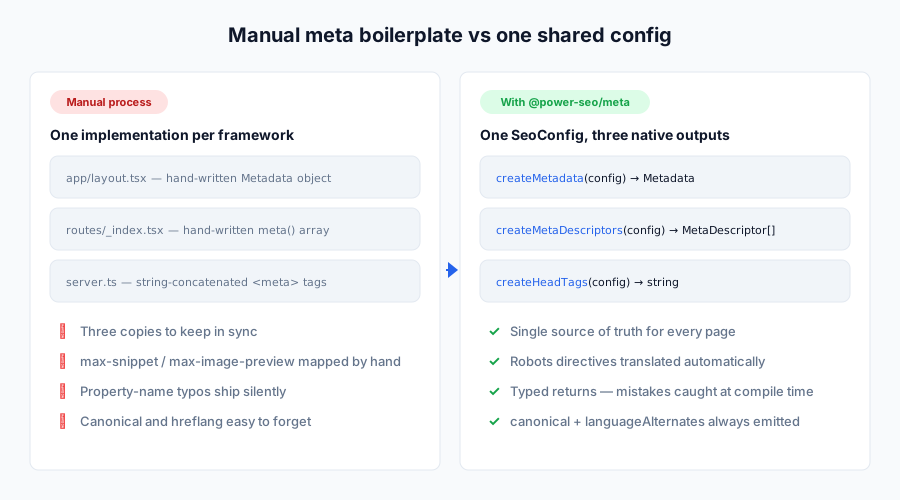
| | Without | With |
| -------------------- | --------------------------------------------------------------- | -------------------------------------------------------------- |
| Cross-framework meta | Different boilerplate for Next.js, Remix, and generic SSR | One SEOConfig → correct output per framework |
| Robots directives | maxSnippet, maxImagePreview need framework-specific mapping | Serialized correctly per target automatically |
| Open Graph images | Manual array construction, inconsistent fields | Typed OpenGraphImage[] with width, height, alt, type |
| Twitter Cards | Hand-coded string fields, easy typos | Typed TwitterCardConfig for every card type |
| Canonical URLs | Omitted or duplicated across pages | Always in SEOConfig; routed to the right output field |
| Hreflang | Manual <link rel="alternate"> per locale | languageAlternates renders every alternate |
| TypeScript | Loosely typed head objects, no autocomplete | Fully typed return per framework — no casting |
Features
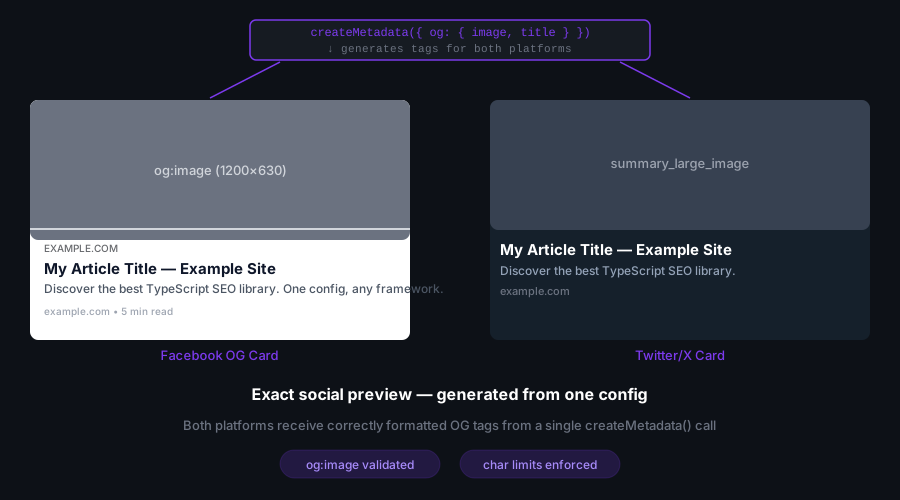
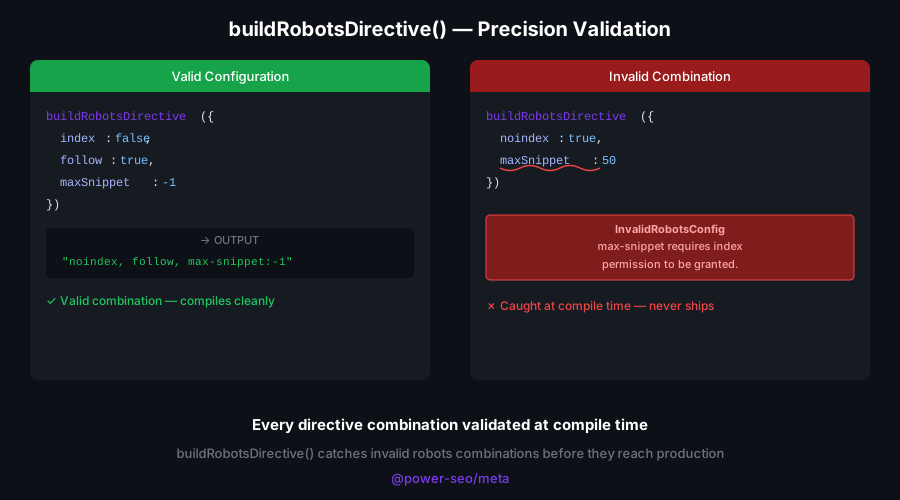
createMetadata()— returns a Next.js App RouterMetadata-shaped object, compatible withgenerateMetadata()andexport const metadata. Advanced robots directives (maxSnippet,maxImagePreview,maxVideoPreview) are serialized intometadata.other['robots']viabuildRobotsContent(), since the Next.jsMetadatatype does not model them natively.createMetaDescriptors()— returns a Remix v2MetaDescriptor[]array forexport const meta, with no@remix-run/reactimport required.createHeadTags()— returns an HTML string of<title>,<meta>, and<link>tags for Astro, SvelteKit, Express, Fastify, and any generic SSR framework.createHeadTagObjects()— returns structuredHeadTag[]objects for custom renderers, template engines, and CI assertions.- Robots directive support —
index,follow,noarchive,nosnippet,noimageindex,notranslate,maxSnippet,maxImagePreview,maxVideoPreview,unavailableAfter, plus top-levelnoindex/nofollowshortcuts. - Open Graph image arrays — multiple images with
width,height,alt, andtype;og:title,og:description, andog:urlfall back to top-leveltitle/description/canonicalwhen not set. - Twitter Card support — all four card types and their properties via
TwitterCardConfig. - Canonical + hreflang — canonical routed to the framework-native field;
languageAlternatesexpanded to per-locale alternates. - XSS-safe HTML output —
createHeadTags()escapes&,",<, and>in every attribute value. - Zero third-party runtime dependencies — depends only on
@power-seo/core; edge-runtime compatible.
Comparison
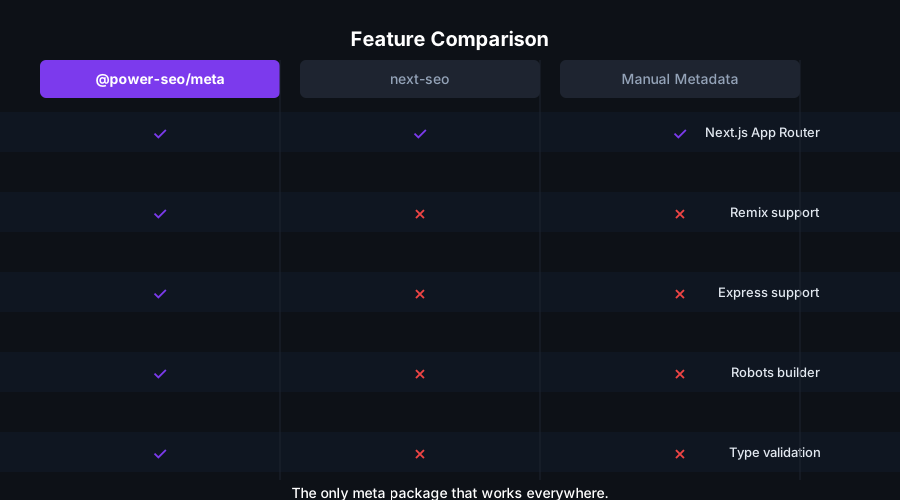
| Feature | @power-seo/meta | next-seo | remix-seo | react-helmet |
| ------------------------------------ | :-------------: | :------: | :-------: | :----------: |
| Next.js App Router native Metadata | Yes | No | No | No |
| Remix v2 native MetaDescriptor[] | Yes | No | Yes | No |
| Generic SSR HTML string output | Yes | No | No | No |
| Robots directive coverage | Yes | Yes | Yes | Partial |
| One config → multiple frameworks | Yes | No | No | No |
| Structured tag-object output | Yes | No | No | No |
| Zero third-party runtime deps | Yes | No | Yes | No |
| Typed return per framework | Yes | Yes | Yes | No |
| Tree-shakeable | Yes | No | Partial | No |
Installation
npm install @power-seo/metayarn add @power-seo/metapnpm add @power-seo/metaRequires Node.js >=18. Ships dual ESM + CJS builds and TypeScript declarations.
Usage
Every function accepts the same SEOConfig object. Only the output shape differs per framework.
How do I generate metadata for a Next.js App Router page?
Import createMetadata and export its result as metadata, or return it from generateMetadata(). It produces a Next.js Metadata-shaped object: title, description, robots, openGraph, twitter, and alternates.canonical map to native fields, while advanced robots directives land in metadata.other['robots']. og:title, og:description, and og:url fall back to the top-level title, description, and canonical when omitted.
// app/page.tsx
import { createMetadata } from '@power-seo/meta';

export const metadata = createMetadata({
  title: 'Home',
  description: 'Welcome to Example Site.',
  canonical: 'https://example.com/',
  openGraph: {
    type: 'website',
    siteName: 'Example Site',
    images: [
      { url: 'https://example.com/og-home.jpg', width: 1200, height: 630, alt: 'Example Site' },
    ],
  },
  twitter: { cardType: 'summary_large_image', site: '@examplesite' },
  robots: { index: true, follow: true },
});
How do I generate dynamic metadata per route in Next.js?
Return createMetadata() from an async generateMetadata() function. Fetch your data first, then map it onto the SEOConfig. Advanced robots directives such as maxSnippet and maxImagePreview are serialized into metadata.other['robots'], so Google receives them even though Next.js does not expose them on the typed Metadata object.
// app/blog/[slug]/page.tsx
import { createMetadata } from '@power-seo/meta';
import { getPost } from '@/lib/posts';

export async function generateMetadata({ params }: { params: { slug: string } }) {
  const post = await getPost(params.slug);
  return createMetadata({
    title: post.title,
    description: post.excerpt,
    canonical: `https://example.com/blog/${params.slug}`,
    noindex: post.isDraft,
    robots: { index: true, follow: true, maxSnippet: 160, maxImagePreview: 'large' },
    openGraph: {
      type: 'article',
      images: [{ url: post.coverImage, width: 1200, height: 630 }],
      article: {
        publishedTime: post.publishedAt,
        modifiedTime: post.updatedAt,
        authors: [post.author.url],
        tags: post.tags,
      },
    },
  });
}
How do I generate Remix v2 route meta?
Return createMetaDescriptors() from your route's meta export. It returns a MetaDescriptor[] union array — { title }, { name, content }, { property, content }, and { tagName: 'link', rel, href } entries — matching Remix's shape with no framework import.
// app/routes/blog.$slug.tsx
import { createMetaDescriptors } from '@power-seo/meta';
import type { MetaFunction } from '@remix-run/node';

export const meta: MetaFunction<typeof loader> = ({ data }) => {
  if (!data?.post) return [{ title: 'Post Not Found' }];
  return createMetaDescriptors({
    title: data.post.title,
    description: data.post.excerpt,
    canonical: `https://example.com/blog/${data.post.slug}`,
    openGraph: { type: 'article', images: [{ url: data.post.coverImage }] },
  });
};
How do I render meta tags in Astro, Express, or Fastify?
Call createHeadTags() to get an HTML string of <title>, <meta>, and <link> tags, then inject it into your <head>. Every attribute value is HTML-escaped, so untrusted title or description input is safe to serialize.
import { createHeadTags } from '@power-seo/meta';

const headHtml = createHeadTags({
  title: 'My Page',
  description: 'A page about something great.',
  canonical: 'https://example.com/my-page',
  openGraph: { type: 'website', images: [{ url: 'https://example.com/og.jpg' }] },
  robots: { index: true, follow: true },
});

// Express / Fastify
app.get('/', (req, res) => {
  res.send(`<!DOCTYPE html><html><head>${headHtml}</head><body>...</body></html>`);
});
How do I assert meta output in tests?
Use createHeadTagObjects() to get structured HeadTag[] objects — each { tag, attributes, content? } — which you can inspect programmatically in unit tests or feed to a custom renderer.
import { createHeadTagObjects } from '@power-seo/meta';

const tags = createHeadTagObjects({
  title: 'My Page',
  description: 'A page about something great.',
  canonical: 'https://example.com/my-page',
  robots: { index: true, follow: true },
});
// [
//   { tag: 'title', attributes: {}, content: 'My Page' },
//   { tag: 'meta', attributes: { name: 'description', content: 'A page about something great.' } },
//   { tag: 'meta', attributes: { name: 'robots', content: 'index, follow' } },
//   { tag: 'link', attributes: { rel: 'canonical', href: 'https://example.com/my-page' } },
// ]
API Reference
All four functions take a single SEOConfig argument and are pure and synchronous.
| Function | Signature | Returns |
| ----------------------- | ---------------------------------------------- | ------------------------------------------------- |
| createMetadata | (config: SEOConfig) => NextMetadata | Next.js App Router Metadata-shaped object |
| createMetaDescriptors | (config: SEOConfig) => RemixMetaDescriptor[] | Remix v2 MetaDescriptor[] array |
| createHeadTags | (config: SEOConfig) => string | HTML string of <title>, <meta>, <link> tags |
| createHeadTagObjects | (config: SEOConfig) => HeadTag[] | Structured head-tag objects |
SEOConfig (input, from @power-seo/core)
| Prop | Type | Description |
| -------------------- | ------------------- | ---------------------------------------- |
| title | string | Page title |
| titleTemplate | string | Title template, e.g. '%s \| Site Name' |
| defaultTitle | string | Default title used with titleTemplate |
| description | string | Meta description |
| canonical | string | Canonical URL |
| noindex | boolean | Shortcut → forces index: false |
| nofollow | boolean | Shortcut → forces follow: false |
| robots | RobotsDirective | Robots directive configuration |
| openGraph | OpenGraphConfig | Open Graph properties |
| twitter | TwitterCardConfig | Twitter Card properties |
| languageAlternates | HreflangConfig[] | Hreflang entries for i18n |
| additionalMetaTags | MetaTag[] | Extra custom meta tags |
| additionalLinkTags | LinkTag[] | Extra custom link tags |
RobotsDirective
| Prop | Type | Description |
| ------------------ | --------------------------------- | --------------------------------------- |
| index | boolean | true → index, false → noindex |
| follow | boolean | true → follow, false → nofollow |
| noarchive | boolean | Prevent cached version |
| nosnippet | boolean | Prevent snippet in results |
| noimageindex | boolean | Prevent image indexing |
| notranslate | boolean | Prevent translation offer |
| maxSnippet | number | Max snippet length in characters |
| maxImagePreview | 'none' \| 'standard' \| 'large' | Max image preview size |
| maxVideoPreview | number | Max video preview length in seconds |
| unavailableAfter | string | ISO 8601 expiry date |
OpenGraphConfig
| Prop | Type | Description |
| ------------- | ------------------ | ---------------------------------------------------------------- |
| type | OpenGraphType | OG object type ('website', 'article', 'product', and more) |
| title | string | og:title (falls back to title) |
| description | string | og:description (falls back to description) |
| url | string | og:url (falls back to canonical) |
| siteName | string | og:site_name |
| locale | string | og:locale |
| images | OpenGraphImage[] | Array of Open Graph image objects |
| article | OpenGraphArticle | Article-specific OG properties |
TwitterCardConfig
| Prop | Type | Description |
| ------------- | --------------------------------------------------------- | --------------------------------------------------- |
| cardType | 'summary' \| 'summary_large_image' \| 'app' \| 'player' | Twitter Card type |
| site | string | twitter:site handle |
| creator | string | twitter:creator handle |
| title | string | twitter:title (falls back to title) |
| description | string | twitter:description (falls back to description) |
| image | string | twitter:image URL |
Types
All input types are re-exported from @power-seo/core; framework output types are defined in this package.
| Type | Source | Shape |
| --------------------- | ----------------- | ------------------------------------------------------------ |
| SEOConfig | @power-seo/core | Unified input configuration |
| RobotsDirective | @power-seo/core | Robots directive configuration |
| OpenGraphConfig | @power-seo/core | Open Graph properties |
| OpenGraphImage | @power-seo/core | { url; secureUrl?; type?; width?; height?; alt? } |
| TwitterCardConfig | @power-seo/core | Twitter Card configuration |
| HreflangConfig | @power-seo/core | { hrefLang: string; href: string } |
| MetaTag | @power-seo/core | { name?; property?; httpEquiv?; content } |
| LinkTag | @power-seo/core | Custom link tag attributes |
| NextMetadata | @power-seo/meta | Next.js App Router Metadata-shaped object |
| NextOGImage | @power-seo/meta | { url; width?; height?; alt?; type? } |
| RemixMetaDescriptor | @power-seo/meta | Remix v2 MetaDescriptor union member |
| HeadTag | @power-seo/meta | { tag: 'meta' \| 'link' \| 'title'; attributes; content? } |
Use Cases
- Next.js App Router — generate
Metadatafor static and dynamic pages viagenerateMetadata(). - Remix v2 routes — generate
MetaDescriptor[]from loader data in themetaexport. - Programmatic SEO — build meta for thousands of auto-generated pages at build time.
- SaaS marketing sites — enforce one consistent meta pattern across every page.
- Multi-language sites — expand
languageAlternatesinto per-locale hreflang links. - E-commerce product pages — emit Open Graph images and Twitter Cards per product.
- CMS-driven content — map CMS fields onto
SEOConfigand render framework-native output. - CI assertions — inspect
createHeadTagObjects()output to catch meta regressions in tests.
Architecture Overview
- Framework-neutral input — every function reads the same
SEOConfig; only the output mapper differs, so the same values render identically across frameworks. - Pure and synchronous — no async, no I/O; safe inside Next.js Server Components, Remix loaders, and Express handlers.
- Advanced robots handling —
maxSnippet,maxImagePreview, andmaxVideoPrevieware serialized withbuildRobotsContent()intometadata.other['robots'], because the Next.jsMetadatatype does not model them directly. - XSS-safe serialization —
createHeadTags()escapes&,",<, and>in every attribute value before joining tags. - Edge-runtime safe — no Node.js globals; runs on Cloudflare Workers, Vercel Edge, and Deno.
- Tree-shakeable —
"sideEffects": falsewith one named export per function. - Dual ESM + CJS — ships both formats via tsup for any bundler or
require()consumer.
Supply Chain Security
- Published to npm with provenance attestation — every release is built and signed by the verified
github.com/CyberCraftBD/power-seoGitHub Actions workflow, so you can trace each tarball back to its exact source commit - Zero third-party runtime dependencies — packages depend only on other
@power-seopackages, nothing else gets pulled in - No network access at runtime — pure computation on the inputs you pass; nothing is fetched, phoned home, or telemetered
- No install scripts (
postinstall,preinstall) - No
evalor dynamic code execution - Safe for SSR, Edge, and server environments
The @power-seo Ecosystem
All 17 packages are independently installable — use only what you need.
| Package | Install | Description |
| ------------------------------------------------------------------------------------------ | ----------------------------------- | ---------------------------------------------------------------------------------- |
| @power-seo/ai | npm i @power-seo/ai | LLM-agnostic prompt templates and response parsers for AI-assisted SEO |
| @power-seo/analytics | npm i @power-seo/analytics | Merge Search Console data with audit results — trends and ranking insights |
| @power-seo/audit | npm i @power-seo/audit | SEO site health auditing with meta, content, structure, and performance rules |
| @power-seo/content-analysis | npm i @power-seo/content-analysis | Yoast-style SEO content analysis engine with scoring, checks, and React components |
| @power-seo/core | npm i @power-seo/core | Framework-agnostic SEO analysis engines, types, validators, and utilities |
| @power-seo/images | npm i @power-seo/images | Image SEO analysis — alt text quality, lazy loading, formats, image sitemaps |
| @power-seo/integrations | npm i @power-seo/integrations | Semrush and Ahrefs API clients with a shared rate-limited HTTP client |
| @power-seo/links | npm i @power-seo/links | Internal link graph analysis — orphan detection, suggestions, equity scoring |
| @power-seo/meta | npm i @power-seo/meta | SSR meta tag helpers for Next.js App Router, Remix v2, and generic SSR |
| @power-seo/preview | npm i @power-seo/preview | SERP, Open Graph, and Twitter Card preview generators with React components |
| @power-seo/react | npm i @power-seo/react | React SEO components — meta tags, Open Graph, Twitter Card, breadcrumbs |
| @power-seo/readability | npm i @power-seo/readability | Readability scoring — Flesch-Kincaid, Gunning Fog, Coleman-Liau, ARI |
| @power-seo/redirects | npm i @power-seo/redirects | Redirect rule engine with Next.js, Remix, and Express adapters |
| @power-seo/schema | npm i @power-seo/schema | Type-safe JSON-LD structured data — 23 schema.org builders plus React components |
| @power-seo/search-console | npm i @power-seo/search-console | Google Search Console API client — OAuth2, service accounts, rate limiting, retry |
| @power-seo/sitemap | npm i @power-seo/sitemap | XML sitemap generation, streaming, and validation with image, video, news support |
| @power-seo/tracking | npm i @power-seo/tracking | Analytics script builders with consent management and React components |
Keywords
seo, meta tags, nextjs metadata, app router, generateMetadata, remix v2, MetaDescriptor, generic ssr, open graph, twitter card, canonical url, robots directives, hreflang, server-side rendering, edge runtime, typescript, head tags, structured metadata, power-seo
About CyberCraft Bangladesh
CyberCraft Bangladesh is a Bangladesh-based enterprise-grade software development and Full Stack SEO service provider company specializing in ERP system development, AI-powered SaaS and business applications, full-stack SEO services, custom website development, and scalable eCommerce platforms. We design and develop intelligent, automation-driven SaaS and enterprise solutions that help startups, SMEs, NGOs, educational institutes, and large organizations streamline operations, enhance digital visibility, and accelerate growth through modern cloud-native technologies.




© 2026 CyberCraft Bangladesh · Released under the MIT License