
@simon_he/pi
v0.3.4
Published
Project-aware CLI that detects npm, pnpm, yarn, bun, Go, Rust and Python projects, then routes installs, scripts, builds and workspace commands automatically.

Maintainers
 simon_he
Readme
PI
Project-aware command router for package managers, monorepos, and multi-language dev tasks.
PI detects your current project context and runs the right command for npm, pnpm, yarn, bun, Go, Rust, and Python workflows.
Requires Node.js >= 18. Node.js 22+ is recommended for supported LTS runtimes.
npm i -g @simon_he/pi

pi react          # install with the detected package manager
prun dev          # run or fuzzy-select package scripts
pfind build       # find and run scripts inside a workspace
Why
Different projects use different package managers, lockfiles, workspaces, and script layouts. PI gives you one command layer that understands the current project before running commands.
- Auto-detect npm, pnpm, yarn, and bun
- Remember package-manager choices per workspace
- Fuzzy run package scripts
- Find scripts deeply in monorepos
- Run Go, Rust, and Python entry files
- Integrate selected
prun/pfindcommands with shell history
Core Commands
pi react
pi --choose-tool bun
pi --show-tool

prun dev
prun

pfind build
pfind
| Command | Purpose |
| --- | --- |
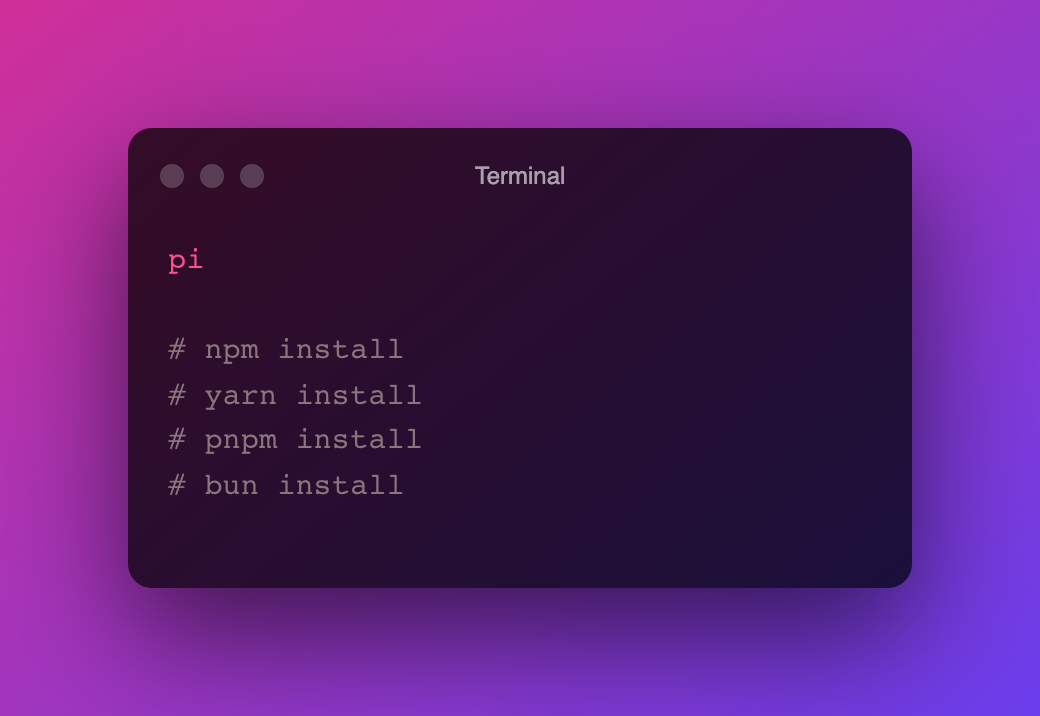
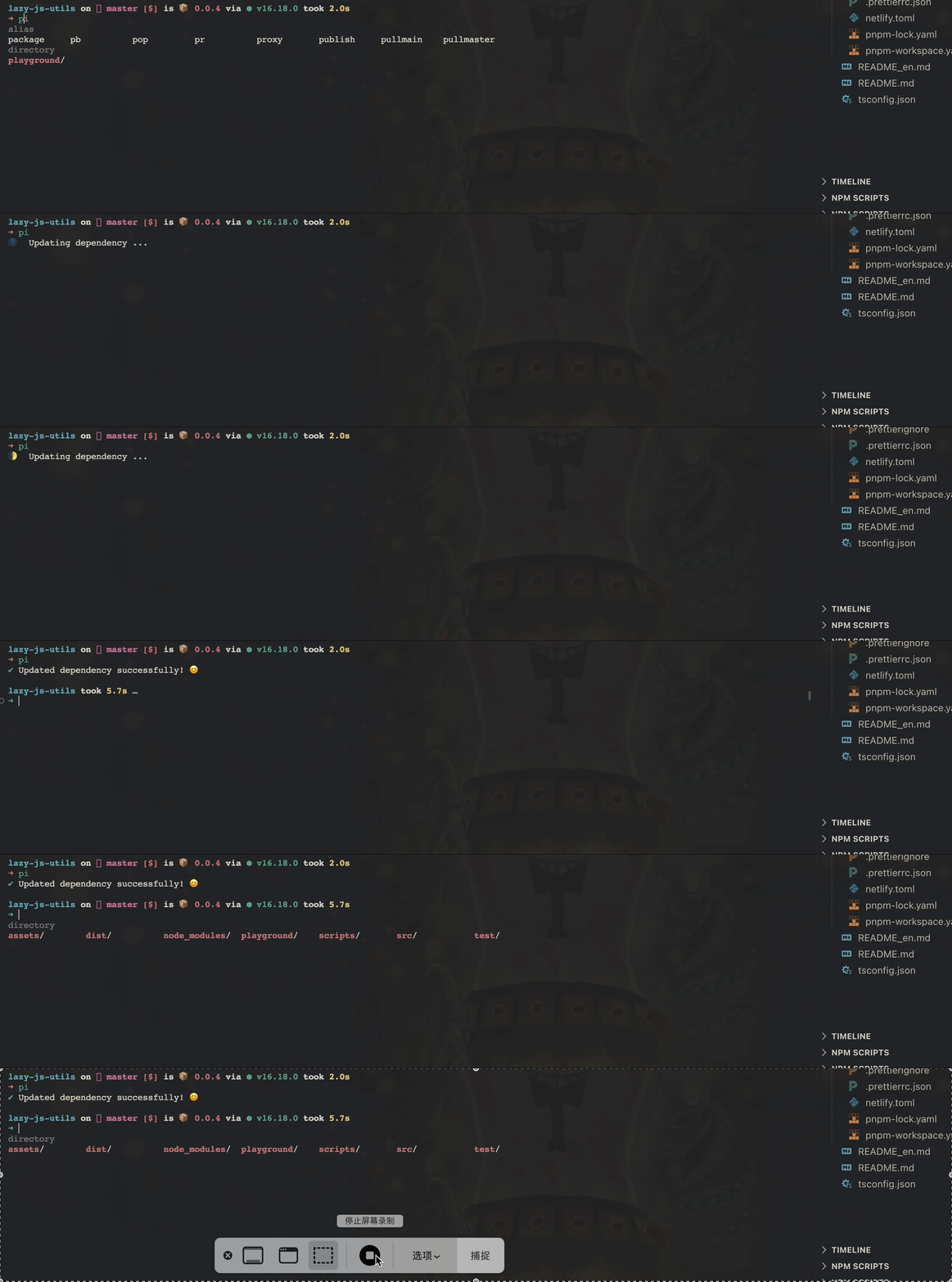
| pi | Install or update dependencies with the package manager for the current project. |
| prun | Run package scripts, fuzzy-select scripts, or run language entry files. |
| pfind | Find and run scripts across a workspace or monorepo. |
Naming
The package is still published as @simon_he/pi, and pi remains the primary short command.
The product positioning is now broader than dependency installation: PI is a project-aware command router.
Compared With ni
ni focuses on using the right JavaScript package manager.
PI goes further as a project command router:
- remembers ambiguous workspace choices
- supports fuzzy script selection via
prun - searches scripts in monorepos via
pfind - supports Go and Rust build/run workflows
- supports Python file execution
- provides optional shell history integration
Supported Projects
| Environment | Support |
| --- | --- |
| Node.js | npm, pnpm, yarn, bun install/remove/run workflows |
| Monorepo | pnpm and yarn workspace script discovery and package-manager selection |
| Go | go get, go mod tidy, go run, go mod init, go build, plus go clean for clean tasks. |
| Rust | cargo run, cargo init, cargo build, plus cargo install / cargo uninstall for binary crates. |
| Python | Python entry file execution through prun / pfind |
Command Reference
| Command | Description |
| --- | --- |
| pi [pkg] | Install a package, or update dependencies when no package is passed. |
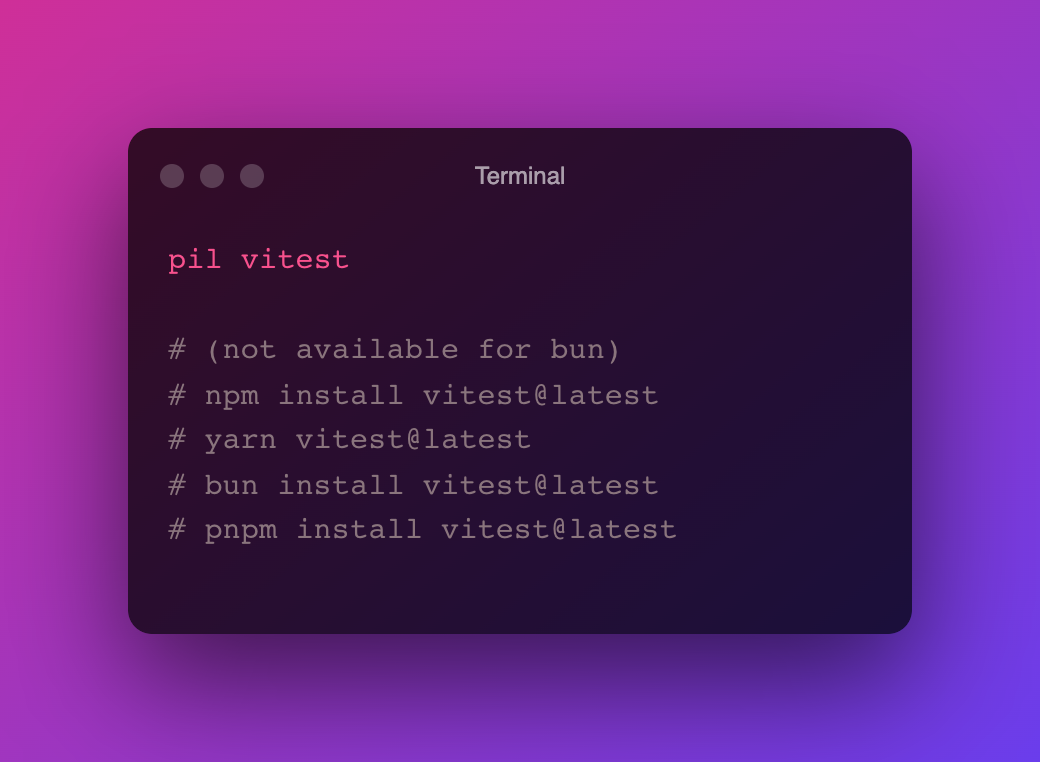
| pil [pkg] | Install selected packages at @latest. |
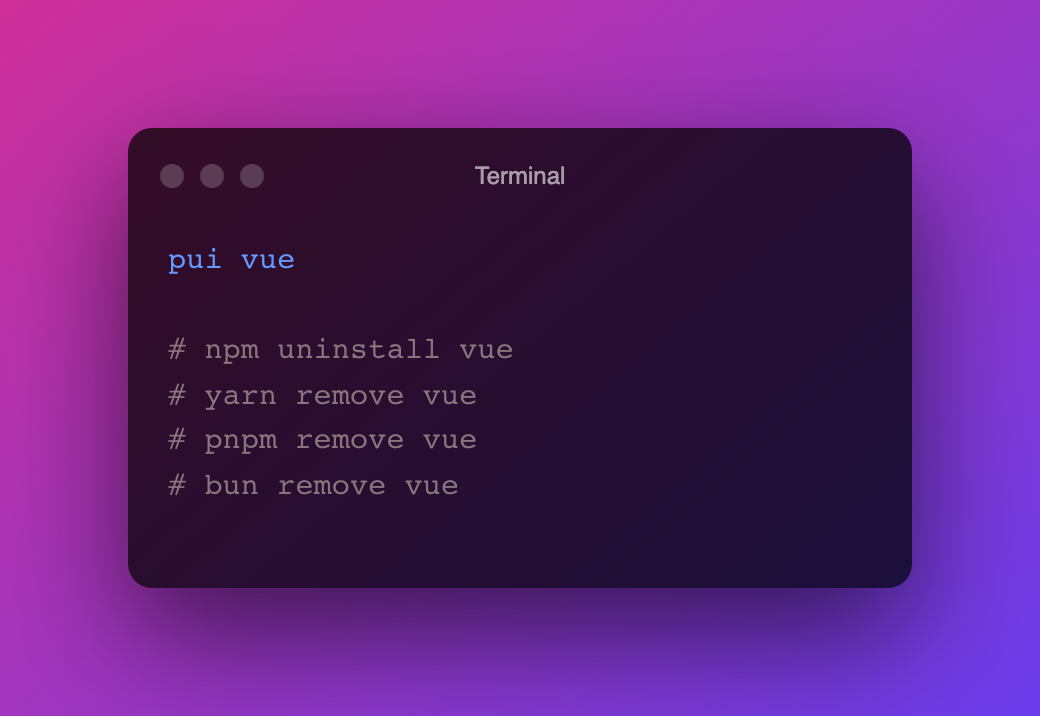
| pui [pkg] | Remove dependencies. |
| pio [pkg] | Install with the detected package manager and --prefer-offline. |
| pix [cmd] | Run npx or bunx depending on the project. |
| prun [script] | Run a package script, fuzzy-select one, or run a language entry file. |
| pfind [script] | Search workspace packages and run matching scripts. |
| pinit | Initialize the current project with the detected tool. |
| pbuild | Run go build or cargo build in Go/Rust projects. |
| pci [pkg] | Compatibility alias of pi; kept for older workflows. Prefer pi. |
Deprecated Aliases
| Command | Status |
| --- | --- |
| pa | Deprecated. Delegates to na when installed. Use na directly if you still need that workflow. |
| pu | Deprecated. Delegates to nu when installed. Use nu directly, or pil only for @latest upgrades. |
Workspace Tool Selection
When a workspace contains multiple package-manager indicators, for example bun.lock and pnpm-lock.yaml, pi, pil, and pci ask which tool to use and remember that choice for the current workspace.
- Saved choices are stored locally, for example
~/.config/pi/workspace-tools.json. - The file is local machine configuration and should not be committed.
- If the remembered tool no longer matches the workspace, PI removes the stale record.
pi --choose-tool
pi --choose-tool bun
pi --forget-tool
pi --show-tool
pi --show-tool --json
pi --list-tools
pi --list-tools --json
pil and pci support the same package-manager selection flags. pui and pio reuse the remembered workspace choice when they resolve a package manager.
Shell Integration
prun and pfind can make the command selected by the fuzzy UI available immediately in your shell history.
Manual setup:
# zsh
eval "$(prun --init zsh)"

# bash
eval "$(prun --init bash)"

# fish
prun --init fish | source

# Windows PowerShell
prun --init powershell | Out-String | Invoke-Expression

# PowerShell 7+
prun --init pwsh | Out-String | Invoke-Expression
Shell integration notice:
By default, PI does not modify your shell rc/profile.
- Automatic setup is opt-in with
PI_AUTO_INIT=1 prun. - Run
prun --doctorto inspect shell/history integration state. - Open a new terminal, or reload your shell config, after adding the hook.
Configuration
export PI_Lang=en        # en or zh
export PI_DEFAULT=pnpm   # fallback package manager
export PI_COLOR=yellow   # ora color
export PI_SPINNER=star   # cli-spinners name
PI_COLOR accepts black, red, green, yellow, blue, magenta, cyan, white, and gray.
Examples
pi
prun
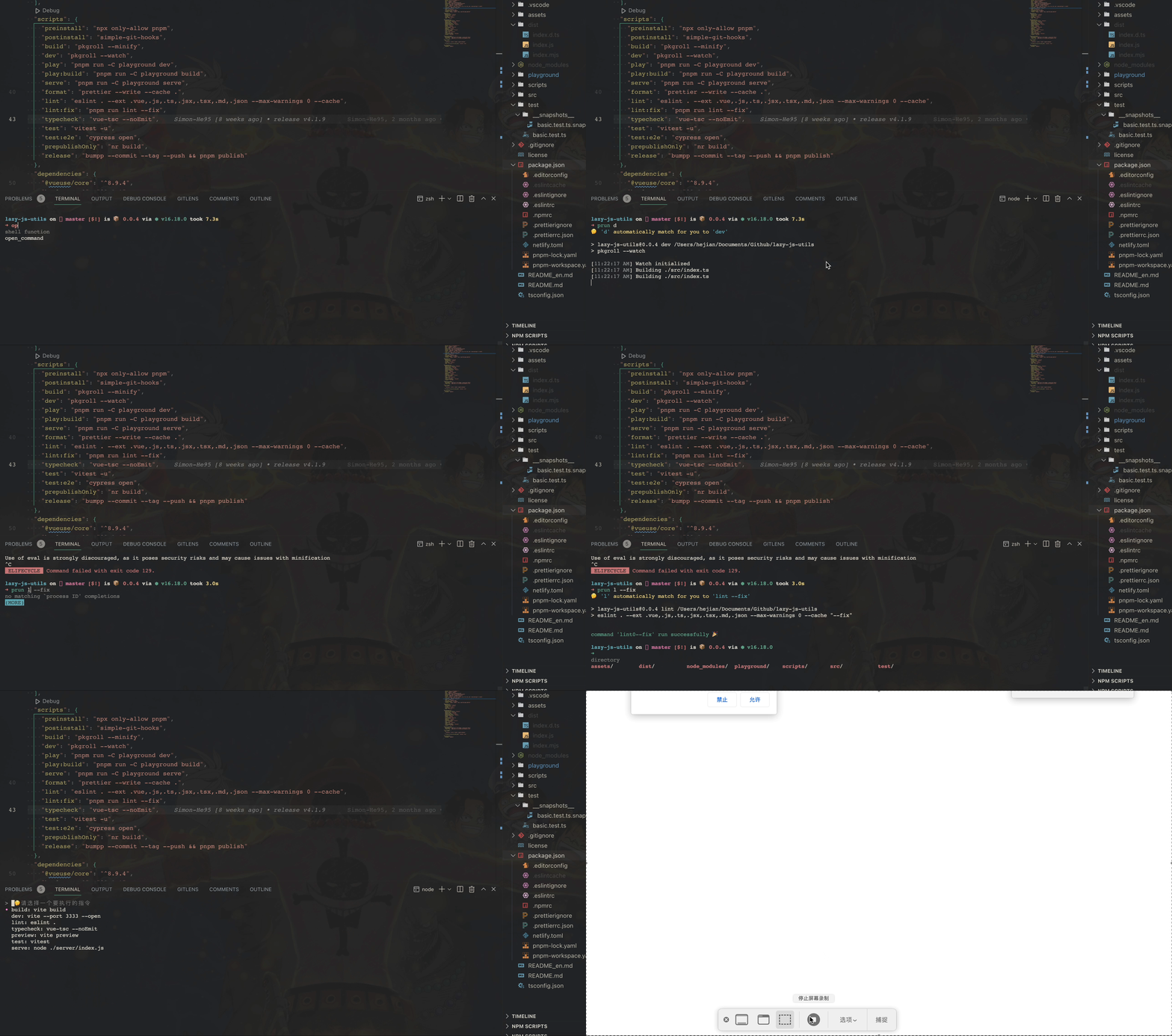
pfind
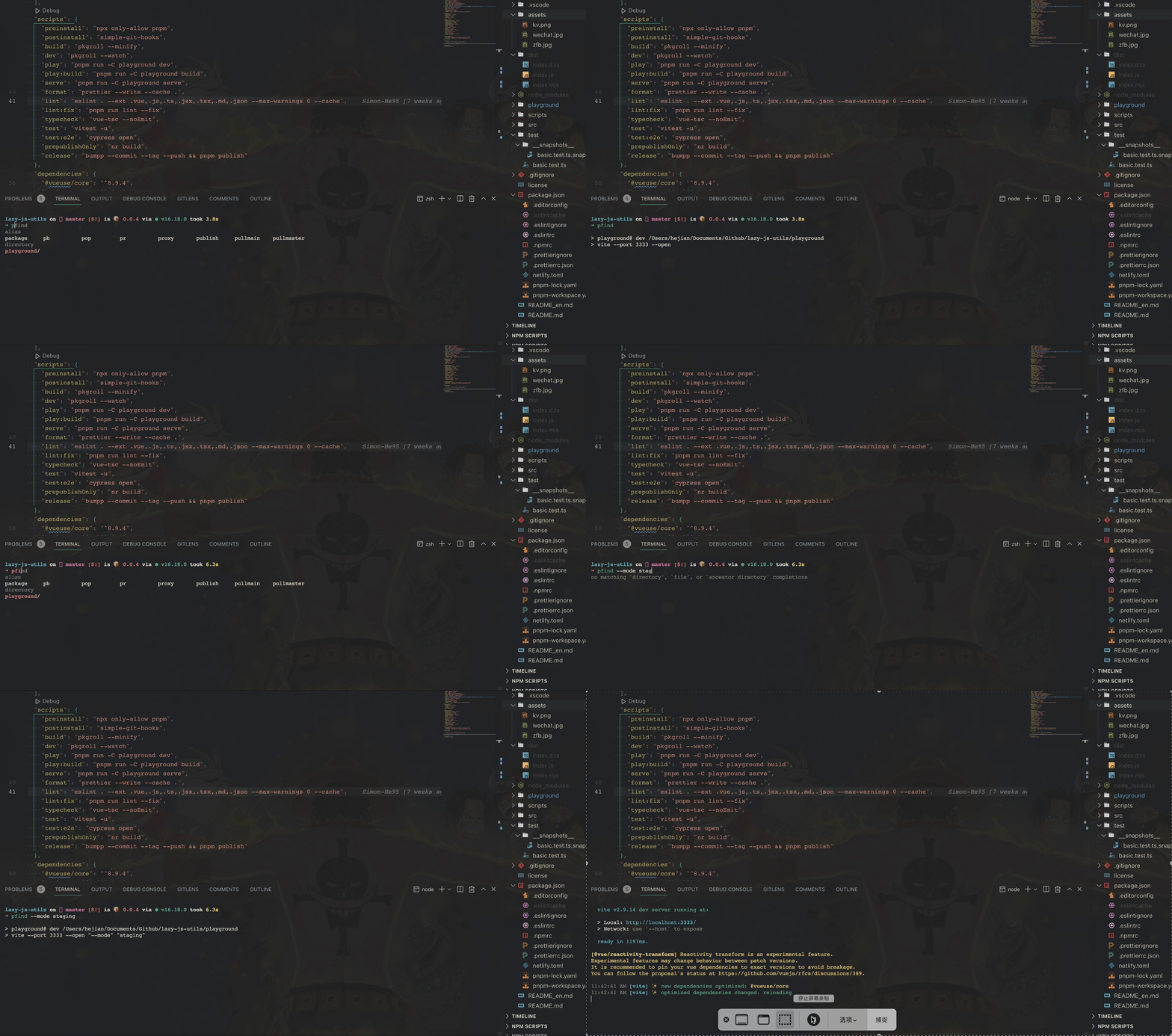
pui
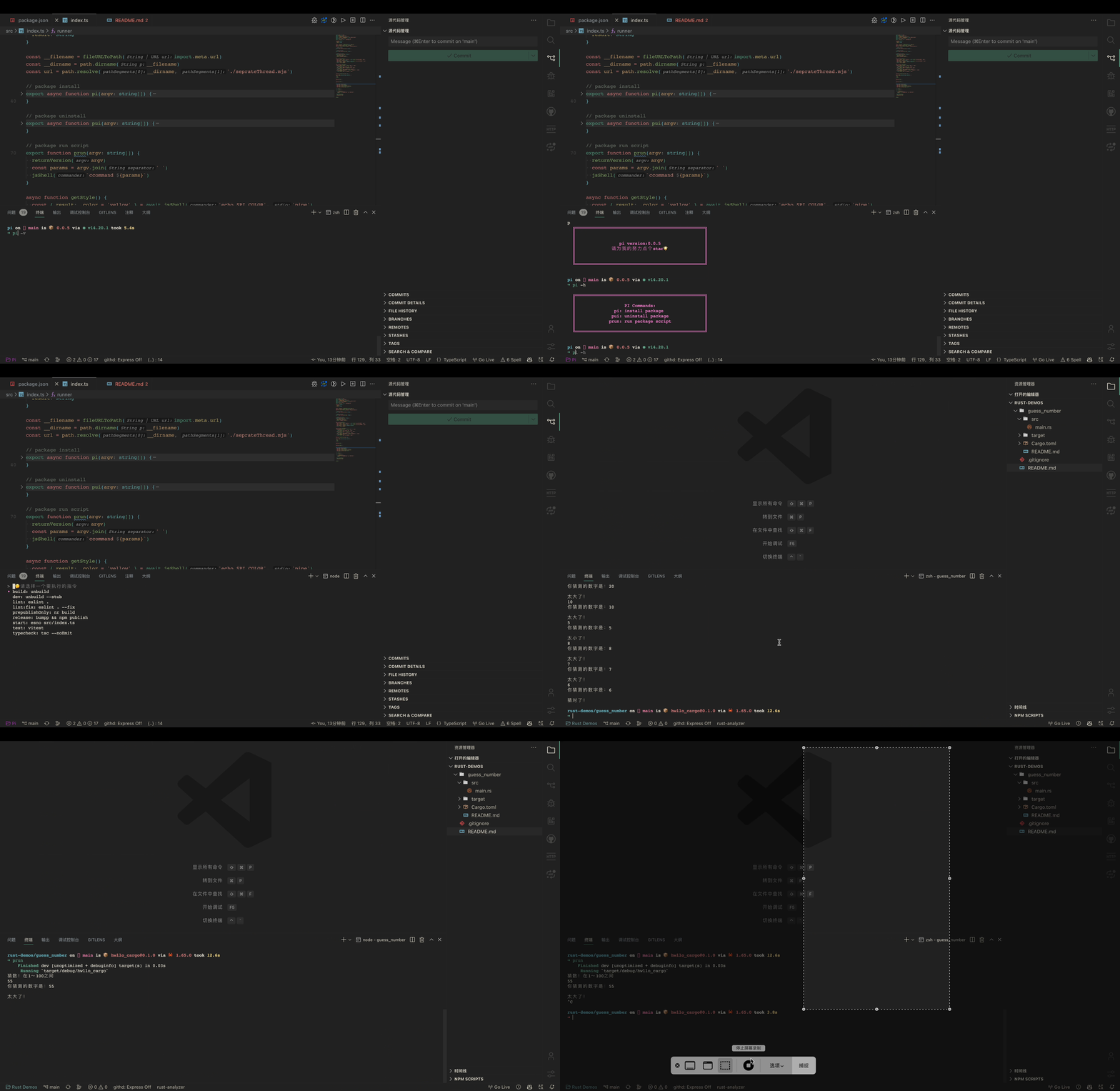
Other Features
Development Checks
pnpm build
pnpm test
pnpm pack:check
pnpm smoke
pnpm smoke:packed
Runtime Integrations
Optional external tools are used when the current project needs them:
- Cargo for Rust workflows
- Go toolchain for Go workflows
- Python for Python file execution