
@zero-ar/tool-kit
v0.5.0
Published
Define and host typed tools for Zero-AR runs.
Downloads
921


Readme
@zero-ar/tool-kit
Define a typed tool once, derive its model-visible schema and serve the same definition through the Zero-AR Tool Host protocol. The development host checks input, output, cancellation and declared cost against that definition.
The handler remains in the tool host. It is not serialized into an agent publication or imported into the runtime server.
Install
Node.js 24.11.0 through the Node 24 LTS line is required.
npm install @zero-ar/tool-kit @zero-ar/contractsFirst working example
Define an observation tool, invoke it through the development host and inspect the same manifest that a publication pins.
import { makeId } from '@zero-ar/contracts';
import {
  defineTool,
  object,
  serveTools,
  string,
} from '@zero-ar/tool-kit';

const archiveSearch = defineTool({
  name: 'archive.search',
  version: '1.0.0',
  description: 'Search the admitted archive and return a source handle.',
  input: object({ query: string(), collection: string() }),
  output: object({ resultRef: string() }),
  operationClass: 'observation',
  isolation: 'process',
  cost: { denomination: 'bytes', maximum: 4_096 },
  execute(input) {
    return { resultRef: `handle:${input.collection}:${input.query}` };
  },
});

const host = serveTools({ tools: [archiveSearch] });
const answer = await host.invoke({
  invoke_id: makeId('ctl'),
  run_id: makeId('run'),
  tool: archiveSearch.name,
  input: { query: 'renewal date', collection: 'contracts-2026' },
});

console.log(archiveSearch.manifest_ref, answer);
An undeclared field or wrong type returns a typed failed answer. It does not reach the handler.
Lists, choices and optional fields
A tool that takes structured input declares it with typed builders, so the model sees the schema and the host refuses a wrong value by its path.
import { array, boolean, enumOf, integer, nullable, object, optional, string } from '@zero-ar/tool-kit';

const stops = object({
  stop: enumOf(['pickup', 'delivery']),
  arrival: string(),
  minutes: integer({ minimum: 0, maximum: 1_440 }),
});

const input = object({
  load_id: string(),
  stops: array(stops, { minItems: 1 }),
  lumper_receipt: nullable(string()),
  lumper_allowed: boolean(),
  note: optional(string()),
});
object lists required fields in the order they are written, the order a
model sees and fills them, and leaves out each optional field. A
declaration may list its required fields in another order; publication
compares them as a set and publishes the declaration's order.
Public surface
string,number,integer,boolean,enumOf,array,nullable,optionalandobjectschema builders.defineToolfor one typed declaration and handler.serveToolsfor the development Tool Host protocol.conformancefor positive and negative input fixtures.- Manifest, request, response and host TypeScript types.
What this does not establish
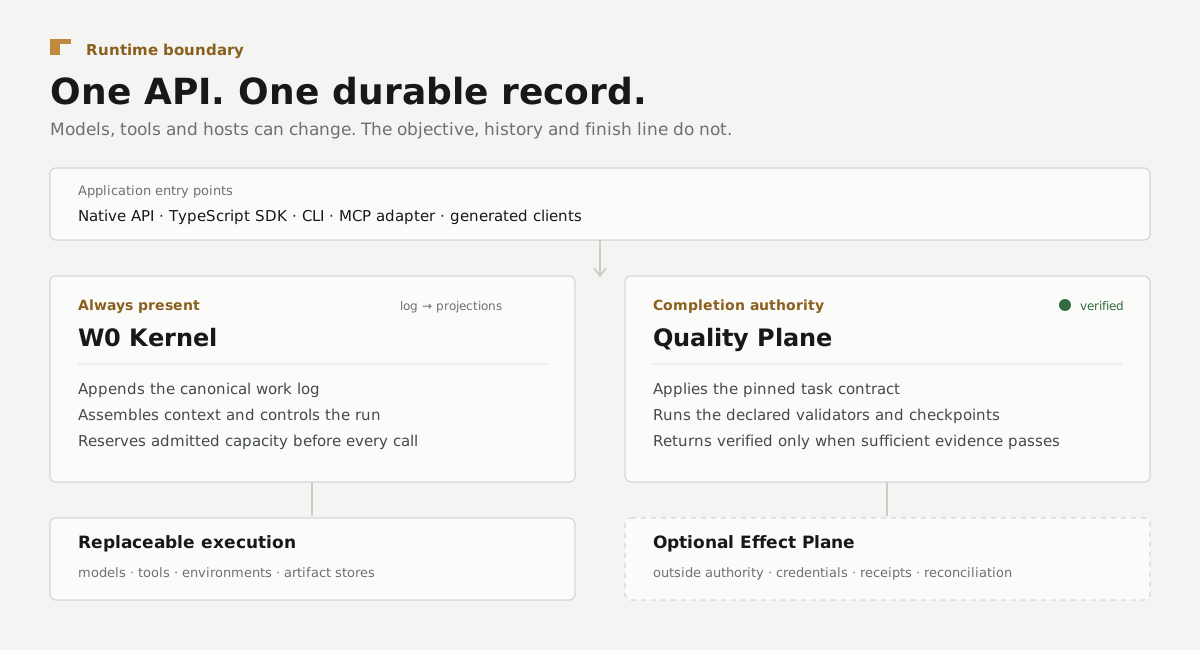
Defining or serving a tool does not register it with a tenant or grant it authority to change another system. A run can call only an admitted manifest through an admitted host, and only when its budget covers the declared cost. A change to an outside system also needs the separate Effect Plane and a matching grant.
Where to go next
- Use
@zero-ar/sdkto compile a tool into an agent publication. - Use
@zero-ar/testkitfor deterministic integration fixtures. - Read the public package map to choose another surface.