
ai-figure
v1.0.0
Published
Generate clean SVG diagrams (flowchart, tree, architecture, sequence) from a JSON config. Auto-layout, zero coordinates, works in browser and Node.js.

Maintainers
 atool
atoolReadme
ai-figure
Clean SVG diagram renderer — define config, get beautiful diagrams. Works in browser and Node.js.


Features ✨
- 🎨 Rich visual styles — light/dark mode, nine built-in palettes (
default,antv,drawio,figma,vega,mono-blue,mono-green,mono-purple,mono-orange) plus custom hex arrays; every diagram supports optional title & subtitle, node groups, and color-coded layers - 📐 Auto layout — just describe the graph; x/y coordinates are computed automatically, and diagram dimensions scale to fit the content
- 🤖 AI-friendly — single
fig()entry point accepts a markdown string or a JSON config; streaming-safe (partial input never throws); ships aSKILL.mdthat AI agents (Copilot, Cursor, Claude, etc.) can load as context - 📊 13 diagram types — flowchart, tree, mindmap, architecture, sequence, quadrant, Gantt, state machine, ER data model, timeline, swimlane, bubble chart, and radar chart; pure SVG output with zero DOM dependency, works in browser and Node.js
Quick Start
Install
npm install ai-figureCDN (browser, no bundler)
<!-- jsDelivr -->
<script src="https://cdn.jsdelivr.net/npm/ai-figure/dist/index.global.js"></script>

<!-- unpkg -->
<script src="https://unpkg.com/ai-figure/dist/index.global.js"></script>
After loading the script, the library is available as the global AiFigure:
<div id="chart"></div>
<script src="https://cdn.jsdelivr.net/npm/ai-figure/dist/index.global.js"></script>
<script>
  const svg = AiFigure.fig(`
    figure flow
    direction: LR
    start((Start)) --> login[Login]
    login --> dashboard[Dashboard]
  `);
  document.getElementById('chart').innerHTML = svg;
</script>
Usage
import { fig } from 'ai-figure';

// ── JSON config object (typed, programmatic) ────────────────────────────────
const svg = fig({
  figure: 'flow',
  nodes: [
    { id: 'start',    label: 'Start',        type: 'terminal' },
    { id: 'process1', label: 'Process Data', type: 'process'  },
    { id: 'decision', label: 'Is Valid?',    type: 'decision' },
    { id: 'end_yes',  label: 'Success',      type: 'terminal' },
    { id: 'end_no',   label: 'Failure',      type: 'terminal' },
  ],
  edges: [
    { from: 'start',    to: 'process1'              },
    { from: 'process1', to: 'decision'              },
    { from: 'decision', to: 'end_yes', label: 'Yes' },
    { from: 'decision', to: 'end_no',  label: 'No'  },
  ],
  theme: 'light',
  palette: 'default',
  direction: 'TB',
});

// ── Markdown string (compact, AI-friendly) ──────────────────────────────────
const svg2 = fig(`
  figure flow
  direction: LR
  palette: default
  title: Auth Flow
  start((Start)) --> login[Enter Credentials]
  login --> validate{Valid?}
  validate --> dashboard((Dashboard)): yes
  validate --> error[Show Error]: no
  error --> login
`);

// Browser: inject into the DOM
document.body.innerHTML = svg;

// Node.js: write to file
import { writeFileSync } from 'fs';
writeFileSync('diagram.svg', svg);
API Reference
fig(input): string
The single entry point. Returns a fully self-contained SVG string.
input is either:
- A JSON config object — typed
FigOptionswith the requiredfigurefield - A markdown string — Mermaid-like syntax, streaming-safe (never throws; partial input returns a valid empty SVG)
import { fig } from 'ai-figure';

// JSON config
fig({ figure: 'flow',     ...flowOptions     }); // flowchart
fig({ figure: 'tree',     ...treeOptions     }); // tree / hierarchy
fig({ figure: 'mindmap',  ...mindmapOptions  }); // root-centered mindmap
fig({ figure: 'arch',     ...archOptions     }); // architecture diagram
fig({ figure: 'sequence', ...sequenceOptions }); // sequence diagram
fig({ figure: 'quadrant', ...quadrantOptions }); // quadrant chart
fig({ figure: 'gantt',    ...ganttOptions    }); // Gantt chart
fig({ figure: 'state',    ...stateOptions    }); // state machine
fig({ figure: 'er',       ...erOptions       }); // ER data model
fig({ figure: 'timeline', ...timelineOptions }); // timeline
fig({ figure: 'swimlane', ...swimlaneOptions }); // swimlane flow
fig({ figure: 'bubble',   ...bubbleOptions   }); // bubble chart
fig({ figure: 'radar',    ...radarOptions    }); // radar / spider chart

// markdown string
fig(`figure flow\na[A] --> b[B]`);
figure: 'flow' — Flowchart
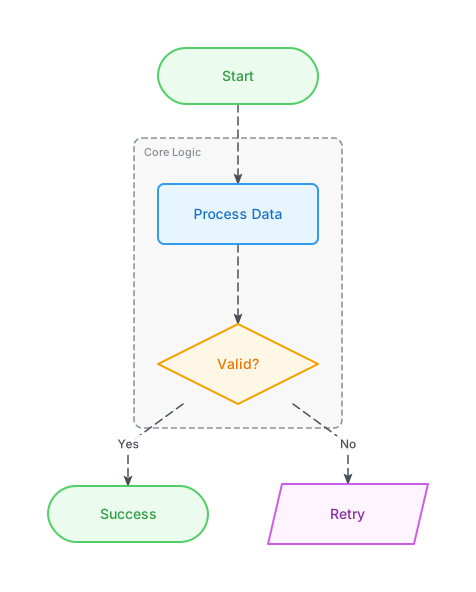
| Field | Type | Default | Description |
|-------------|-----------------|----------------|------------------------------------------|
| figure | 'flow' | required | Selects the flowchart renderer |
| nodes | FlowNode[] | required | List of nodes |
| edges | FlowEdge[] | required | List of directed edges |
| groups | FlowGroup[] | [] | Optional logical groups |
| title | string | undefined | Optional centered title above the diagram |
| subtitle | string | undefined | Optional centered subtitle below the title |
| theme | ThemeType | 'light' | Light or dark rendering mode ('light' | 'dark') |
| palette | PaletteType | 'default' | Color palette — see Palette API below |
| direction | Direction | 'TB' | Layout direction ('TB' or 'LR') |
FlowNode
| Field | Type | Default | Description |
|---------|------------|--------------|----------------------------|
| id | string | required | Unique node identifier |
| label | string | required | Text displayed in the node |
| type | NodeType | 'process' | Visual shape |
Node types (NodeType)
| Value | Shape | Use case |
|------------|---------------------|---------------------------|
| process | Rectangle | Default step / action |
| decision | Diamond | Conditional / branch |
| terminal | Rounded rectangle | Start / End |
| io | Parallelogram | Input / Output |
FlowEdge
| Field | Type | Default | Description |
|---------|----------|--------------|---------------------|
| from | string | required | Source node ID |
| to | string | required | Target node ID |
| label | string | undefined | Optional edge label |
FlowGroup
| Field | Type | Default | Description |
|---------|------------|--------------|------------------------------------|
| id | string | required | Unique group identifier |
| label | string | required | Label shown above the group border |
| nodes | string[] | required | IDs of nodes inside this group |
figure: 'tree' — Tree Diagram
Renders a hierarchy from a flat node list with parent references. Uses Dagre for layout.
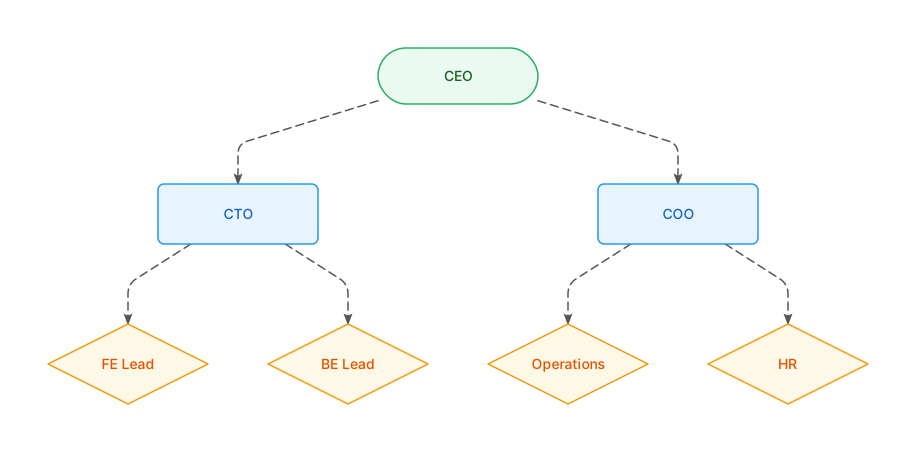
| Field | Type | Default | Description |
|-------------|---------------|----------------|------------------------------------|
| figure | 'tree' | required | Selects the tree renderer |
| nodes | TreeNode[] | required | Flat list with optional parent ref |
| title | string | undefined | Optional centered title above the diagram |
| subtitle | string | undefined | Optional centered subtitle below the title |
| theme | ThemeType | 'light' | Light or dark rendering mode ('light' | 'dark') |
| palette | PaletteType | 'default' | Color palette — see Palette API below |
| direction | Direction | 'TB' | Layout direction |
fig({
  figure: 'tree',
  nodes: [
    { id: 'ceo', label: 'CEO' },
    { id: 'cto', label: 'CTO', parent: 'ceo' },
    { id: 'coo', label: 'COO', parent: 'ceo' },
  ],
  theme: 'light',
  palette: 'default',
});
figure: 'mindmap' — Mindmap Diagram
Renders a root-centered mindmap. First-level branches are auto-balanced across left/right unless explicit side is provided.
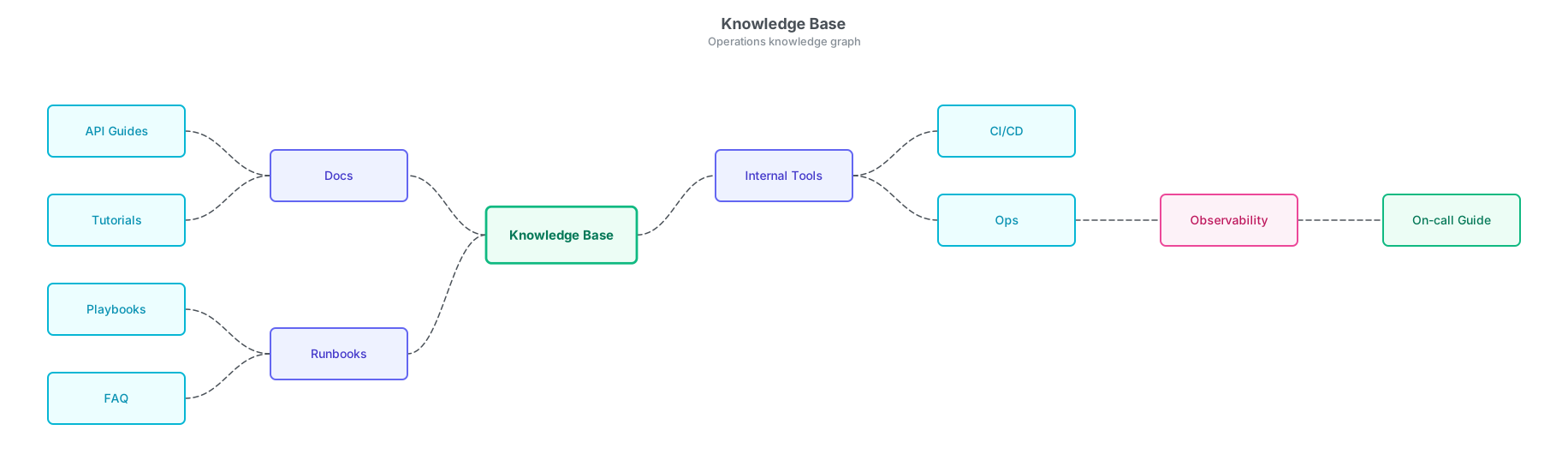
| Field | Type | Default | Description |
|------------|--------------------|--------------|-------------|
| figure | 'mindmap' | required | Selects the mindmap renderer |
| nodes | MindmapNode[] | required | Flat list with optional parent and side |
| title | string | undefined | Optional centered title above the diagram |
| subtitle | string | undefined | Optional centered subtitle below the title |
| theme | ThemeType | 'light' | Light or dark rendering mode ('light' | 'dark') |
| palette | PaletteType | 'default' | Color palette — see Palette API below |
MindmapNode
| Field | Type | Default | Description |
|----------|-----------------------|--------------|-------------|
| id | string | required | Unique node identifier |
| label | string | required | Text displayed in the node |
| parent | string | undefined | Parent node id (omit for root) |
| side | 'left' \| 'right' | auto | Optional preferred branch side (best for root-level children) |
fig({
  figure: 'mindmap',
  title: 'Product Strategy',
  nodes: [
    { id: 'root', label: 'Product Strategy' },
    { id: 'market', label: 'Market', parent: 'root', side: 'left' },
    { id: 'tech', label: 'Technology', parent: 'root', side: 'right' },
    { id: 'smb', label: 'SMB', parent: 'market' },
    { id: 'ai', label: 'AI Features', parent: 'tech' },
  ],
});
figure: 'arch' — Architecture Diagram
Renders a tech-stack landscape as layered, color-coded cards — no edges needed.
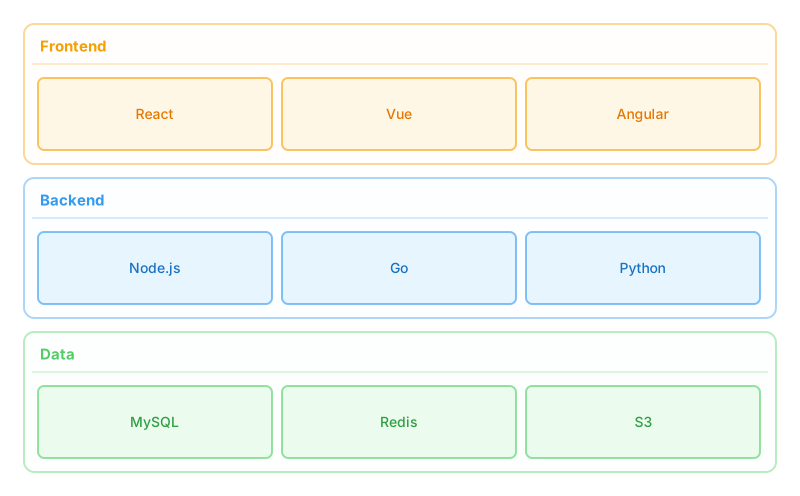
| Field | Type | Default | Description |
|-------------|---------------|----------------|------------------------------------------|
| figure | 'arch' | required | Selects the architecture renderer |
| layers | ArchLayer[] | required | Layers from top to bottom (TB) or left to right (LR) |
| title | string | undefined | Optional centered title above the diagram |
| subtitle | string | undefined | Optional centered subtitle below the title |
| theme | ThemeType | 'light' | Light or dark rendering mode ('light' | 'dark') |
| palette | PaletteType | 'default' | Color palette — see Palette API below |
| direction | Direction | 'TB' | 'TB' = layers stacked, 'LR' = layers side-by-side |
fig({
  figure: 'arch',
  layers: [
    { id: 'fe', label: 'Frontend', nodes: [{ id: 'react', label: 'React' }, { id: 'vue', label: 'Vue' }] },
    { id: 'be', label: 'Backend',  nodes: [{ id: 'node', label: 'Node.js' }] },
  ],
});
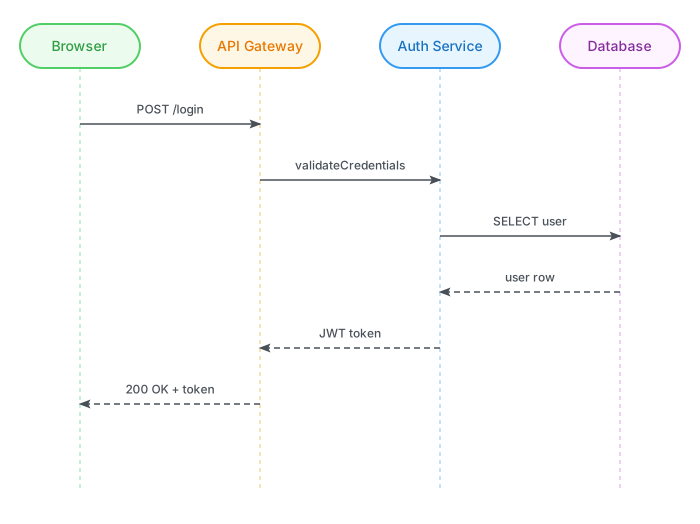
figure: 'sequence' — Sequence Diagram
Renders a sequence diagram with vertical lifelines and horizontal message arrows.
| Field | Type | Default | Description |
|------------|----------------|----------------|---------------------------------------|
| figure | 'sequence' | required | Selects the sequence renderer |
| actors | string[] | required | Ordered list of participant names |
| messages | SeqMessage[] | required | Ordered list of message arrows |
| title | string | undefined | Optional centered title above the diagram |
| subtitle | string | undefined | Optional centered subtitle below the title |
| theme | ThemeType | 'light' | Light or dark rendering mode ('light' | 'dark') |
| palette | PaletteType | 'default' | Color palette — see Palette API below |
fig({
  figure: 'sequence',
  actors: ['Browser', 'API', 'DB'],
  messages: [
    { from: 'Browser', to: 'API', label: 'POST /login' },
    { from: 'API',     to: 'DB',  label: 'SELECT user' },
    { from: 'DB',      to: 'API', label: 'user row',  style: 'return' },
    { from: 'API',     to: 'Browser', label: '200 OK', style: 'return' },
  ],
});
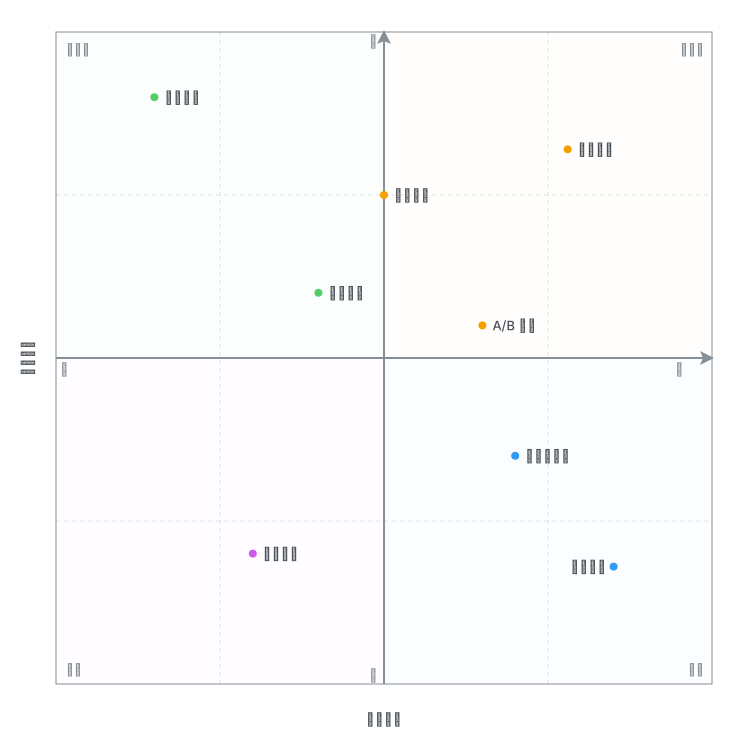
figure: 'quadrant' — Quadrant Chart
Renders a 2D quadrant scatter plot. Points are placed by normalized x/y values (0–1) and auto-colored by which quadrant they fall in.
| Field | Type | Default | Description |
|-------------|--------------------|----------------|-----------------------------------------------------|
| figure | 'quadrant' | required | Selects the quadrant renderer |
| xAxis | AxisConfig | required | X-axis label, min and max tick labels |
| yAxis | AxisConfig | required | Y-axis label, min and max tick labels |
| quadrants | [TL, TR, BL, BR] | required | Corner labels: top-left, top-right, bottom-left, bottom-right |
| points | QuadrantPoint[] | required | Data points to plot |
| title | string | undefined | Optional centered title above the diagram |
| subtitle | string | undefined | Optional centered subtitle below the title |
| theme | ThemeType | 'light' | Light or dark rendering mode ('light' | 'dark') |
| palette | PaletteType | 'default' | Color palette — see Palette API below |
AxisConfig
| Field | Type | Description |
|---------|----------|--------------------------|
| label | string | Axis title |
| min | string | Label at the low end |
| max | string | Label at the high end |
QuadrantPoint
| Field | Type | Description |
|---------|----------|-----------------------------------------|
| id | string | Unique identifier |
| label | string | Text shown next to the point |
| x | number | Normalized X position (0 = left, 1 = right) |
| y | number | Normalized Y position (0 = bottom, 1 = top) |
fig({
  figure: 'quadrant',
  xAxis: { label: 'Effort', min: 'Low', max: 'High' },
  yAxis: { label: 'Value',  min: 'Low', max: 'High' },
  quadrants: ['Quick Wins', 'Major Projects', 'Fill-ins', 'Thankless Tasks'],
  points: [
    { id: 'a', label: 'Feature A', x: 0.2,  y: 0.85 },
    { id: 'b', label: 'Feature B', x: 0.75, y: 0.80 },
    { id: 'c', label: 'Feature C', x: 0.5,  y: 0.6  },
    { id: 'd', label: 'Feature D', x: 0.3,  y: 0.2  },
    { id: 'e', label: 'Feature E', x: 0.8,  y: 0.25 },
  ],
  theme: 'light',
  palette: 'default',
});
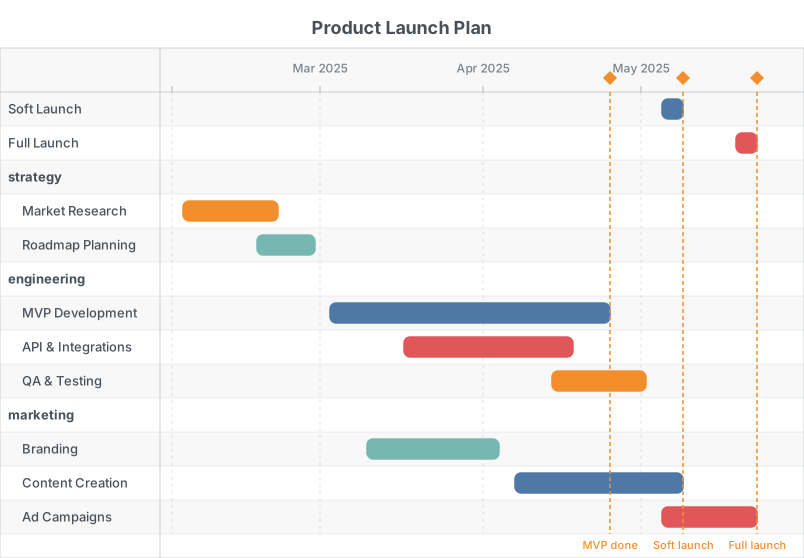
figure: 'gantt' — Gantt Chart
Renders a project timeline with task bars, optional group headers, and milestone markers. Canvas width is fixed at 804 px; height auto-adapts to the number of rows. The time axis ticks adjust automatically to the date range (weekly / monthly / quarterly).
| Field | Type | Default | Description |
|--------------|--------------------|--------------|----------------------------------------------|
| figure | 'gantt' | required | Selects the Gantt renderer |
| tasks | GanttTask[] | required | List of task bars |
| milestones | GanttMilestone[] | [] | Optional milestone markers |
| title | string | undefined | Optional centered title above the diagram |
| subtitle | string | undefined | Optional centered subtitle below the title |
| theme | ThemeType | 'light' | Light or dark rendering mode |
| palette | PaletteType | 'default' | Color palette — see Palette API below |
GanttTask
| Field | Type | Default | Description |
|-----------|----------|--------------|--------------------------------------------------------------------|
| id | string | required | Unique task identifier |
| label | string | required | Task name shown in the label column and inside the bar |
| start | string | required | Start date yyyy-mm-dd |
| end | string | required | End date yyyy-mm-dd |
| groupId | string | undefined | Tasks sharing the same groupId are clustered under a group header |
| color | string | undefined | Optional custom bar color (6-digit hex, e.g. '#e64980') |
GanttMilestone
| Field | Type | Default | Description |
|---------|----------|--------------|-----------------------------------|
| date | string | required | Milestone date yyyy-mm-dd |
| label | string | required | Short label near the diamond icon |
fig({
  figure: 'gantt',
  title: 'Project Roadmap',
  tasks: [
    { id: 'design', label: 'Design',       start: '2025-01-06', end: '2025-01-24' },
    { id: 'fe',     label: 'Frontend Dev', start: '2025-01-20', end: '2025-02-28', groupId: 'dev' },
    { id: 'be',     label: 'Backend Dev',  start: '2025-01-13', end: '2025-03-07', groupId: 'dev' },
    { id: 'qa',     label: 'QA Testing',   start: '2025-02-24', end: '2025-03-14', groupId: 'qa'  },
    { id: 'deploy', label: 'Deploy',       start: '2025-03-17', end: '2025-03-21' },
  ],
  milestones: [
    { date: '2025-01-24', label: 'Design freeze' },
    { date: '2025-03-21', label: 'Launch' },
  ],
  theme: 'light',
  palette: 'default',
});
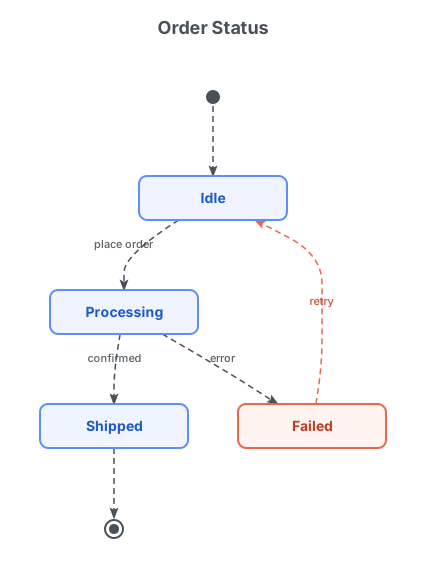
figure: 'state' — State Machine
Renders a UML state machine with dagre layout. Supports start (●) and end (◎) pseudo-states, accent states, self-loops, and labeled transitions.
| Field | Type | Default | Description |
|---------------|-----------------------|--------------|----------------------------------------------|
| figure | 'state' | required | Selects the state machine renderer |
| nodes | StateNode[] | required | List of states |
| transitions | StateTransition[] | required | List of directed transitions |
| title | string | undefined | Optional centered title above the diagram |
| subtitle | string | undefined | Optional centered subtitle below the title |
| theme | ThemeType | 'light' | Light or dark rendering mode |
| palette | PaletteType | 'default' | Color palette — see Palette API below |
StateNode
| Field | Type | Default | Description |
|----------|------------------|-------------|-------------------------------------------------------|
| id | string | required| Unique state identifier |
| label | string | required| Text displayed in the state box |
| type | StateNodeType | 'state' | 'state' | 'start' | 'end' |
| accent | boolean | false | Highlight this state with the accent color (max 1–2) |
StateTransition
| Field | Type | Default | Description |
|---------|----------|--------------|-------------------------------------------------------|
| from | string | required | Source state ID |
| to | string | required | Target state ID |
| label | string | undefined | Optional label — typically event [guard] / action |
fig({
  figure: 'state',
  title: 'Order Status',
  nodes: [
    { id: 'start',      label: '',           type: 'start' },
    { id: 'idle',       label: 'Idle' },
    { id: 'processing', label: 'Processing' },
    { id: 'shipped',    label: 'Shipped' },
    { id: 'failed',     label: 'Failed',     accent: true },
    { id: 'end',        label: '',           type: 'end' },
  ],
  transitions: [
    { from: 'start',      to: 'idle' },
    { from: 'idle',       to: 'processing', label: 'place order' },
    { from: 'processing', to: 'shipped',    label: 'confirmed' },
    { from: 'processing', to: 'failed',     label: 'error' },
    { from: 'failed',     to: 'idle',       label: 'retry' },
    { from: 'shipped',    to: 'end' },
  ],
});
figure: 'er' — Entity-Relationship Diagram
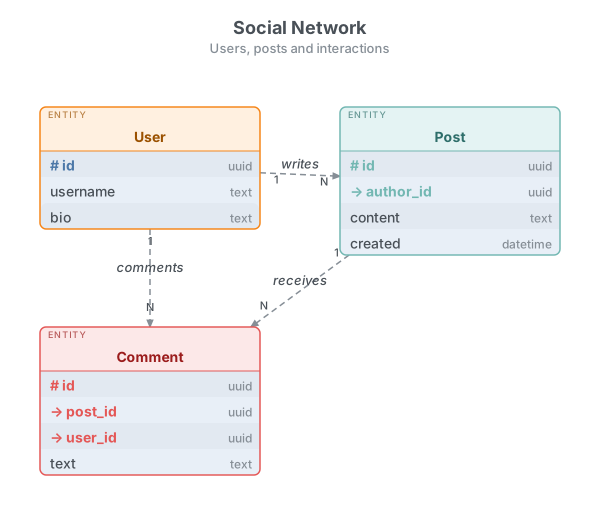
Renders a database schema with entity boxes (header + field list) and relationship lines with optional cardinality annotations.
| Field | Type | Default | Description |
|------------|----------------|--------------|----------------------------------------------|
| figure | 'er' | required | Selects the ER renderer |
| entities | ErEntity[] | required | List of entities (tables) |
| relations| ErRelation[] | required | List of relationship lines |
| title | string | undefined | Optional centered title above the diagram |
| subtitle | string | undefined | Optional centered subtitle below the title |
| theme | ThemeType | 'light' | Light or dark rendering mode |
| palette | PaletteType | 'default' | Color palette — see Palette API below |
ErEntity
| Field | Type | Default | Description |
|----------|-------------|--------------|--------------------------------------------------------------|
| id | string | required | Unique entity identifier |
| label | string | required | Entity display name shown in the header |
| fields | ErField[] | required | Ordered list of fields (columns) |
| accent | boolean | false | Highlight as the aggregate root (max 1) |
ErField
| Field | Type | Default | Description |
|--------|---------------|--------------|-------------------------------------------------|
| name | string | required | Field name |
| type | string | undefined | Data type string (e.g. 'uuid', 'text') |
| key | 'pk'\|'fk' | undefined | 'pk' = primary key (#), 'fk' = foreign key (→) |
ErRelation
| Field | Type | Default | Description |
|------------|----------|--------------|----------------------------------------------------|
| from | string | required | Source entity ID |
| to | string | required | Target entity ID |
| label | string | undefined | Optional label centered on the line |
| fromCard | string | undefined | Cardinality at the from end (e.g. '1', 'N') |
| toCard | string | undefined | Cardinality at the to end |
fig({
  figure: 'er',
  title: 'Blog Schema',
  entities: [
    { id: 'user', label: 'User',
      fields: [{ name: 'id', type: 'uuid', key: 'pk' }, { name: 'email', type: 'text' }] },
    { id: 'post', label: 'Post',
      fields: [{ name: 'id', type: 'uuid', key: 'pk' }, { name: 'author_id', type: 'uuid', key: 'fk' }] },
  ],
  relations: [
    { from: 'user', to: 'post', label: 'writes', fromCard: '1', toCard: 'N' },
  ],
});
figure: 'timeline' — Timeline
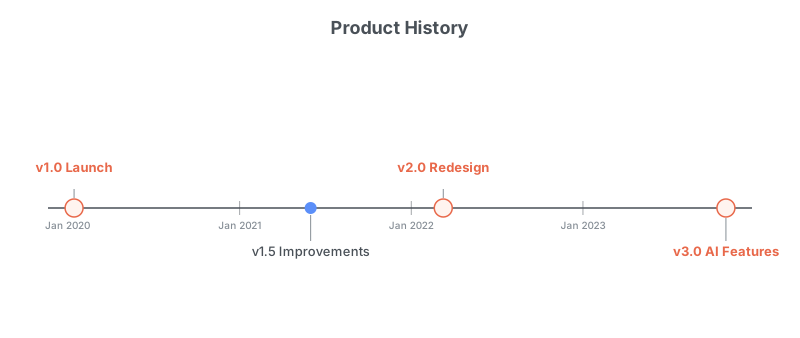
Renders a horizontal date axis with events spaced proportionally. Labels alternate above and below the axis to reduce collision. Major milestones are rendered with a larger accent dot.
| Field | Type | Default | Description |
|------------|-------------------|--------------|----------------------------------------------|
| figure | 'timeline' | required | Selects the timeline renderer |
| events | TimelineEvent[] | required | List of events (auto-sorted by date) |
| title | string | undefined | Optional centered title above the diagram |
| subtitle | string | undefined | Optional centered subtitle below the title |
| theme | ThemeType | 'light' | Light or dark rendering mode |
| palette | PaletteType | 'default' | Color palette — see Palette API below |
TimelineEvent
| Field | Type | Default | Description |
|-------------|-----------|--------------|------------------------------------------------------|
| id | string | required | Unique event identifier |
| label | string | required | Short label displayed near the event dot |
| date | string | required | Event date in yyyy-mm-dd format |
| milestone | boolean | false | Render as a major milestone (larger accent-color dot)|
fig({
  figure: 'timeline',
  title: 'Product History',
  events: [
    { id: 'v1',   label: 'v1.0 Launch',   date: '2020-01-15', milestone: true },
    { id: 'v15',  label: 'v1.5 Patch',    date: '2021-06-01' },
    { id: 'v2',   label: 'v2.0 Redesign', date: '2022-03-10', milestone: true },
    { id: 'v3',   label: 'v3.0 AI',       date: '2023-11-01', milestone: true },
  ],
});
figure: 'swimlane' — Swimlane Flow
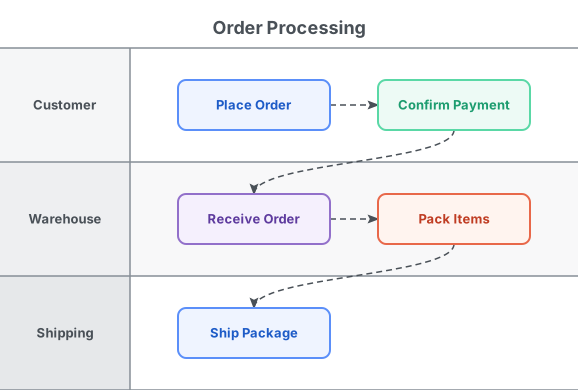
Renders a cross-functional flowchart with horizontal lane bands. Nodes are placed in their declared lane; cross-lane edges use S-curve routing.
| Field | Type | Default | Description |
|------------|-------------------|--------------|----------------------------------------------|
| figure | 'swimlane' | required | Selects the swimlane renderer |
| lanes | string[] | required | Lane labels in display order |
| nodes | SwimlaneNode[] | required | Nodes placed inside their respective lanes |
| edges | SwimlaneEdge[] | required | Directed edges between nodes |
| title | string | undefined | Optional centered title above the diagram |
| subtitle | string | undefined | Optional centered subtitle below the title |
| theme | ThemeType | 'light' | Light or dark rendering mode |
| palette | PaletteType | 'default' | Color palette — see Palette API below |
SwimlaneNode
| Field | Type | Default | Description |
|---------|------------|--------------|------------------------------------------|
| id | string | required | Unique node identifier |
| label | string | required | Text displayed in the node |
| lane | string | required | Lane label this node belongs to |
| type | NodeType | 'process' | Visual shape (same as flowchart nodes) |
SwimlaneEdge
| Field | Type | Default | Description |
|---------|----------|--------------|---------------------|
| from | string | required | Source node ID |
| to | string | required | Target node ID |
| label | string | undefined | Optional edge label |
fig({
  figure: 'swimlane',
  title: 'Order Processing',
  lanes: ['Customer', 'Warehouse', 'Shipping'],
  nodes: [
    { id: 'order',   label: 'Place Order',     lane: 'Customer'  },
    { id: 'pay',     label: 'Confirm Payment', lane: 'Customer'  },
    { id: 'receive', label: 'Receive Order',   lane: 'Warehouse' },
    { id: 'pack',    label: 'Pack Items',      lane: 'Warehouse' },
    { id: 'ship',    label: 'Ship Package',    lane: 'Shipping'  },
  ],
  edges: [
    { from: 'order',   to: 'pay'     },
    { from: 'pay',     to: 'receive' },
    { from: 'receive', to: 'pack'    },
    { from: 'pack',    to: 'ship'    },
  ],
});
figure: 'bubble' — Bubble Chart
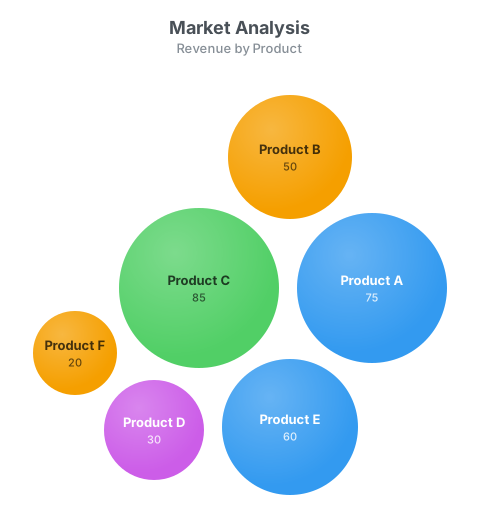
Renders a packed-bubble chart where each item's area is proportional to its value. Positions are computed automatically by a greedy circle-packing algorithm — no coordinates needed. Bubbles pulse with a subtle SMIL animation for a lively visual effect.
| Field | Type | Default | Description |
|------------|-----------------|--------------|-----------------------------------------------|
| figure | 'bubble' | required | Selects the bubble chart renderer |
| items | BubbleItem[] | required | Bubble data items |
| title | string | undefined | Optional centered title above the diagram |
| subtitle | string | undefined | Optional centered subtitle below the title |
| theme | ThemeType | 'light' | Light or dark rendering mode |
| palette | PaletteType | 'default' | Color palette — see Palette API below |
BubbleItem
| Field | Type | Default | Description |
|---------|----------|--------------|--------------------------------------------------------|
| id | string | undefined | Optional unique identifier |
| label | string | required | Text label displayed inside or below the bubble |
| value | number | required | Positive number — bubble area is proportional to value |
fig({
  figure: 'bubble',
  title: 'Market Analysis',
  items: [
    { label: 'Product A', value: 75 },
    { label: 'Product B', value: 50 },
    { label: 'Product C', value: 85 },
  ],
  palette: 'default',
});
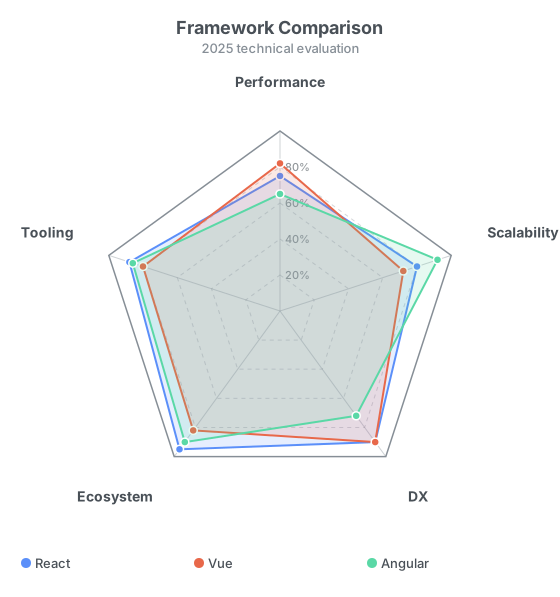
figure: 'radar' — Radar / Spider Chart
Renders a radar (spider / web) chart with multiple overlaid polygon series. Each axis is a spoke radiating from the centre; values 0–100 map to 0–100% of the axis radius. Multiple series are overlaid with translucent fills so they remain readable when they overlap. A legend below the chart labels each series.
| Field | Type | Default | Description |
|------------|-----------------|--------------|-----------------------------------------------|
| figure | 'radar' | required | Selects the radar chart renderer |
| axes | string[] | required | Ordered list of axis labels (3 or more recommended) |
| series | RadarSeries[] | required | One or more data series to overlay |
| title | string | undefined | Optional centered title above the diagram |
| subtitle | string | undefined | Optional centered subtitle below the title |
| theme | ThemeType | 'light' | Light or dark rendering mode |
| palette | PaletteType | 'default' | Color palette — see Palette API below |
RadarSeries
| Field | Type | Default | Description |
|----------|------------|--------------|---------------------------------------------------------------|
| label | string | required | Series name shown in the legend |
| values | number[] | required | One value per axis in the same order as axes (range 0–100) |
fig({
  figure: 'radar',
  title: 'Framework Comparison',
  axes: ['Performance', 'Scalability', 'DX', 'Ecosystem', 'Tooling'],
  series: [
    { label: 'React',   values: [75, 80, 90, 95, 88] },
    { label: 'Vue',     values: [82, 72, 90, 82, 80] },
    { label: 'Angular', values: [65, 92, 72, 90, 86] },
  ],
  palette: 'antv',
});
Palette API
All thirteen diagram types accept two independent styling parameters:
| Field | Type | Default | Description |
|-----------|------------------------|---------------|--------------------------------------|
| theme | 'light' \| 'dark' | 'light' | Background and text rendering mode |
| palette | string \| string[] | 'default' | Color palette for nodes |
palette values:
| Value | Description |
|-------|-------------|
| 'default' | Built-in multi-hue palette — process=blue, decision=amber, terminal=green, io=purple |
| 'antv' | AntV G2 categorical palette — cornflower-blue, coral-orange, mint-teal, violet |
| 'drawio' | draw.io / diagrams.net shape palette — sky-blue, amber, sage, red |
| 'figma' | Figma / design-tool palette — indigo, cyan, emerald, rose-pink |
| 'vega' | Vega / Vega-Lite categorical palette — steel-blue, orange, teal, crimson |
| 'mono-blue' | Monochrome blue — all four node types use blue-family shades |
| 'mono-green' | Monochrome green — all four node types use green-family shades |
| 'mono-purple' | Monochrome purple — all four node types use purple-family shades |
| 'mono-orange' | Monochrome orange — all four node types use orange-family shades |
| string[] | 4-element hex array mapped to [process, decision, terminal, io] |
// Built-in palette, dark mode
fig({ figure: 'flow', nodes, edges, theme: 'dark', palette: 'default' });

// AntV G2 palette
fig({ figure: 'flow', nodes, edges, palette: 'antv' });

// draw.io palette with dark background
fig({ figure: 'flow', nodes, edges, theme: 'dark', palette: 'drawio' });

// Monochrome blue
fig({ figure: 'flow', nodes, edges, palette: 'mono-blue' });

// Custom hex palette
fig({ figure: 'flow', nodes, edges, palette: ['#e64980', '#ae3ec9', '#7048e8', '#1098ad'] });
Markdown syntax
fig() also accepts a plain markdown string as input. The first non-empty line must be figure <type>. Config, data, and comment lines follow.
| Line type | Syntax | Example |
|-----------|--------|---------|
| Header | figure <type> | figure flow |
| Config | key: value | direction: LR · palette: antv · title: My Chart |
| Comment | %% text | %% ignored |
| Data | diagram-specific | see per-diagram syntax below |
Config keys available in all diagram types: title, subtitle, theme (light|dark), palette, direction (TB|LR).
Node notation (flow / tree / mindmap / arch)
| Notation | Shape |
|----------|-------|
| id[label] | process (rectangle) |
| id{label} | decision (diamond) |
| id((label)) | terminal (pill) |
| id[/label/] | io (parallelogram) |
| id | process (bare id used as label) |
Per-diagram syntax
figure flow
direction: LR
title: Optional Title
subtitle: Optional Subtitle
id[Label]                          %% standalone node definition
A[Source] --> B[Target]            %% edge
A --> B[Target]: label             %% labeled edge
group GroupName: id1, id2, id3     %% logical group
figure tree
direction: LR
title: Optional Title
root[Root] %% root node (no parent)
root --> child[Child] %% parent → child relationshipfigure arch
direction: TB
title: Optional Title
layer Layer Label %% layer declaration (label serves as id)
nodeId[Node Label] %% node in current layer (indentation optional)figure mindmap
title: Optional Title
subtitle: Optional Subtitle
root[Root Topic]
root --> leftBranch[Left Branch]
root --> rightBranch[Right Branch]
leftBranch --> leaf[Leaf]figure sequence
title: Optional Title
actors: Actor1, Actor2, Actor3 %% optional; inferred from messages if omitted
Actor1 -> Actor2: message %% solid arrow
Actor2 --> Actor1: response %% dashed return arrow
Actor1 -> Actor2 %% arrow without labelfigure quadrant
title: Optional Title
x-axis: min .. max %% axis range (label defaults to "")
x-axis Label: min .. max %% axis range with explicit axis label
y-axis: min .. max
quadrant-1: Top-Left Name %% 1=TL, 2=TR, 3=BL, 4=BR
quadrant-2: Top-Right Name
quadrant-3: Bottom-Left Name
quadrant-4: Bottom-Right Name
Point Label: 0.3, 0.7 %% data point (x, y in [0, 1])figure gantt
title: Optional Title
section Section Name %% group header (applied to subsequent tasks)
Task Label: id, start, end %% task bar (dates: yyyy-mm-dd)
milestone: Label, date %% milestone diamondfigure state
title: Optional Title
idle[Idle] %% normal state (rounded rectangle)
accent: failed %% highlight as focal/error state
start --> idle %% start pseudo-state → first state
idle --> processing: order placed %% transition with optional label
processing --> end: shipped %% end pseudo-statefigure er
title: Optional Title
entity User %% entity declaration (name = id = label)
id pk: uuid %% field: name [pk|fk]: type
email: text
name %% bare field (no type)
entity Post
id pk: uuid
author_id fk: uuid
User --> Post: writes %% relationship line
accent: User %% mark as aggregate rootfigure timeline
title: Optional Title
2020-01-15: v1.0 Launch milestone %% major milestone (larger accent dot)
2021-06-01: v1.5 Patch
2022-03-10: v2.0 Redesign milestonefigure swimlane
title: Optional Title
section Customer %% declare lane (subsequent nodes belong here)
order[Place Order] %% node in current lane
pay[Confirm Payment]
section Warehouse
pack[Pack Items]
section Shipping
ship[Ship Package]
order --> pack %% edges between nodes
pack --> shipfigure bubble
title: Optional Title
%% e.g. "Product A: 75"
Label: valuefigure radar
title: Optional Title
%% axes: comma-separated axis labels
axes: Axis1, Axis2, Axis3, ...
%% one value (0-100) per axis
Series A: 80, 70, 90, ...
Series B: 60, 85, 75, ...Using with AI
This library ships a SKILL.md — a machine-readable skill file that AI agents (Copilot, Cursor, Claude, etc.) can load as context.
# Load the skill into your AI context:
@SKILL.md
fig() accepts a plain markdown string, which makes it ideal for AI generation:
- Streaming-safe — partial output never throws; the diagram fills in progressively as more tokens arrive
- Compact — the markdown syntax is ~5× shorter than an equivalent JSON config
Prompt example:
"Draw a flowchart showing the user login process."
AI-generated code:
import { fig } from 'ai-figure';

const svg = fig(`
  figure flow
  direction: TB
  palette: default
  title: User Login
  start((Start)) --> creds[Enter Credentials]
  creds --> validate{Valid?}
  validate --> dashboard((Dashboard)): yes
  validate --> error[Show Error]: no
  error --> creds
  dashboard --> done((End))
`);
Development
# Install dependencies
npm install

# Build (ESM + CJS)
npm run build

# Run tests
npm test

# Type check
npm run typecheck

# Start browser demo (after building)
npx serve .
# Then open: http://localhost:3000/index.html
License
MIT © hustcc