
arahi
v2.0.0
Published
Installer for the cmdop CLI — run an AI agent that automates work on your own machine

Maintainers
 markolofsen
Readme
arahi
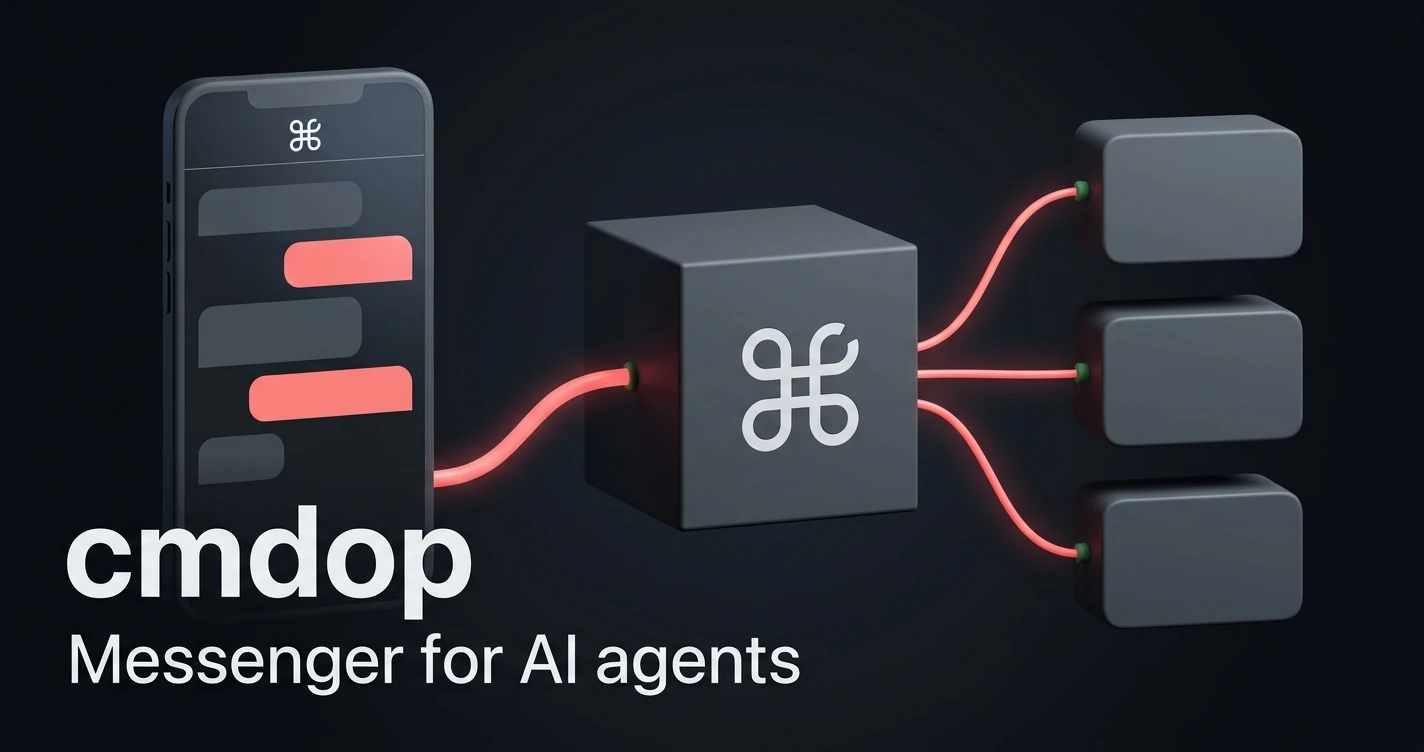
Installer for the cmdop CLI — the agent that automates work on the machine where the work actually is.
npx arahiThat's it. arahi detects your platform, downloads the cmdop binary,
verifies it against the published checksums, installs it, and hands over.
Automation usually stops at the edge of the machine. A scheduler can fire a job, a bot can post a message, but neither can open your project, read the file that is actually wrong, and change it.
cmdop is a single binary that puts an AI agent on that machine, with a shell and your filesystem, and keeps it reachable. This package installs that binary and gets out of the way.
How does CMDOP compare? CMDOP Skills vs OpenClaw: two approaches to AI agent skills →
Automation that runs where your work lives
The agent runs on hardware you already own, under your account, with the tools you already have installed. Nothing is uploaded to a service to be automated somewhere else, because the machine that needs the work done is the machine running the agent.
That also means the setup cost is a single npx command, not a runbook.
What is cmdop
One executable that is the agent, the relay, the local server and the web console at once. There is no gateway, backend, database server or broker to stand up — you add one binary to a machine you already own.
- run an AI agent on your own machine, with your own tools
- reach it from anywhere: terminal, files, remote execution
- connect machines into a fleet
- works with Claude Code and other agent engines under the hood
Full documentation: docs.cmdop.com
Usage
npx arahi                   # install cmdop (if needed), then run it
npm install -g arahi        # or install the command permanently
Once the command is available:
arahi                    # install cmdop (if needed), then run it
arahi --install-only     # install, don't hand over
arahi --prefix ~/bin     # choose the install directory
arahi --force            # reinstall even if already present
arahi --quiet            # print only the installed path
arahi -- --help          # everything after `--` goes to cmdop
Default install directory is ~/.local/bin (%LOCALAPPDATA%\cmdop\bin on
Windows). No sudo, no system directories.
What it does, precisely
- Detects your OS and architecture.
- Fetches
SHA256SUMSfrominstall.cmdop.com. - Downloads the matching binary to a temporary file.
- Verifies the SHA-256 against the published checksum. On mismatch it aborts and installs nothing.
- Moves the verified binary into the install directory and marks it executable.
- Runs it.
Supported: macOS (Apple Silicon, Intel), Linux (x64, arm64), Windows (x64).
Requires Node.js 18 or newer.
What it does not do
- No side effects at install time.
npm install arahionly unpacks files — there is nopostinstallscript. Nothing is downloaded or executed until you runarahi. - No network access on require.
require('arahi')touches nothing. - No telemetry. The package sends no analytics, ever.
- No dependencies. Node built-ins only, so there is nothing in this
package's tree that can float onto a broken release. It declares no
dependenciesat all — not an empty object, no entry.
Node API
The installer is importable if you would rather script it:
const arahi = require('arahi');

const target = arahi.detect();
console.log(target.label, target.asset);

const result = await arahi.install();
console.log(result.path, result.sha256);
arahi.install() rejects with arahi.InstallError carrying a
user-facing message on any failure, and arahi.detect() throws
arahi.UnsupportedPlatform when there is no published binary for the
current machine.
install() accepts { installDir, target, onProgress }; all three are
optional.
Links
- Website — https://cmdop.com
- Documentation — https://docs.cmdop.com
- Downloads — https://cmdop.com/download
License
MIT