
denoise-voice-clarity
v0.2.2
Published
Real-time in-browser noise suppression + voice clarity for WebRTC (DeepFilterNet 3, WASM). Open-source, license-free Krisp replacement. Works with plain getUserMedia or LiveKit. Lazy-loaded.

Maintainers
 rajan471
Readme
denoise-voice-clarity


Real-time noise suppression for the browser — a free, open-source, license-free
Krisp replacement. Runs 100% client-side in an AudioWorklet + WebAssembly
(DeepFilterNet 3), so no audio ever leaves the user's device and there are no
per-seat fees. Works with plain WebRTC / getUserMedia and ships a thin
LiveKit adapter.
▶ Try the live demo — hear it on your own mic
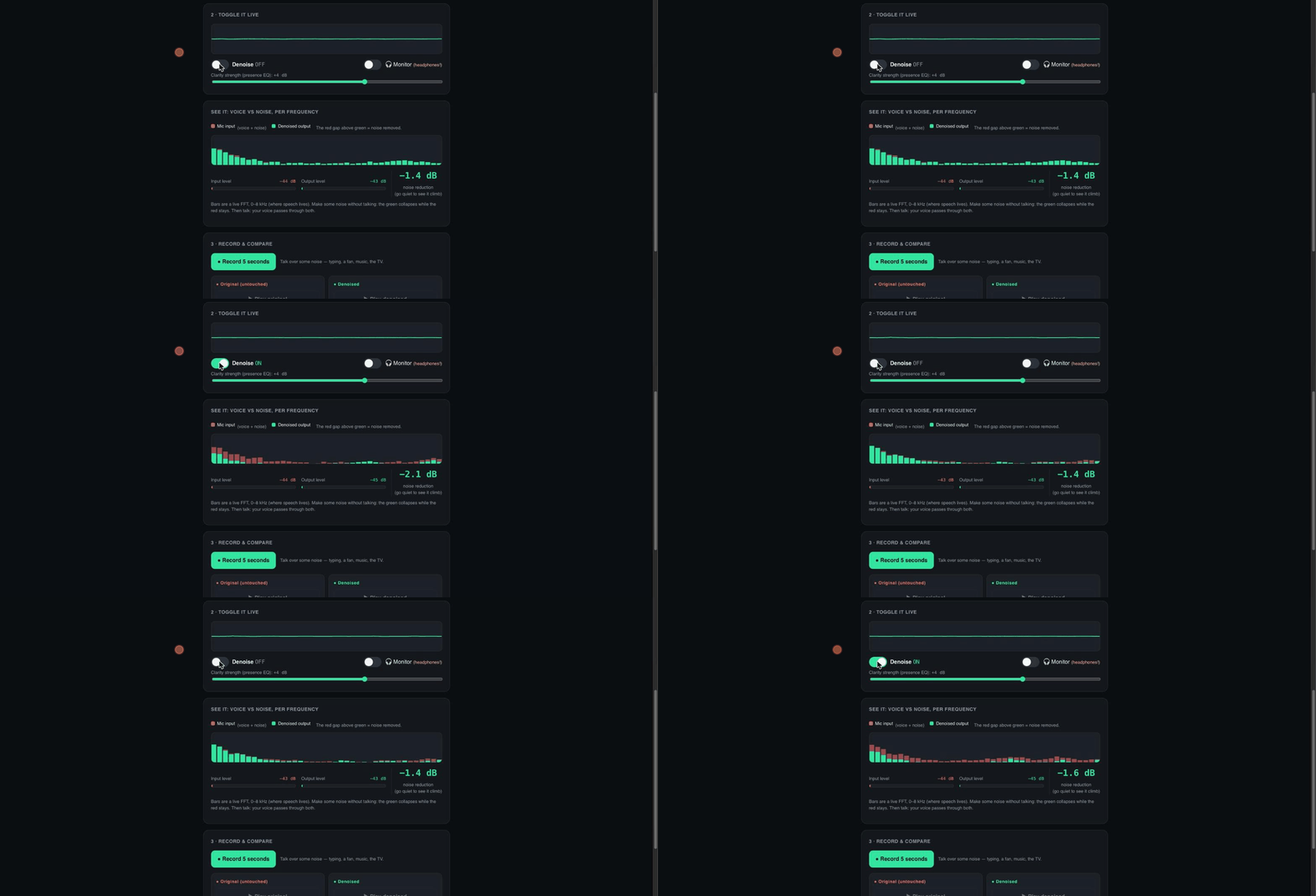
Toggle the filter on your microphone, record an A/B clip, and watch a live input-vs-denoised spectrum: https://rajan471.github.io/denoise-voice-clarity/ (runs entirely in your browser — no audio is uploaded). In the clip above, red is the raw mic and green is the denoised output — flip the filter on and the green collapses below the red: that gap is the noise being removed.
- Denoise — DeepFilterNet 3 neural suppression (optional build) or a passthrough reference engine.
- Clarity — high-pass → presence EQ → AGC → soft compressor, VAD-gated.
- No license server, no per-seat cost (unlike Krisp / Koala).
- Provider-agnostic — anything that gives you a
MediaStreamTrackworks. - Lazy-loaded — dynamic-import keeps the multi-MB WASM out of your initial bundle.
How it compares
| | denoise-voice-clarity | Krisp | Koala (Picovoice) | RNNoise (jitsi) | |---|---|---|---|---| | License | MIT, free | Commercial, per-seat | Commercial | BSD, free | | Runs in-browser (no server) | ✅ | ✅ (LiveKit Cloud) | ✅ | ✅ | | Model | DeepFilterNet 3 | Proprietary | Proprietary | RNNoise | | Audio leaves device | No | No | No | No | | Works outside LiveKit | ✅ (any WebRTC) | Tied to vendor SDKs | ✅ | ✅ | | Voice-clarity chain (EQ/AGC) | ✅ | partial | ❌ | ❌ |
Install
npm install denoise-voice-clarityQuick start (any WebRTC / getUserMedia)
No LiveKit required. Dynamic-import so the WASM stays out of your initial bundle:
async function enableDenoise(): Promise<MediaStream> {
  const { createDenoisedStream, isVoiceClaritySupported } =
    await import('denoise-voice-clarity');

  const mic = await navigator.mediaDevices.getUserMedia({
    audio: { noiseSuppression: false, autoGainControl: false, echoCancellation: true },
  });

  if (!isVoiceClaritySupported()) return mic; // fall back to the raw mic

  const denoised = await createDenoisedStream(mic, {
    enabled: true,
    attenuationLimitDb: 30, // higher = more removal
    presenceGainDb: 4,      // "clarity strength"
  });

  // denoised.stream / denoised.track are clean — publish them anywhere:
  //   peerConnection.addTrack(denoised.track, denoised.stream)
  //   twilioLocalAudioTrack, daily, agora, <audio>.srcObject, …
  return denoised.stream;
}
Toggle and tune at runtime, then tear down:
denoised.setEnabled(false);     // bypass (hear the raw mic)
denoised.setPresenceGainDb(6);  // more presence
await denoised.destroy();        // free the graph + AudioContext
Turn off the browser's own
noiseSuppression/autoGainControlwhen this is active (keepechoCancellation) so you don't double-process.
LiveKit
A TrackProcessor adapter is included — attach it to a LocalAudioTrack:
import type { LocalAudioTrack } from 'livekit-client';

async function enableVoiceClarity(micTrack: LocalAudioTrack) {
  const { VoiceClarityProcessor, isVoiceClaritySupported } =
    await import('denoise-voice-clarity');
  if (!isVoiceClaritySupported()) return false; // fall back to native suppression

  const processor = new VoiceClarityProcessor({ enabled: true, presenceGainDb: 4 });
  await micTrack.setProcessor(processor);
  return true;
}
Disable native suppression in RoomOptions.audioCaptureDefaults (keep
echoCancellation). Full wiring: examples/meeting-ui-integration.ts.
livekit-client ^2.17 is an optional peer dependency — only needed if you use
this adapter.
API
| Export | Description |
|---|---|
| createDenoisedStream(stream, opts?) | Denoise a MediaStream's first audio track → DenoiseHandle. |
| createDenoisedTrack(track, opts?) | Denoise a single MediaStreamTrack → DenoiseHandle. |
| DenoiseEngine | Low-level engine if you want to manage the graph yourself. |
| VoiceClarityProcessor | LiveKit TrackProcessor adapter. |
| isVoiceClaritySupported() | Capability check (AudioWorklet + streaming WASM). |
DenoiseOptions: enabled (default true), attenuationLimitDb (0–100, default
30), presenceGainDb (−12…12, default 4). A DenoiseHandle exposes track,
stream, setEnabled(), setPresenceGainDb(), and destroy().
Browser support
Requires AudioWorklet and WebAssembly.compileStreaming (all modern evergreen
browsers). isVoiceClaritySupported() gates it for you; fall back to the raw mic
- native suppression otherwise.
Build from source
# 1. Rust core → WASM (needs Rust + wasm-pack; see ../scripts/build-wasm.sh)
npm run build:wasm                        # small passthrough+clarity WASM
FEATURES="wasm,dfn" npm run build:wasm    # full DeepFilterNet (needs model weights)

# 2. npm package (copies WASM, bundles worklet, emits types)
npm run build                             # → dist/{index.js, voiceClarity.worklet.js, wasm/, *.d.ts}
npm publish runs prepublishOnly → build; the published package contains only
dist/ + this README.
Notes / caveats
- The worklet is a self-contained classic script with the wasm-bindgen glue
inlined (AudioWorklet scope can't dynamic-import). Built by
scripts/build.mjs. - Adds ~10 ms latency (one 480-sample frame at 48 kHz) — fine for calls.
- The full DeepFilterNet model WASM is large (~18 MB); always dynamic-import it.
- The
TrackProcessorinterface can shift acrosslivekit-clientminors — tested against^2.17.
License: MIT.