
doe-gpu
v0.4.7
Published
Zig-first WebGPU runtime for Node.js, Bun, and Deno

Maintainers
 clocksmith
Readme
doe-gpu
doe-gpu is the JavaScript entry point for Doe's native WebGPU runtime. It
loads a native Doe library when one is available and fails explicitly when it is
not.
Install
npm install doe-gpuPackage map
+-------------------+
| app code          |
| Node | Bun | Deno |
+---------+---------+
         |
         v
+--------------------------------+
| doe-gpu npm package            |
| JS API + native runtime loader |
+------+------------+------------+
       |            |
       v            v
+-------------+  +--------------------------------+
| entrypoints |  | native library resolution      |
| compute     |  | optional pkg | workspace build |
| native      |  | DOE_WEBGPU_LIB / DOE_LIB       |
| node-webgpu |  +---------------+----------------+
| plan        |                  |
| capture     |                  v
| browser     |          +----------------+
+------+------+          | libwebgpu_doe  |
      |                +-------+--------+
      |                        |
      |                        v
      |          +-------------------------------+
      |          | native backend path           |
      |          | Metal | Vulkan | D3D12/DXIL  |
      |          +---------------+---------------+
      |                          |
      +--------------------------+
                                 v
                      +---------------------+
                      | receipts or explicit|
                      | missing-runtime fail|
                      +---------------------+

+------------------+     +--------------------------+
| doe-gpu/browser  | --> | incumbent browser WebGPU |
+------------------+     +--------------------------+

+-------------------------------+
| Fawn/Chromium                 |
| separate browser release lane |
+-------------------------------+
Usage
Run the package examples:
node node_modules/doe-gpu/examples/node-first-kernel.mjs
bun node_modules/doe-gpu/examples/bun-first-kernel.mjs
Or call the default compute surface:
import { gpu } from "doe-gpu";

const device = await gpu.requestDevice();
const result = await device.compute({
  code: `@group(0) @binding(0) var<storage, read_write> data: array<f32>;
         @compute @workgroup_size(64) fn main(@builtin(global_invocation_id) id: vec3u) {
           data[id.x] = data[id.x] * 2.0;
         }`,
  inputs: [new Float32Array([1, 2, 3, 4])],
  output: { type: Float32Array, size: 16 },
  workgroups: 1,
});
Use createNativeDirect() when you want the native WebGPU provider directly:
import { createNativeDirect } from "doe-gpu";

const gpu = createNativeDirect();
const adapter = await gpu.requestAdapter();
const device = await adapter.requestDevice();
Entry Points
doe-gpu: default runtime surfacedoe-gpu/compute: compute-focused helper surfacedoe-gpu/native: explicit Zig-backed native WebGPU providerdoe-gpu/node-webgpu: Node WebGPU provider bootstrapdoe-gpu/api: provider-neutral helpers and typesdoe-gpu/plan: JSON command-stream and execution-plan contractsdoe-gpu/capture: record-only WebGPU capture providerdoe-gpu/browser: browser API wrapperdoe-gpu/hybrid: compatibility helper for older integrations
Runtime requirements
- Node.js 18+ for the default package entry point
- Bun and Deno are supported through the package entrypoints in
exports - a matching optional platform package, local workspace build, or explicit native library path
Native loading checks these paths:
- npm-installed optional platform packages such as
doe-gpu-darwin-arm64anddoe-gpu-linux-x64 - a local workspace build under
runtime/zig/zig-out/ - explicit
DOE_WEBGPU_LIB/DOE_LIBoverrides - local debug prebuilds under
packages/doe-gpu/prebuilds/<platform-arch>/
If the native addon or shared library is missing, the package fails explicitly instead of silently falling back to another runtime.
Evidence
The npm package is the JavaScript wrapper. It does not bundle the full Vulkan, Metal, Dawn-vs-Doe, browser, or hardware evidence trees.
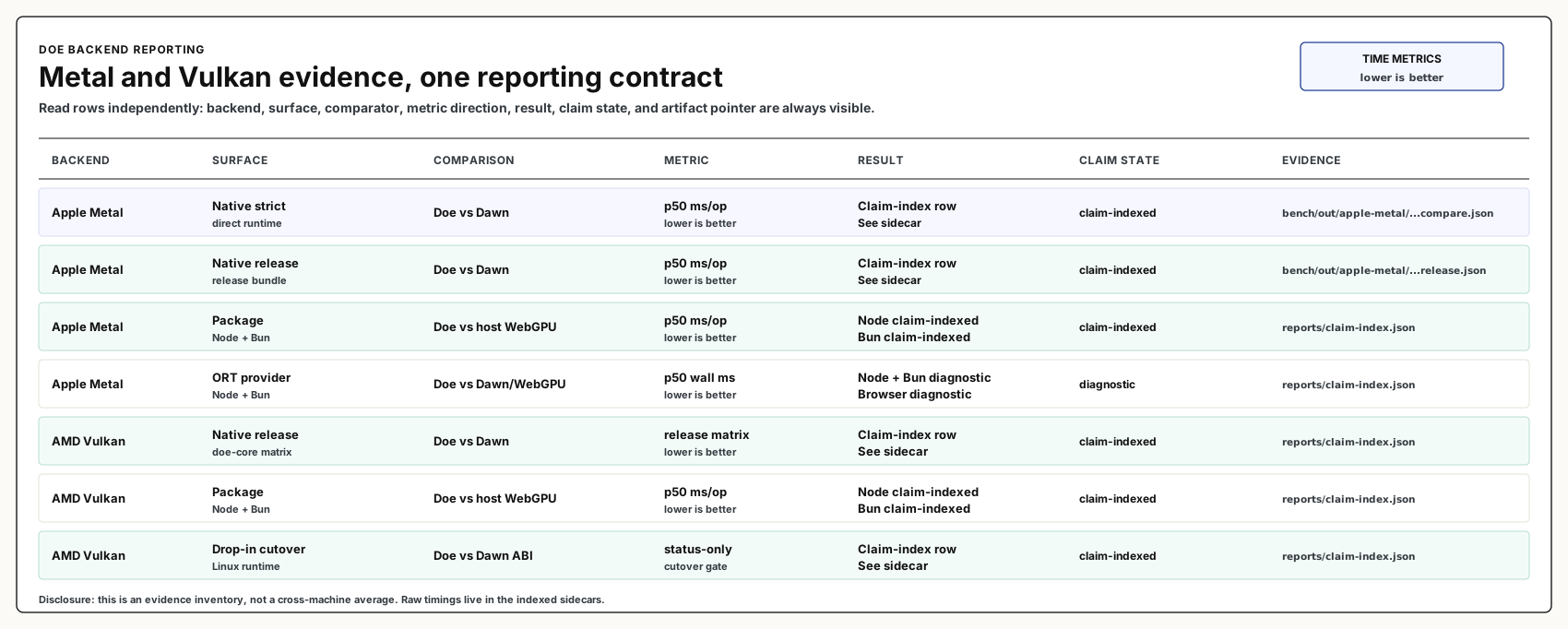
Current public package and runtime evidence is indexed in
reports/claim-index.json.
The shared chart separates claim-indexed Apple Metal package/native rows, AMD
Vulkan package/native/drop-in rows, and diagnostic ORT/browser rows.
Read each row by its claim state:
claim-indexed: public claim row with a report path and claim sidecar.diagnostic: measured engineering evidence, not public speed wording.status-only: support or capability status without a performance claim.
Do not promote old package charts or local run artifacts unless the current claim index and gates still mark the lane as claimable.
Release boundary
A doe-gpu npm release is a package/native-runtime release. It is not, by
itself, a Fawn/Chromium browser release and it does not prove that Doe replaces
Dawn in every browser path.
Platform packages and prebuilds are platform-specific. macOS arm64, Linux x64, and future Windows artifacts need matching native libraries, package metadata, and evidence rows. Keep macOS evidence and downloads separate from Linux Vulkan browser diagnostics.
Browser runtime releases need their own public archive, SHA-256, proof surface, launch receipt, and Dawn-vs-Doe comparison receipts outside the npm package.
Browser boundary
doe-gpu/browser wraps the browser's incumbent WebGPU implementation. It is
for API compatibility in browser code; it is not Doe replacing the browser
runtime.
A future Fawn/Doe browser artifact for macOS arm64 should be documented as a
separate browser release lane, not as doe-gpu/browser.
More detail
- repo overview:
README.md - runtime internals:
runtime/zig/README.md - benchmarks and evidence:
bench/README.md - current status:
docs/status.md
Legacy package names
These legacy package names are deprecated in favor of doe-gpu:
@simulatte/webgpu@simulatte/webgpu-doe
License
Apache-2.0. See
docs/licensing.md.