
jev-msw
v0.0.2
Published
Mock Jev API decisions with MSW for deterministic tests without real API calls or credits.

Maintainers
 royalpinto007
Readme
jev-msw
Mock Jev. Test decisions without making decisions.


jev-msw provides contract-aware MSW handlers for the real @typesafe-ai/sdk. Make Jev-driven tests deterministic without API calls, credentials, latency, or credits.
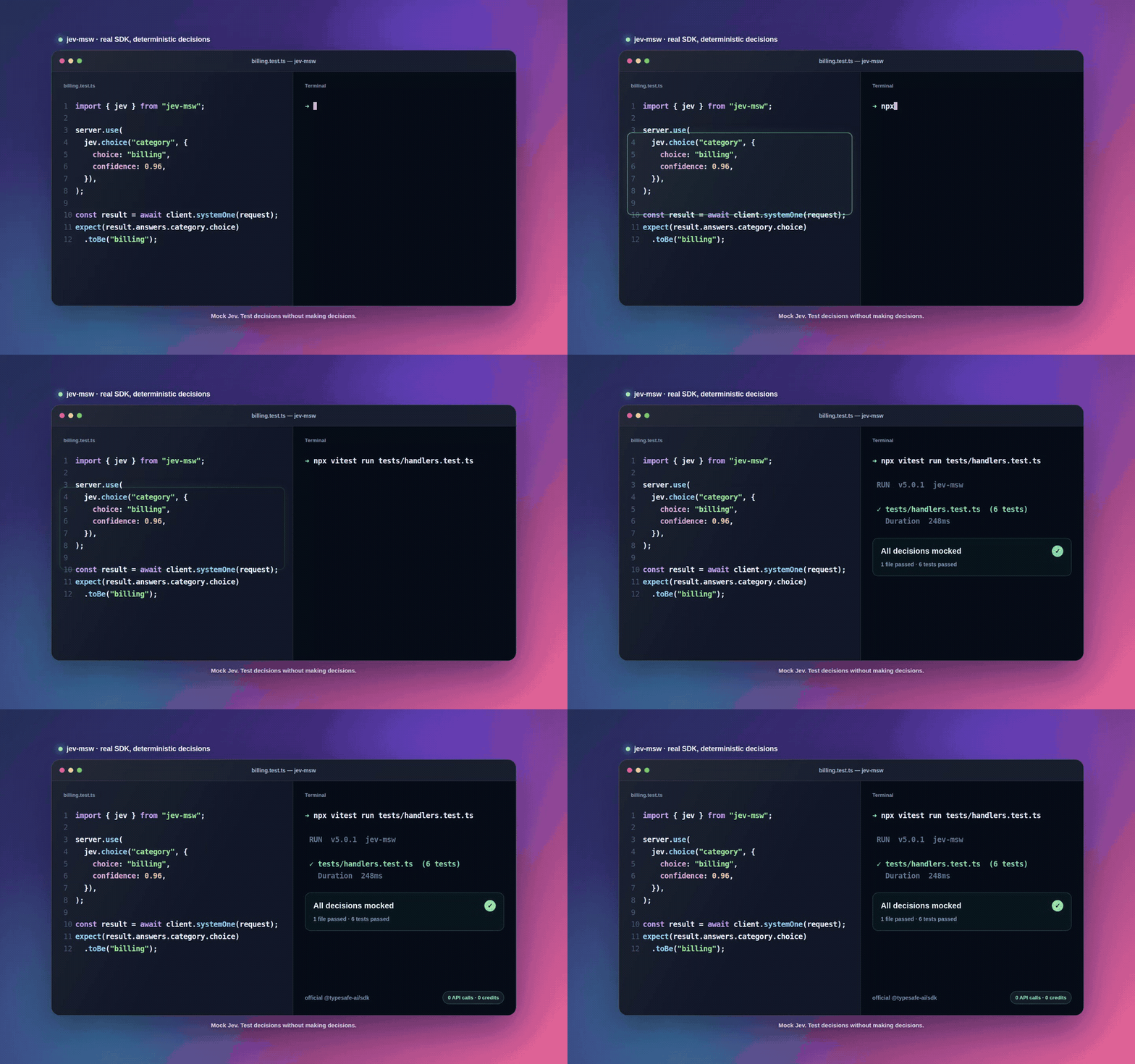
30-second quickstart
npm install -D jev-msw mswimport { choice, TypeSafeClient } from "@typesafe-ai/sdk";
import { setupServer } from "msw/node";
import { afterAll, afterEach, beforeAll, expect, it } from "vitest";
import { jev } from "jev-msw";
const server = setupServer();
const client = new TypeSafeClient({ apiKey: "test-key" });
beforeAll(() => server.listen({ onUnhandledRequest: "error" }));
afterEach(() => {
server.resetHandlers();
jev.reset();
});
afterAll(() => server.close());
it("routes billing tickets", async () => {
server.use(
jev.choice("category", {
choice: "billing",
confidence: 0.96,
}),
);
const result = await client.systemOne({
state: "I was charged twice.",
questions: {
category: choice("What is this ticket about?", {
billing: null,
technical: null,
other: null,
}),
},
});
expect(result.answers.category.choice).toBe("billing");
});The missing probability map is derived from the actual labels in the incoming question. The application still runs the official SDK and its real parsing, error, timeout, and retry logic.
Answers
server.use(jev.noul("approved", { noul: 0.91 }));

server.use(
  jev.score("urgency", {
    score: 1.7,
    confidence: 0.82,
  }),
);

server.use(
  jev.respond({
    approved: { type: "noul", noul: 0.91 },
    category: { type: "choice", choice: "billing", confidence: 0.96 },
  }),
);
Choice probabilities, score legends, score probabilities, model, and zero-token usage are completed from the incoming request unless you provide them explicitly.
Dynamic decisions and matching
server.use(
  jev.mock(
    ({ request, attempt }) => {
      const state = request.state;
      const vip =
        typeof state === "object" && state !== null && !Array.isArray(state) && state.vip === true;
      return {
        answers: {
          category: {
            type: "choice",
            choice: vip ? "priority" : "standard",
            confidence: attempt === 1 ? 0.88 : 0.99,
          },
        },
      };
    },
    {
      match: {
        state: { tenant: "acme" },
        questions: { category: "choice" },
        model: /^jev-/,
      },
      delay: 25,
    },
  ),
);
State matching is deep-partial. State, question, and model matchers can also be predicates.
Failures and retries
server.use(jev.serverError());
server.use(jev.rateLimited({ retryAfterMs: 100 }));
server.use(jev.error(422, { message: "Invalid test input" }));
server.use(jev.connectionError());
server.use(jev.timeout());
server.use(jev.malformed("missing-answers"));

server.use(
  jev.sequence(
    jev.rateLimited({ retryAfterMs: 1 }),
    jev.serverError(),
    jev.choice("category", { choice: "billing", confidence: 1 }),
  ),
);
sequence() keeps returning its final handler after the sequence is exhausted. This makes the official SDK's 408, 429, 5xx, connection, and timeout retry behavior straightforward to test.
Inspect requests
expect(jev.history.requests).toHaveLength(1);
expect(jev.history.lastRequest?.request.state).toEqual({ ticket: "charged twice" });

import { jevMatchers } from "jev-msw/vitest"; // Also available from jev-msw/jest
expect.extend(jevMatchers);
Use createJevMock() when suites need isolated histories:
import { createJevMock } from "jev-msw";

const billingJev = createJevMock();
Compatibility
- Node.js 20 or newer
- MSW 2.x
- Verified against
@typesafe-ai/sdk0.6.0 - ESM and CommonJS
- Vitest and Jest-compatible matcher functions
The default endpoint is exactly POST https://api.typesafe.ai/v1/systemone. Requests that do not satisfy a configured matcher pass through to the next MSW handler.
Documentation
Why MSW?
Your production code does not switch clients or import a fake SDK. MSW intercepts the HTTP boundary, so request validation, answer typing, retries, timeouts, and errors continue through the official client.