lettercamp
v0.1.64
Published
The Lettercamp blog engine and CLI


Readme
What is Lettercamp?
Lettercamp is an open-source platform that makes it easy to create and manage a modern content publication site. It's basically a blog in a box. The framework ships with all the features you expect from a modern content site, including markdown and MDX support, search, table of contents, related articles, author profiles, and much more. Lettercamp Cloud lets you connect your custom blog to an online editor, so anyone on your team can write and publish content.
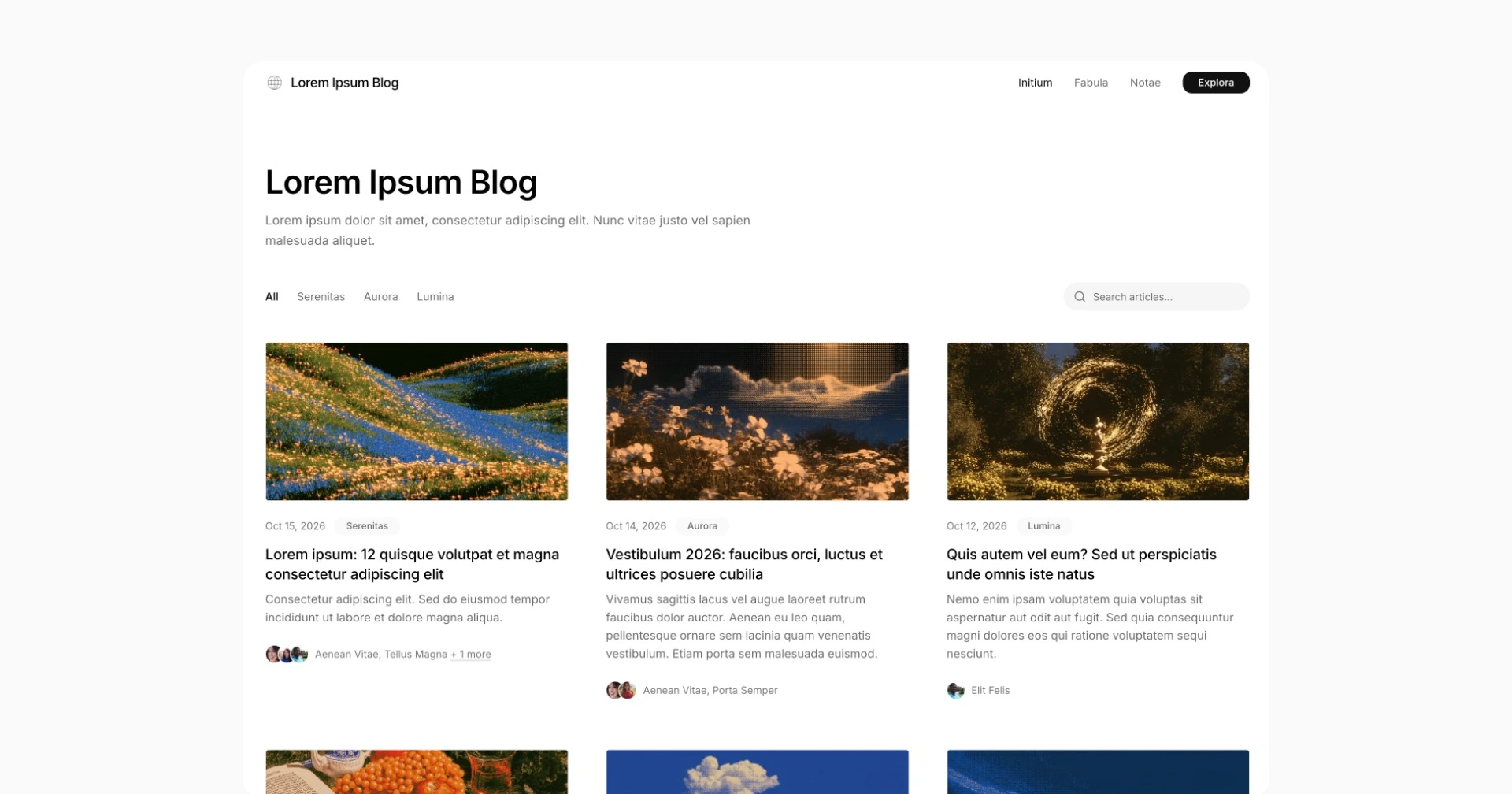
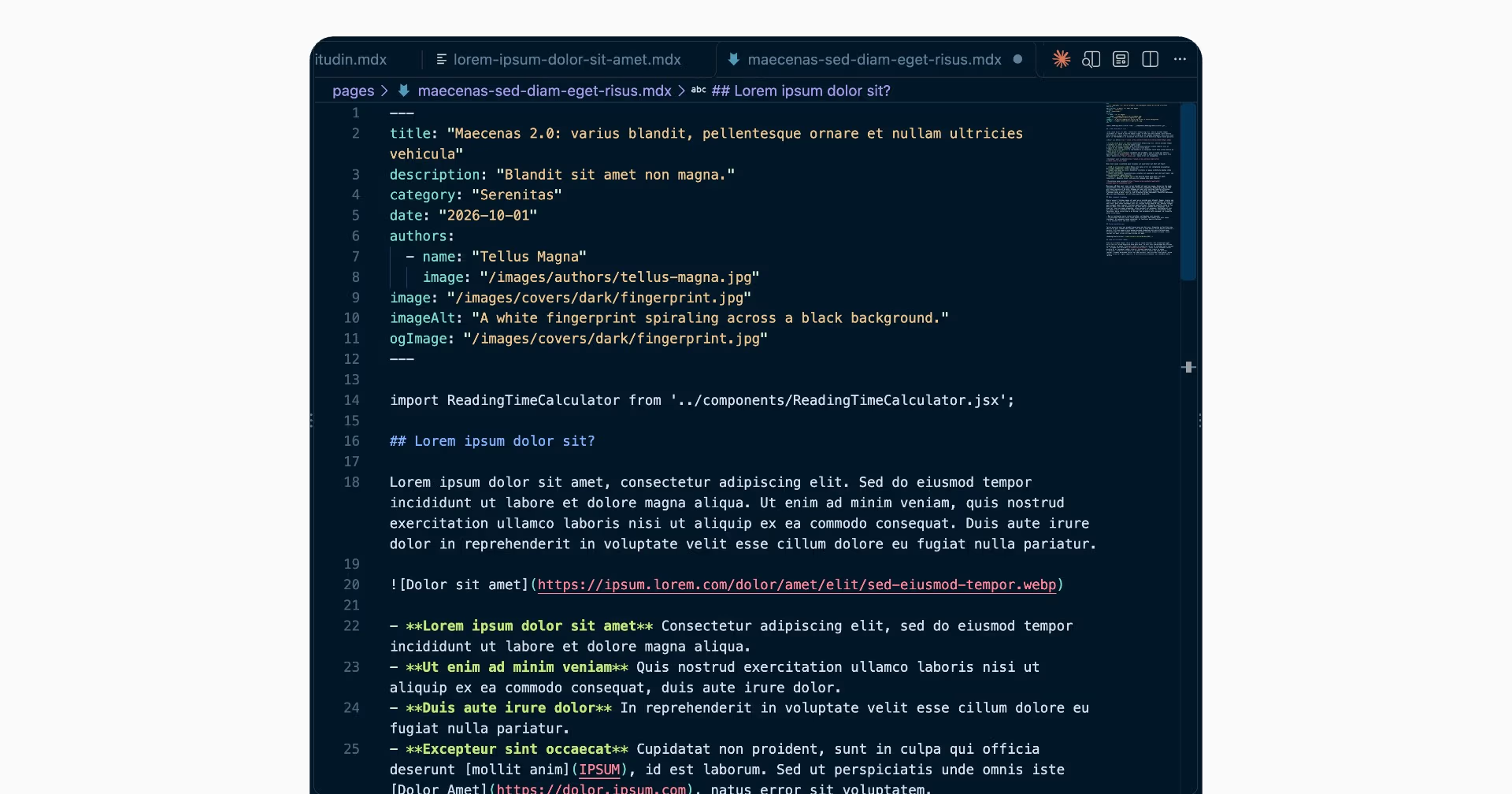
- Write in Markdown and MDX Keep your content in files and make it easier for your agent to draft and edit content without relying on a database.
- Spin up a modern content site quickly Lettercamp ships everything you need to publish and more, so you can focus on creating and publishing the best content possible.
- Customize to your brand Easily replace brand logos, fonts, and colors so that your publication reflects your brand.
- Free and open-source The core Lettercamp framework is MIT-licensed, giving you complete control over your content, publication, and deploys. Our company operates Lettercamp Cloud, which offers an hosted version.

Lettercamp ships with several built-in features that help you more easily ship content articles:
- Full rich content support Add quotes, codeblocks, tables, images, and more directly in markdown and have these reflected on your post content.
- Built-in pagination and search Your blog automatically scales to any number of posts while staying optimized for search engines and AI agents.
- SEO optimized Blog posts support authors, metadata, table of contents, and other SEO-friendly features to help your content rank better.
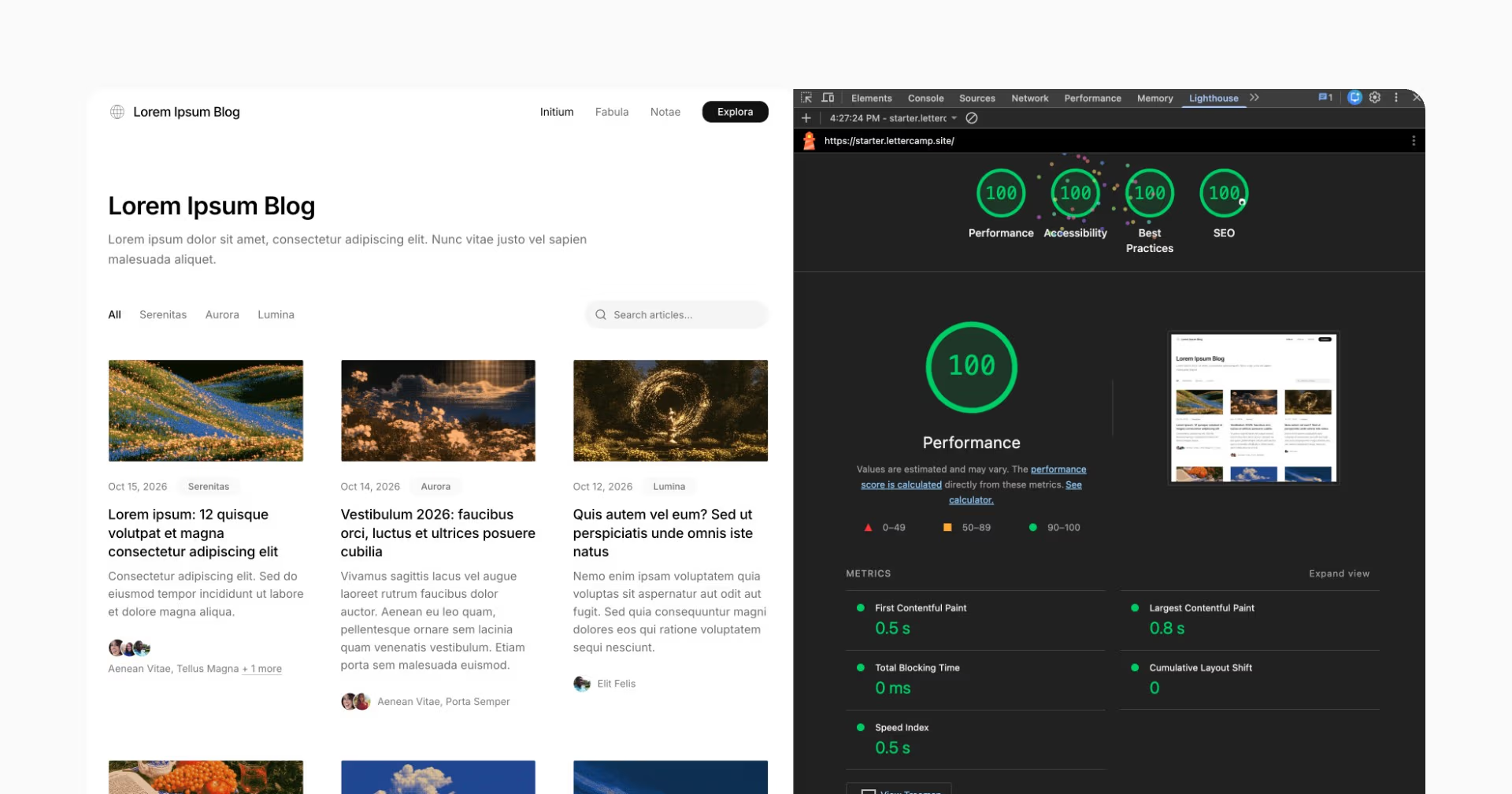
- Performant (100 across Lighthouse scores) Optimized for speed out of the box so you can focus on writing instead of tweaking loading times.
Why Lettercamp?
If you want to start publishing content on your domain, you'll have to build a content site that supports rendering articles, post pages, pagination, authors, SEO features, and much more. Lettercamp provides all of these features (and more) out of the box, letting you focus on building your own product instead of building a content site.
Existing solutions require building your entire website on a third party provider, or managing a headless CMS which contains your content in a third party database. Lettercamp solves these issues by providing an entire site as a static site, which means published content pages are fast, performant, and easier to manage. Lettercamp is built on top of the popular open-source Astro framework.
Finally, Lettercamp is designed to make it easy to connect your content to an AI agent. Instead of drafting articles and then copying and pasting them into a third party site, with Lettercamp your agent can directly iterate on the code to draft articles and create interactive content experiences. The Markdown lives in your codebase, so your agent can edit it like any other local file.
Quick start
Create your first publication:
npm create lettercamp@latest my-lettercamp-site
cd my-lettercamp-site
npm run dev
Want to see a live example of Lettercamp? You can check out the Lettercamp starter site.
Setup includes local images and fonts by default. To optionally start with
already-hosted assets, use npm create lettercamp@latest my-lettercamp-site -- --remote-assets.
See creation options for details.
See the documentation for customization and publishing with the CLI, or use Lettercamp Cloud for a web editor and managed hosting.
Installation with agents
Just ask your favorite agent to create a new Lettercamp site for you. You can also point it to this repository, or our official documentation for guidance.
Customization
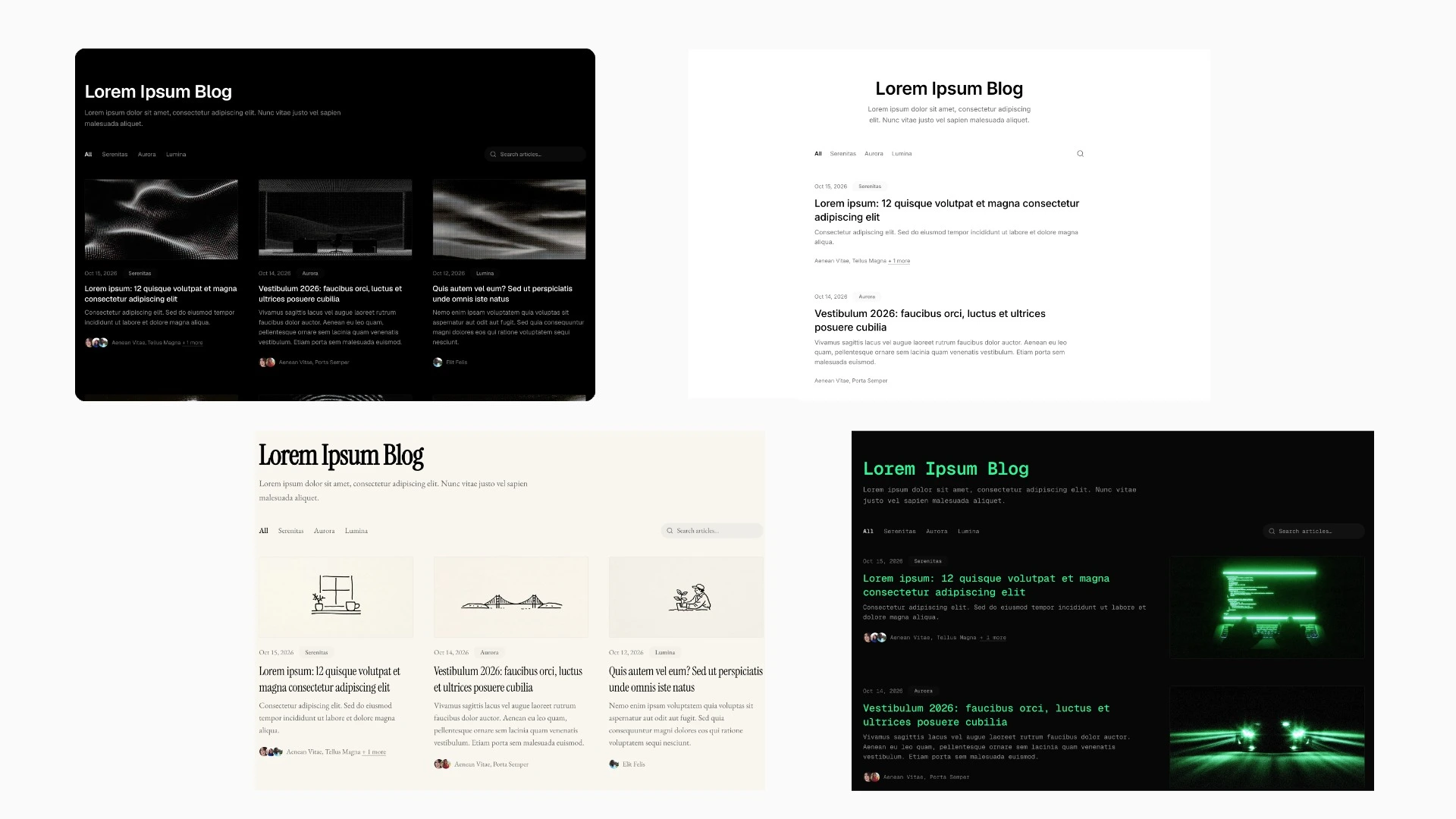
Lettercamp ships with a few default presets, but makes it easy to customize your publication site with your own branding, font, and colors.
If the native options aren't enough, you can extend Lettercamp with custom implementations for components, headers, footers, and more.
Roadmap
Our team plans to continue improving Lettercamp based on feedback from the community. There are several areas on the immediate roadmap:
- Translation and i18n Native support for multiple languages and localization to improve global content reach.
- Integrated AI Agent Readers can interact or chat with the content directly using an AI agent
- Expanded integrations Lettercamp posts should natively support popular third-party services and tools and embed content seamlessly.
- Additional UI enhancements Continuous improvements to the user interface for a better reading experience. Posts can include more rich elements, such as dark mode, reading progress, bookmarking, saved selections, and more.
If you have suggestions or ideas for the roadmap, please open an issue to share your thoughts with the community.
Lettercamp Cloud
Run npx lettercamp deploy from your publication folder to publish it and create its site in the Lettercamp dashboard. The web editor and your connected agent then save changes to one preview branch. Open Preview to review the built site and click Publish to make that version live. See Preview and publish.
Contributing
Bug reports, fixes, documentation improvements, and feature ideas are welcome. Open an issue to report a problem or discuss a larger change before starting work.
For local development, use the Node.js version in .nvmrc, then run
npm ci and npm run dev. Before opening a pull request, run npm run check and
npm run build, and describe how you verified your changes.
License and assets
Code is licensed under the MIT license.