
sonic-api-gateway
v1.0.44
Published
Nodejs api gateway

Maintainers
 hastalavistababy
Readme
Sonic - Nodejs API GATEWAY
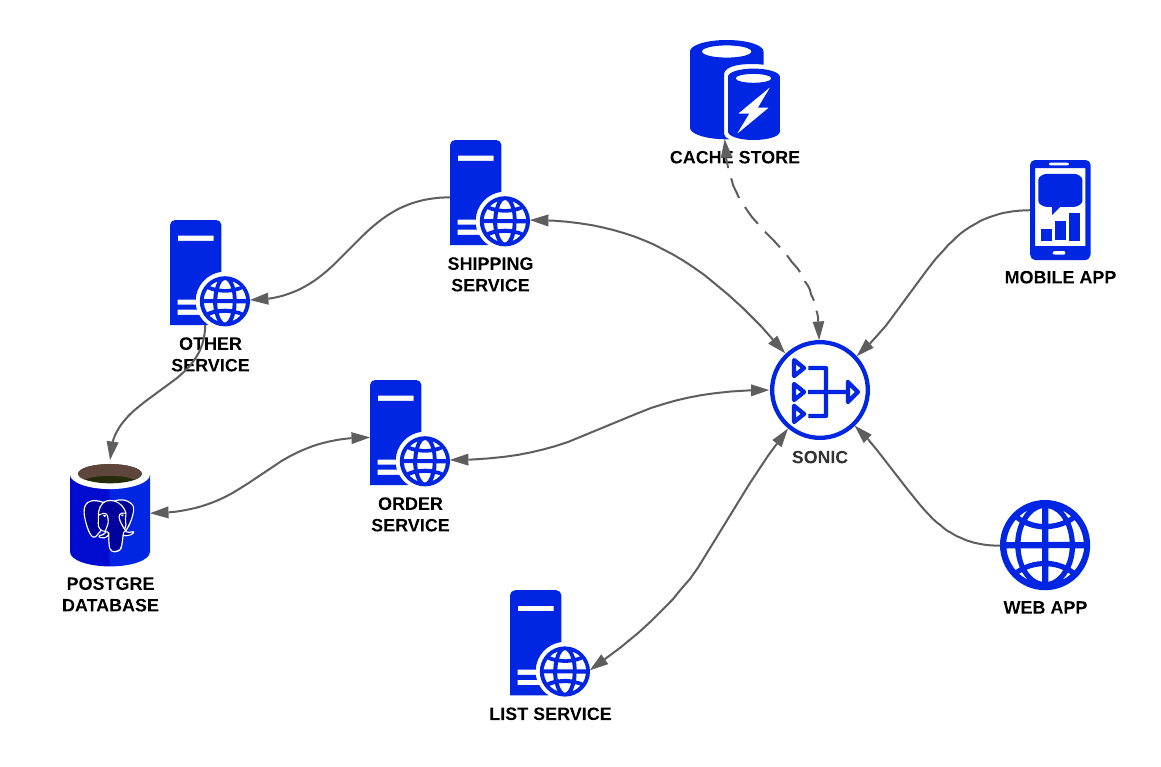
Sonic is a high-performance 100% open source, config based free API Gateway for Nodejs. All source code is available under the MIT License on GitHub.
Its core functionality is to create an API that acts as an aggregator of many microservices into single endpoints.
Features
- A single API that exposes many.
- Merge the content and modify of several APIs into one.
- Device detection (mobile, desktop).
- HTTP Caching(Redis, memory).
- Unlimited endpoints and backends.
- Secure the transport.
- Error handling.
- URL patterns and variables
- Request body validation
- Use middlewares(Response, Request, Error, and your own).
- Simple JSON configuration.
Installing:
This is a Node.js module available through the npm registry.
Using npm:
$ npm install sonic-api-gateway --saveUsing yarn:
$ yarn add sonic-api-gatewayExample:
Now that we have installed the Sonic API gateway module.
Let's create a Sonic project file.
app.js
const Sonic = require('sonic-api-gateway').Sonic

const Config = {
  port : 3014, // Server will run on port 3014
  routes: [
    {
        endpoint: '/posts/:id', // http://localhost:3014/posts/:id
        method: 'get',
        backend: [
            {
                target: 'https://jsonplaceholder.typicode.com/posts/{id}',
                method: 'get',
                response_key : "posts",
            },
            {
                target: 'https://jsonplaceholder.typicode.com/posts',
                method: 'get',
                response_key : "all_posts",
            },
            // ...
        ]
    },
    // ...
  ]
}

new Sonic(Config);
Start Sonic server:
node app.js Make a GET request (as we declare in config) with CURL:
curl -G http://localhost:3014/posts/1
Configuration options:
{
    version: String, // Optional
    logs: Boolean, // Optional
    port : Number, // Optional, Default 3000
    debug: Boolean, // Optional, Default true, for logging
    middlewares: Array, //Optional global middlewares in the format: (req, res, next) => next(), Default []
    cache: [ // Optional
        {
            driver: String, // Required, redis | memory
            host: String, // Optional
            port: Number // Optional
        }
        // ...
    ],
    routes: [
        {
            endpoint : String, // Required, ex: "/posts"
            method : String, // Required, GET, POST, DELETE, PUT
            cache: { // Optional,
                driver: String, // Required, redis | memory,
                ttl: Number, // Optional, 1 = 1 second
            },
            params : { // Optional
                [key: String] : String
            },
            onResponse?(req: any, res: any, next: any, data: any, route: any): Function; // Optional
            onRequest?(req: any, res: any, next: any): Function; // Optional
            backend: [
                {
                    target: String, // Required, ex: "https://jsonplaceholder.typicode.com/posts"
                    method: String, // Required, GET, POST, DELETE, PUT
                    response_key: String, // Optional
                    response_status : Number, // Optional
                    onResponse?(req: any, res: any, next: any, data: any, route: any): Function, // Optional
                    auth : Boolean, // Optional
                    onError?(req, res, next, proxyRoute, error) : Function // Optional
                    params : { // Optional
                        [key: String] : String
                    },
                    body: {
                        [key: string]: 'string' | 'files' | 'any' | 'number' | 'boolean'
                    }, // Required if request method is POST, PUT. ex: body : {name : 'string'}
                    body_method: String, // Default : rawdata. Possible: formdata, urlencoded, raw
                    headers: Object // Optional, set request header
                    childRoutes: Backend[] // Experimental
                }
            ]
        }
        // ...
    ]
}
API
Options:
PORT- Sonic server portVERSION- Informing client about Sonic versionDEBUG- Sonic debug modeLOGS- Log incoming requests infoMIDDLEWARES- MiddlewaresCACHE- Caching responsesROUTES- APIROUTES.ENDPOINT- API endpointROUTES.METHODAPI methodROUTES.onResponse- Handle responseROUTES.CACHEROUTES.BACKENDROUTES.BACKEND.TARGETROUTES.BACKEND.METHODROUTES.BACKEND.RESPONSE_KEYROUTES.BACKEND.RESPONSE_STATUSROUTES.BACKEND.ONRESPONSEROUTES.BACKEND.AUTHROUTES.BACKEND.BODYROUTES.BACKEND.BODY_METHODROUTES.BACKEND.HEADERSROUTES.BACKEND.CHILD_ROUTES
port - Creates Sonic server
Start a server listening for connections. It will create simple http server with express.
Type: Number Default: 3000 Required: false
Example:
new Sonic({
    port : 3014
    // ...
})
curl -G http://localhost:3014
:warning: If address allready in use server will not start
version - Informing client for Sonic version with header
Seting response header for every response wich sending from server to client.
Type: String Default: 1.0 Required: false
Example:
new Sonic({
    version: 2.0,
    // ...
})
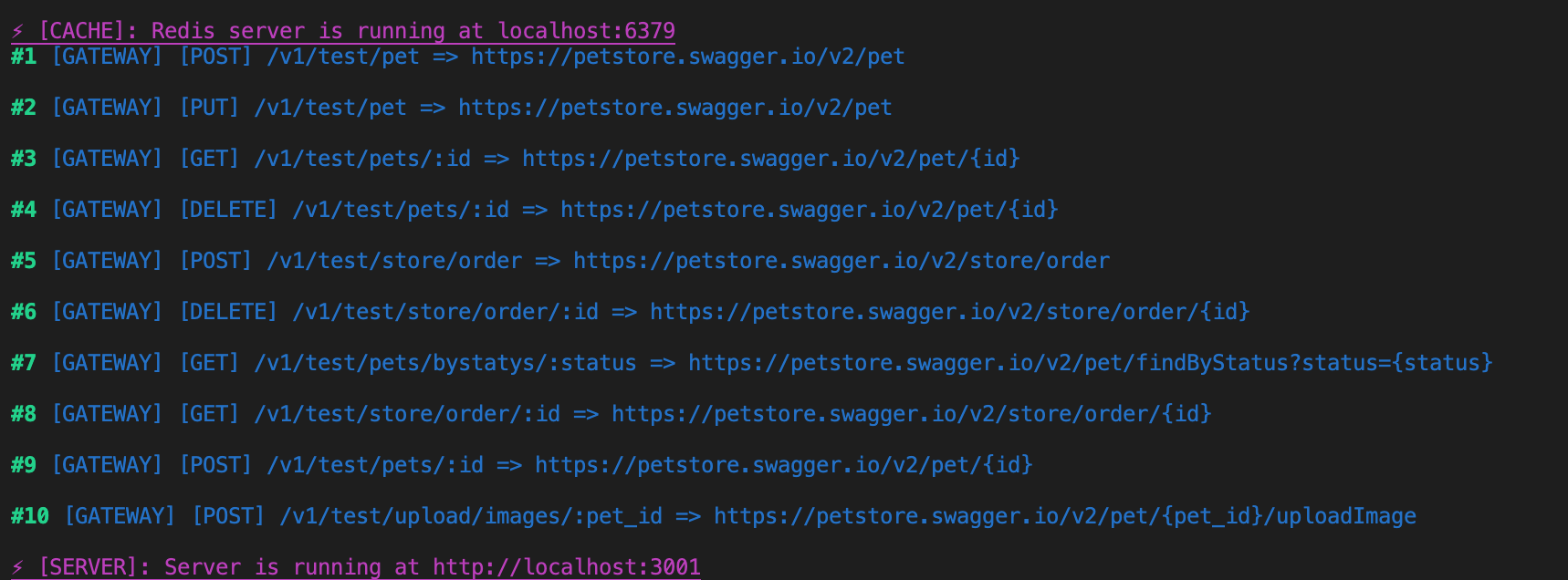
debug - Sonic debug mode
Debug styled server actions in your node.js console. It will log incoming requests, server status, caching servers status, invalid config error
Type: Boolean Default: true Required: false
Example:
new Sonic({
    debug: true
    // ...
})
logs - Logs incoming request into file
Save request date and client ip into the file in root directory _log/{date)
Type: Boolean Default: false Required: false
Example:
new Sonic({
    logs : true,
    // ...
})
middlewares - Express Middlewares
Use Express middlewares.
Type: Array:Function(req,res,next) Default: none Required: false
Example:
new Sonic({
    middlewares: [
        (req: Request, res: Response, next: NextFunction) => {
            console.log(req.method)
            next() // Don't miss
        },
        morgan(),
        // ...
    ]
    // ...
})
cache - Caching backend response
With caching option you can cache every response to a redis or disk memory. This caching technique applies to traffic between Sonic and your microservices endpoints.
Type: Array:Object (port?: Number, host?: String, driver: 'redis' || 'memory')
Default: none
Required: false
Possible cache drivers: redis | memory
Example:
new Sonic({
    cache : [
        {
            driver: 'redis',
            host: '1231.1.2.3.4',
            port: 12701
        },
        {
            driver: 'memory',
        }
    ],
    routes : [
        {
            endpoint: "/v1/test",
            method: "get",
            cache: {
                driver: "memory",
            },
            backend: [
                // ...
            ]
        },
        {
            endpoint: "/v1/test/pets",
            method: "get",
            cache: {
                driver: "redis",
            },
            backend: [
                // ...
            ]
        }
    ]
    // ...
})
routes - API routes
An array of endpoint objects offered by the gateway, all the associated backends and configurations.
Type: Array:Object Default: none Required: true
Example:
new Sonic({
    routes : [
        {
            endpoint: "/v1/test",
            method: "get",
            backend: [
                // ...
            ]
        },
        // ...
    ]
    // ...
})
routes.endpoint - Api endpoint name
The resource URL you want to expose
Type: String Default: none Required: true Note: Endpoints starts with "/"
Example
new Sonic({
    // ...
    routes : {
        endpoint : "/v1/test-endpoint"
        // ...
    }
    // ...
})
curl http://localhost:3014/v1/test-endpointroutes.method - Api request method
Request method, GET, POST, PUT or DELETE
Type: String Default: get Required: true Note: Possible : GET, POST, PUT, DELETE
Example
new Sonic({
    // ...
    routes : {
        endpoint : "/v1/test-endpoint",
        method : "get"
        // ...
    }
    // ...
})
curl http://localhost:1001/v1/test-endpointDocumentation in progress.